
Available products
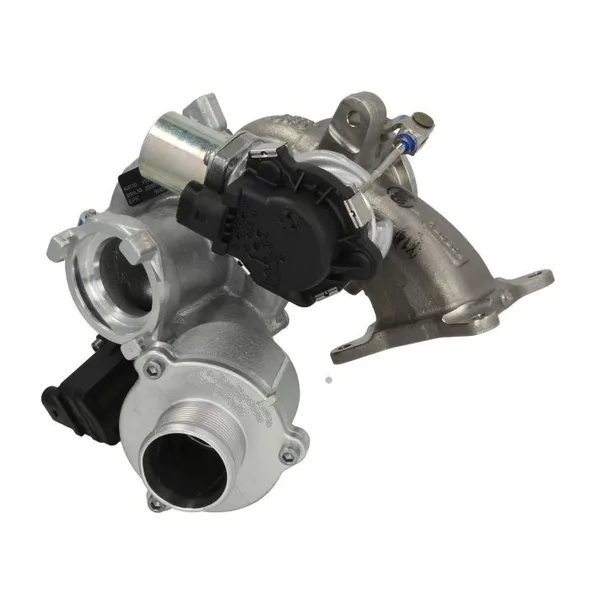
In stock
The VOLKSWAGEN Golf 7 (5G1 / BQ1 / BE1 / BE2) 2.0 TSI 290 hp (213 kW petrol) is covered by 1 exchange-standard reference(s). Check output before displacement: it determines the part.
Engine specification: 1984 cm³, petrol, built since 06/2012. Matching part number: 9VA05 (SL Turbo). Compare with the code stamped on your part.
Other engines of the VOLKSWAGEN Golf 7 (5G1 / BQ1 / BE1 / BE2): 2.0 R 310 hp, 2.0 TSI 310 hp, 2.0 R 300 hp. If the code stamped on your part is legible, search by reference remains the safest route. 24-month warranty.
Related categories
Frequently asked questions
About this category
The 2.0 TSI 290 HP turbocharger category serves a dual audience: professionals repairing vehicles and enthusiasts performing DIY maintenance. Here, you’ll find exchange-standard turbos designed for engines like the VW 2.8L VR6 or Audi 3.0L supercharged variants, where performance loss often traces back to turbo failure. These units are remanufactured to restore factory-like efficiency, with compatibility verified by motorization, power output, and OEM reference.
This range is curated by a wholesale specialist, sourcing turbos from remanufacturers who rebuild CHRA cores and variable geometry mechanisms to OEM tolerances. The grossist model ensures availability across 132 vehicle brands and 1,531 models, with stock rotation aligned to workshop demand rather than retail fluctuations.
Professional uses by trade
Different users approach this category with distinct needs: garages prioritize bulk availability and core deposit logistics, while DIYers seek plug-and-play replacements. Professionals in Germany and the DACH region often require documentation for tax compliance, whereas French buyers focus on immediate availability.
- Le garagiste independant : Replace a failing turbo on a 2018 Audi S5 3.0T with 290 HP without waiting for OEM parts, using a pre-calibrated exchange unit.
- L'automobiliste depanne : Diagnose a whining noise under acceleration as a turbo actuator failure, then order a remanufactured unit for self-installation.
- Le passionne qui fait lui-meme : Swap a worn-out turbo on a modified VW Golf MK7 2.0 TSI for improved throttle response, leveraging core deposit to offset costs.
- Der deutsche Kaeufer (DACH) : Source a turbo for a 2015 Skoda Superb 2.0 TSI 290 HP with a focus on VAT-compliant invoicing and German-language support.
- Le garagiste independant : Use core deposit programs to manage inventory costs when replacing turbos on high-mileage 2.0 TSI engines in fleet vehicles.
- L'automobiliste depanne : Address a sudden power loss by identifying the turbo’s variable geometry sticking, then ordering a remanufactured replacement.
- Der deutsche Kaeufer (DACH) : Verify compatibility for a 2017 Seat Leon Cupra 2.0 TSI 290 HP by cross-referencing the OEM code with the turbo’s CHRA specifications.
Range comparison
Below, compare the available turbos for 2.0 TSI 290 HP engines by reference, format, and target use case. Each unit is designed for exchange-standard fitment, with remanufacturing ensuring performance parity to new OEM parts.
| Range | Use | Format |
|---|---|---|
| SL Turbo 9VA05 | Direct fit for VW/Audi 2.0 TSI |
How to choose
Selecting the right turbo depends on factors like motorization alignment, core condition, and packaging. Professionals should prioritize units with documented remanufacturing processes and clear OEM equivalences.
- Verify the turbo’s CHRA core matches your engine’s displacement and power output to avoid mismatched performance characteristics.
- Check the packaging for core deposit instructions to streamline returns of your old turbo and reduce upfront costs.
- Prioritize turbos with documented variable geometry calibration to ensure consistent boost response across RPM ranges.
- Select units with clear OEM reference cross-referencing to avoid compatibility issues in high-performance applications.
- Opt for turbos from remanufacturers with a track record in 2.0 TSI applications to deliver rebuild quality.
- Choose packaging that aligns with your workshop’s storage constraints, whether bulk pallets or individual cartons.
- For DACH buyers, ensure the invoice includes VAT details and German-language documentation for tax compliance.
Storage & logistics
Bulk turbos for 2.0 TSI 290 HP engines require climate-controlled storage to prevent moisture damage to the CHRA core and variable geometry mechanisms. Warehouses should rotate stock based on motorization demand, with pallets labeled by OEM reference and power output. For smaller workshops, individual cartons with desiccant packs protect the turbo during transit and short-term storage. Core deposit units must be stored separately to avoid contamination with non-returnable stock.
Since 2026, our team has rebuilt turbos for over 1,500 2.0 TSI applications, refining our sourcing to match the variable geometry tolerances of high-performance engines.— autoKUR team
Related categories
Browse our other ranges:
Useful references
For regulatory and sector references, see Reglement (UE) 461/2010 — pieces de rechange et garantie constructeur.