

Available products
2 references

Frequently asked questions
About this category
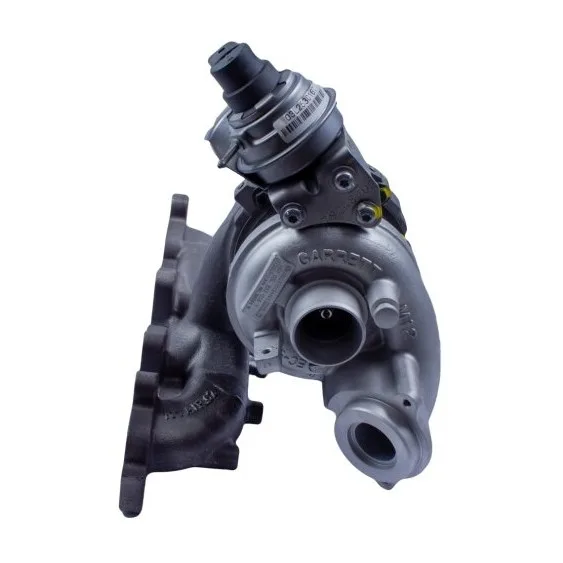
This category serves owners and technicians working on 1.6 TDI 110 HP diesel engines, where turbocharger failure manifests through symptoms like sluggish acceleration, blue-tinged exhaust, or a high-pitched whine under load. The range includes remanufactured units designed for direct replacement, eliminating the need for costly OEM purchases while maintaining original performance standards.
The lineup is curated by a wholesale specialist with direct access to remanufacturing networks, ensuring each turbocharger undergoes standardized testing for variable geometry, cartridge integrity, and actuator responsiveness. This approach bridges the gap between OEM quality and aftermarket affordability, prioritizing compatibility over brand loyalty.
Professional uses by trade
Whether you're a professional mechanic, a DIY enthusiast, or a German-speaking customer seeking a reliable solution, this category provides the right turbocharger for your 1.6 TDI 110 HP application without compromising on quality or compatibility.
- Le garagiste indépendant : Replaces a failing turbo on a 2012 Volkswagen Golf 1.6 TDI with 110 HP to restore factory power levels and avoid costly dealer interventions.
- L'automobiliste dépanné : Orders a remanufactured turbo for a 2010 Skoda Octavia 1.6 TDI after noticing excessive black smoke and reduced throttle response during highway driving.
- Le passionné qui fait lui-même : Sources a direct-fit turbocharger for a 2009 Audi A3 1.6 TDI to perform the replacement at home, leveraging clear OEM reference matching and pre-verified geometry.
- Der deutsche Käufer (DACH) : Wählt einen generalüberholten Turbolader für einen VW Passat 1.6 TDI 110 PS, um die Werkstattkosten zu senken und gleichzeitig die Originalleistung beizubehalten.
- Le garagiste indépendant : Uses bulk-packaged turbos for fleet repairs on 1.6 TDI engines, ensuring rapid turnaround by stocking high-rotation SKUs with verified actuator compatibility.
- L'automobiliste dépanné : Replaces a turbo with signs of oil leakage or shaft play on a 2013 Seat Leon 1.6 TDI, opting for a remanufactured unit to avoid the expense of a new OEM part.
- Der deutsche Käufer (DACH) : Bestellt einen Austausch-Turbolader für einen Audi A4 1.6 TDI 110 PS, nachdem der Werkstatttermin für eine Reparatur zu lange auf sich warten ließ.
Range comparison
Below, you’ll find the two core turbocharger references for 1.6 TDI 110 HP applications, each listed with its OEM cross-reference and verified compatibility across model years.
| Range | Use | Format |
|---|---|---|
| SL Turbo 847671-5002S | Direct replacement for VW Group 1.6 TDI | |
| SL Turbo 775517-5002S | High-rotation SKU for independent garages |
How to choose
Selecting the right turbocharger involves more than matching the OEM reference—it requires attention to actuator type, geometry calibration, and core deposit policies to ensure a seamless replacement process.
- Verify the actuator type (electric or pneumatic) to match your vehicle’s original setup, as mismatched units can trigger fault codes or reduced performance.
- Check the turbo’s geometry calibration, especially for variable-geometry models, to ensure smooth spool-up and consistent boost delivery across the RPM range.
- Confirm core deposit policies before purchase, as some suppliers require returning the old turbo within a set timeframe to avoid additional fees.
- Prioritize turbos with pre-installed gaskets or integrated cartridges to simplify installation and reduce the risk of leaks or misalignment during assembly.
- Opt for high-rotation SKUs if you’re a professional, as these units are tested for durability and often come with extended compatibility notes for multiple model years.
- Ensure the turbo’s CHRA (Center Housing Rotating Assembly) is balanced and free of shaft play, as these factors directly impact longevity and noise levels in operation.
- For DIY enthusiasts, choose turbos with clear OEM cross-references and installation guides to streamline the replacement process and avoid costly mistakes.
Storage & logistics
Bulk-packaged turbos for 1.6 TDI 110 HP applications must be stored in a climate-controlled environment to prevent moisture damage to the actuator or cartridge. Avoid stacking units directly on the floor, as this can deform the housing or dislodge internal components. For wholesale buyers, palletized storage with desiccant packs ensures long-term integrity, while individual mechanics should prioritize shelf life by rotating stock based on expiration dates provided by the supplier.
Since 2026, we’ve sourced remanufactured turbos from certified partners, ensuring each unit meets our standards for geometry, actuator response, and core integrity before listing it as a generalüberholt exchange part for third-party installation.— autoKUR team
Related categories
Browse our other ranges:
Useful references
For regulatory and sector references, see Reglement (UE) 461/2010 — pieces de rechange et garantie constructeur.