

Available products
2 references

Frequently asked questions
About this category
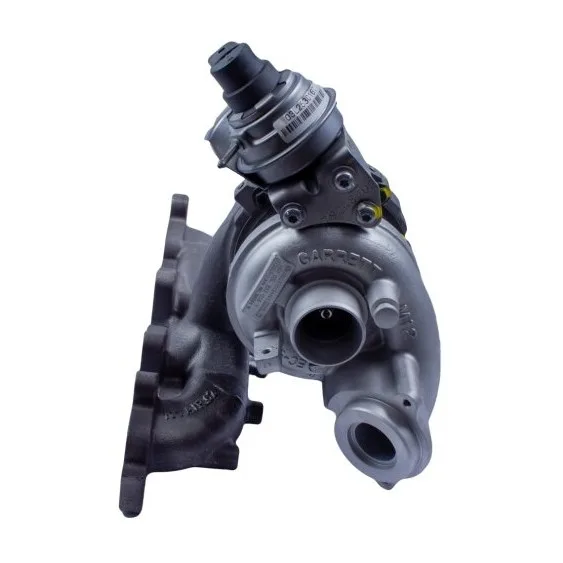
The 1.6 TDI 90 hp turbocharger category serves diesel drivers and repair professionals dealing with Volkswagen Group engines, where power loss, excessive exhaust smoke, or unusual noises signal a failing turbo. This range includes exchange standard units—fully remanufactured, tested, and ready for installation—covering a wide span of model years and vehicle applications to ensure broad compatibility.
Curated by a specialist wholesaler, this range prioritizes precision engineering and traceable sourcing, with each turbo designed to meet the original equipment manufacturer’s specifications. The focus is on delivering consistent quality through standardized remanufacturing processes, ensuring reliability for both professional and private use.
Professional uses by trade
Different users approach the 1.6 TDI 90 hp turbo differently: garages rely on bulk availability for quick turnarounds, stranded drivers need a direct replacement to get back on the road, and DIY mechanics seek parts that simplify installation without compromising performance.
- Independent garage: Orders bulk exchange standard turbos to minimize vehicle downtime and maintain workshop efficiency during high-volume repair schedules.
- Stranded driver: Purchases a single exchange standard unit as a direct replacement to restore vehicle drivability after sudden turbo failure on the road.
- DIY mechanic: Selects an exchange standard turbo for self-installation, leveraging pre-tested compatibility to avoid complex diagnostics or adjustments.
- German buyer (DACH): Prefers exchange standard turbos for their balance of cost efficiency and reliability, often sourcing through professional networks for warranty-backed purchases.
- Fleet manager: Stocks exchange standard turbos as critical spares to prevent extended vehicle unavailability during routine maintenance cycles.
- Classic car restorer: Chooses exchange standard units to maintain authenticity while ensuring modern reliability in older 1.6 TDI applications.
- Mobile mechanic: Carries exchange standard turbos in service vans to perform on-site repairs, reducing customer inconvenience and travel costs.
Range comparison
The following exchange standard turbos are verified for the 1.6 TDI 90 hp category, each designed to restore original performance without the expense of a new unit. Compare specifications to select the best fit for your application.
| Range | Use | Format |
|---|---|---|
| SL Turbo 775517-5002S | Direct fit for high-mileage engines | |
| SL Turbo 847671-5002S | Optimized for frequent stop-and-go driving |
How to choose
Selecting the right exchange standard turbo for a 1.6 TDI 90 hp engine depends on factors like vehicle age, driving conditions, and expected lifespan. Prioritize units with verified compatibility and a clear remanufacturing history to ensure long-term reliability.
- Compatibility: Verify the turbo matches your vehicle’s exact model year and engine code to avoid installation issues or performance mismatches.
- Remanufacturing standard: Prefer units labeled as fully remanufactured with tested performance metrics over basic repairs to ensure durability.
- Core deposit policy: Check if the supplier requires a core deposit for the old turbo, which may be refunded upon return of the used unit.
- Warranty terms: Look for exchange standard turbos backed by a warranty covering defects, though terms vary by supplier and are not reliable by autoKUR.
- Packaging integrity: Ensure the unit arrives in protective packaging to prevent damage during transit, especially for DIY installations.
- Rotation stock: Suppliers with frequent stock turnover offer fresher units, reducing the risk of hidden wear or storage-related issues.
- Technical documentation: Request OEM reference numbers and equivalent part lists to confirm cross-compatibility with your specific application.
Storage & logistics
For professional buyers, storing exchange standard turbos requires a controlled environment to prevent moisture damage or seal degradation. Keep units in their original packaging, away from direct sunlight and temperature extremes, and rotate stock regularly to ensure freshness. Bulk orders should be stored on shelves with adequate spacing to avoid pressure points on seals or housings, and always handle with clean gloves to prevent contamination of internal components.
With over a decade of experience in diesel powertrain components, our team has refined the exchange standard process to deliver turbos that meet the demands of both garages and DIY users, ensuring no compromise on quality or compatibility.— autoKUR team
Related categories
Browse our other ranges:
Useful references
For regulatory and sector references, see Reglement (UE) 461/2010 — pieces de rechange et garantie constructeur.