
Available products
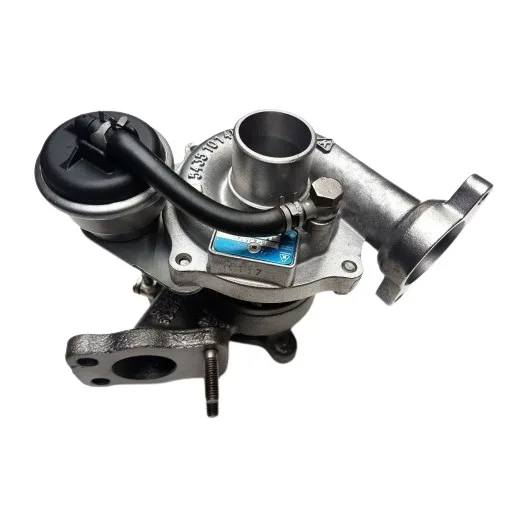
In stock
1 exchange-standard reference(s) match the FORD Fiesta 6 1.4 TDCi 68 hp (50 kW diesel). Output is the deciding criterion: a part meant for another output of the same displacement will not fit.
Engine specification: 1399 cm³, diesel, built since 01/2009. Matching part number: 5435 988 0009 (SL Turbo). Compare with the code stamped on your part.
Other engines of the FORD Fiesta 6: 1.6 ST 200 hp, 1.6 ST 182 hp, 1.0 EcoBoost 125 hp. If the code stamped on your part is legible, search by reference remains the safest route. 24-month warranty.
Related categories
Frequently asked questions
About this category
This category presents the exchange-standard turbocharger built for the 1.4 TDCi 68 hp engine, a motorisation fitted across several vehicle brands sharing the same block and power rating. It serves the independent garage sourcing a part between two jobs, the motorist stranded by a loss of power, the enthusiast working on their own car, and the German-speaking buyer comparing reconditioned options. Here, the reference is grouped by engine code and power figure first, so the entry point matches how a reader actually searches: by vehicle, by engine, by horsepower, not by an internal catalogue number.
The range is built around a remanufacturing process applied to the original core: each unit is stripped, the cartridge and actuator are assessed, and the assembly is reconditioned as an exchange-standard part rather than sold new. A distributor's role in this chain is to hold the validated reference against the engine code, confirm the OEM equivalence, and keep a single listing per motorisation instead of a scatter of near-identical part numbers that only add confusion at the counter.
Professional uses by trade
The way this turbo is used differs by who is buying it. A workshop treats it as a stocked reference for a recurring repair job on a customer's car; a stranded motorist treats it as the part that gets a vehicle back on the road; an enthusiast and a German-speaking buyer each compare it against their own engine code before ordering.
- Independent garage: Orders the exchange-standard reference against the vehicle's engine code before booking the job, so the part is confirmed to fit ahead of time.
- Independent garage: Cross-checks the OEM part number listed here against the workshop's own database before a second, more urgent order is placed the same week.
- Motorist coping with a breakdown: Searches by vehicle, engine and power figure rather than a reference, since the fault appeared without warning on the road.
- DIY enthusiast: Compares the listed cartridge and actuator details against the symptoms already diagnosed on their own car before deciding to order the part.
- DIY enthusiast: Reads the compatibility notes against the engine code stamped under the bonnet, then confirms the reference before removing the original turbo.
- German-speaking buyer (DACH): Checks the same engine code and power figure against the naming used in their own market before placing an order.
Range comparison
The table below lists the single validated reference available for this engine code, with the practical use case and the generic wholesale packaging format, so a buyer can confirm the fit before comparing it against any other listing.
| Range | Use | Format |
|---|---|---|
| SL Turbo 5435 988 0009 | 1.4 TDCi 68 hp replacement |
How to choose
Choosing the right listing for this engine code comes down to a few practical checks a professional runs before ordering, from packaging to how the core deposit is handled, rather than from the reference number alone.
- Confirm the engine code and power figure stamped on the vehicle match this listing exactly, since several close variants can share a similar part number.
- Check that the packaging protects the turbine housing and actuator during transport, since a damaged connector on arrival delays the job by another day.
- Verify how the core deposit is collected and returned, since the exchange-standard model depends on the original unit going back through the same channel.
- Ask how consistently the reference is stocked, since a workshop planning a repair around this part needs the same listing available on the next order.
- Review the OEM equivalences listed against the reference, since a single engine code can carry more than one original part number over its production run.
- Confirm the reference includes the actuator and cartridge already matched to the engine code, rather than a housing sold separately from its internals.
Storage & logistics
Storing a reconditioned 1.4 TDCi 68 turbo for resale means keeping the intake and exhaust ports sealed until the part reaches a bay, since dust ingress on a reconditioned cartridge undermines the work already done on it. The core deposit tied to the exchange-standard model should be tracked from the moment the new unit leaves and the old one is expected back, so the reference stays reconciled rather than open-ended. Rotation matters too: a reference held too long before its first sale is worth reviewing against current demand for this engine code, rather than left static on a shelf.
Since we started listing exchange-standard parts under this name, our approach has stayed the same: one validated reference per engine code, checked against the OEM number before it goes live, not the widest possible list of near-matches.— autoKUR team
Related categories
Browse our other ranges:
Useful references
For regulatory and sector references, see Reglement (UE) 461/2010 — pieces de rechange et garantie constructeur.