
Available products
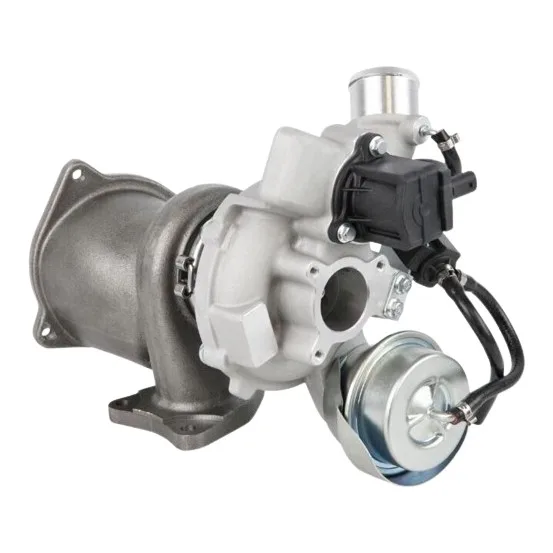
In stock
The FORD Fiesta 6 1.6 ST 200 hp (147 kW petrol) is covered by 1 exchange-standard reference(s). Check output before displacement: it determines the part.
Engine specification: 1596 cm³, petrol, built from 04/2016 to 04/2017. Matching part number: 5439 998 0144 (SL Turbo). Compare with the code stamped on your part.
Other engines of the FORD Fiesta 6: 1.6 ST 182 hp, 1.0 EcoBoost 125 hp, 1.0 EcoBoost 100 hp. If the code stamped on your part is legible, search by reference remains the safest route. 24-month warranty.
Related categories
Frequently asked questions
About this category
The 1.6 ST 200 hp category gathers an exchange turbocharger built for 1.6-litre engines rated around 200hp, the kind of unit found under the bonnet of hot hatches and performance-oriented compact cars. It is written for anyone facing a failing turbo on this engine family: an independent garage diagnosing a loss of power, a driver noticing smoke or a whistling sound, and a hands-on owner planning to fit the replacement themselves. Inside, the reconditioned unit is matched to this engine code, described by its reference, fitment, and the core-exchange process that comes with it.
The reference in this range starts life as a used core, stripped down, inspected, and rebuilt around the original housing and turbine geometry so the replacement matches the engine it came from. The role of the listing is to verify that pairing before the part reaches a workshop counter or a driveway: engine code against reference, reference against equivalences, and equivalences against what the vehicle actually needs, so the part ordered is the part that fits.
Professional uses by trade
A 1.6 ST 200 hp turbo reaches different hands before it is fitted. The independent garage orders it to close a repair ticket, the stranded driver searches for it under pressure, and the hands-on owner treats it as a weekend project. Each of them reads the same reference differently.
- Independent garage: orders the core-exchange unit to close a repair ticket quickly, checking the engine code and turbine reference against the vehicle before confirming the job.
- Stranded driver: searches for the part after a warning light or a sudden loss of power, needing a reference that matches the exact engine code without guesswork.
- Hands-on enthusiast: fits the reconditioned turbo at home over a weekend, relying on the listed reference and core-exchange terms to avoid buying the wrong part twice.
- Der deutsche Kaeufer (DACH): compares the engine code and turbine geometry against the original part number before ordering, expecting the same precision in German as in French.
- Independent garage: keeps a core-exchange unit on hand for a customer who cannot leave the vehicle for long, shortening the time between diagnosis and road test.
- Hands-on enthusiast: cross-checks the OEM reference and equivalences listed here against the number stamped on the removed unit before placing the order.
Range comparison
The table below lists the reference available in the 1.6 ST 200 hp core-exchange range, alongside its typical use and the wholesale format it ships in, so a buyer can confirm fitment before adding it to an order.
| Range | Use | Format |
|---|---|---|
| SL Turbo 5439 998 0144 | 1.6-litre 200hp turbo replacement |
How to choose
Choosing the right reference in this range comes down to a handful of checks that matter more than habit or brand loyalty: the engine code, the core-exchange terms, and how the unit is packaged for transport. These criteria apply whether the order comes from a workshop or a driveway.
- Match the exact engine code stamped on the block against the reference listed here before ordering, since a close match still risks a failed fitment.
- Confirm the core-exchange terms upfront, including how and when the used unit must be returned, to avoid an unexpected additional charge later.
- Check that the turbine geometry and cartridge type match the original part, since a variable-geometry unit cannot be swapped for a fixed-geometry equivalent.
- Verify the OEM reference and its equivalences against the number on the removed part, not just the vehicle model and year.
- Ask how the unit is packaged for transport, since a reconditioned turbocharger travels better boxed and protected than loose in a parcel.
- Plan for installation by a qualified technician if the fitment is unfamiliar, since a turbocharger interacts with oil and boost lines that must be reconnected correctly.
Storage & logistics
Once the reconditioned turbo arrives, store it in its original packaging, upright and away from moisture, until it is ready to be fitted; the oil and coolant ports are capped for a reason, and leaving them exposed invites debris that can undo the rebuild. If the core-exchange return is not immediate, keep the removed unit in the same box the replacement arrived in, drained where required, and labelled with the engine code so it is not confused with another job on the same bench. A workshop juggling several vehicles benefits from tracking each core by reference number rather than by memory.
Since we built this range in 2026, our team has kept the rule simple: the reference has to match the engine code before it is listed, not after a customer calls back.— autoKUR team
Related categories
Browse our other ranges:
Useful references
For regulatory and sector references, see Reglement (UE) 461/2010 — pieces de rechange et garantie constructeur.