

Available products
5 references



Frequently asked questions
About this category
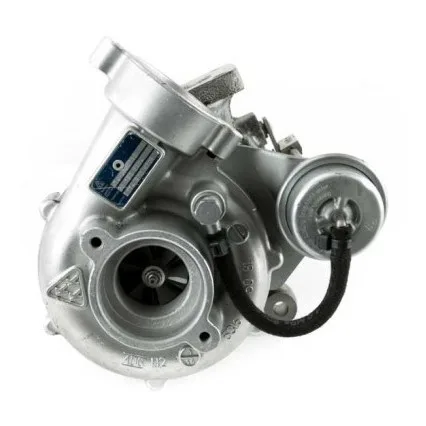
This category gathers core-exchange turbocharger units drawn from established manufacturer lines, intended for anyone replacing a failing turbocharger on a vehicle already identified by make, engine and power output. It serves the independent garage sourcing a part for a customer's car, the driver stranded by a loss of power who needs the exact reference for their engine, the hobbyist mechanic working from a home garage, and buyers in Germany, Austria and Switzerland searching by engine code rather than a generic part name.
The range is built directly from BorgWarner KKK and Garrett reference numbers rather than generic descriptions, so each entry can be checked against the code stamped on the original unit before ordering. Operating on a core-exchange model, the listing keeps every reference traceable from the moment an order is placed to the moment the worn core is returned, so garages can reorder the same part with the same result each time.
Professional uses by trade
A turbocharger reference means little without the context of who is ordering it. The uses below set out how each of these five units fits into a garage's daily workload, a stranded driver's search for a fix, a home mechanic's project, or a DACH buyer's search by engine code and power figure.
- Le garagiste independant : Cross-references the BorgWarner or Garrett code against the unit removed from the vehicle before ordering a replacement for a customer awaiting their car.
- L'automobiliste depanne : Searches by the exact reference stamped on the failed turbocharger to find the matching core-exchange unit for a vehicle currently off the road.
- Le passionne qui fait lui-meme : Compares the geometry and mounting details of each reference before ordering a unit to fit during a home garage repair session.
- Der deutsche Kaeufer (DACH) : Filters the range by engine code and power output to identify the correct BorgWarner or Garrett reference for a vehicle registered in Germany, Austria or Switzerland.
- Le garagiste independant : Keeps a shortlist of frequently ordered references on hand to reduce the time a customer's vehicle spends waiting for the correct part.
- L'automobiliste depanne : Checks the OEM equivalence noted against each reference to confirm the unit corresponds to the turbocharger originally fitted to their engine.
Range comparison
The table below sets the five references side by side so a buyer can move from the code on the removed unit to the matching listing without cross-checking multiple pages, whichever brand or mounting pattern the original turbocharger carries.
| Range | Use | Format |
|---|---|---|
| Turbo BorgWarner - KKK 5316 988 6723 | core-exchange engine replacement | |
| Turbo BorgWarner - KKK 5314 988 6706 | matching engine code fitment | |
| Turbo Garrett 465247-5001S | cross-brand reference matching | |
| Turbo BorgWarner - KKK 5314 988 7015 | variable geometry replacement | |
| Turbo BorgWarner - KKK 5316 988 6737 | OEM equivalence sourcing |
How to choose
Choosing among five similar-looking references comes down to a handful of checks a buyer can run before placing an order, from the code stamped on the old unit to how the core return is organised once the new part is fitted.
- Confirm the exact BorgWarner or Garrett reference printed on the housing of the removed turbocharger before selecting its replacement from this range.
- Check the engine code and power output listed for the vehicle against the fitment noted for each reference to rule out a near-match error.
- Note whether the unit uses a fixed or variable geometry mechanism, since the two are not interchangeable even within the same engine family.
- Verify the OEM equivalence reference where one is listed, particularly when replacing a unit on a vehicle sold under several badge names.
- Plan the return of the worn core in advance, since the exchange model depends on sending back the original unit within the stated process.
- Ask a qualified mechanic or garage to confirm the mounting pattern before ordering if the reference on the old unit is no longer legible.
Storage & logistics
Once a core-exchange unit arrives, it should stay in its original packaging until the vehicle is ready for the part to be fitted, kept indoors and away from damp conditions that can affect seals and connectors before installation. The same care applies in reverse: the worn core being returned should be packed the way it arrived, drained where applicable, to avoid damage in transit that could complicate the exchange process. Garages managing several references at once benefit from keeping each unit labelled with its reference number until it is matched to the vehicle awaiting it, reducing the risk of fitting the wrong turbocharger to the wrong engine.
Since assembling this range in 2026, our team has focused on one thing: making sure the reference a buyer finds here is the one stamped on the unit they removed, not an approximate match.— autoKUR team
Related categories
Browse our other ranges:
Useful references
For regulatory and sector references, see Reglement (UE) 461/2010 — pieces de rechange et garantie constructeur.