

Available products
4 references

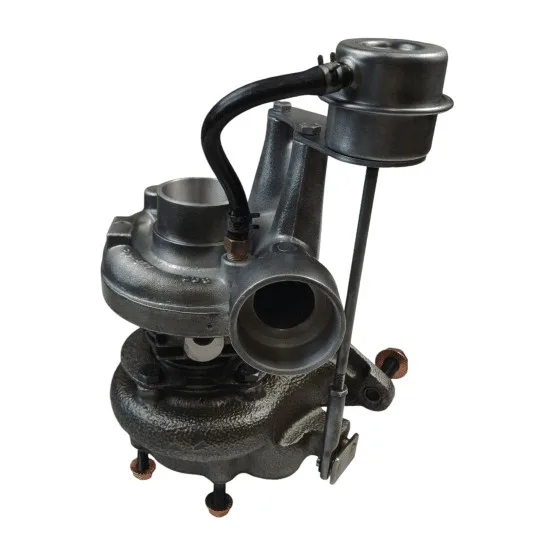
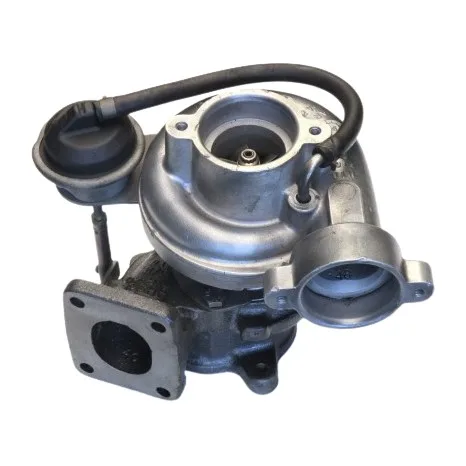
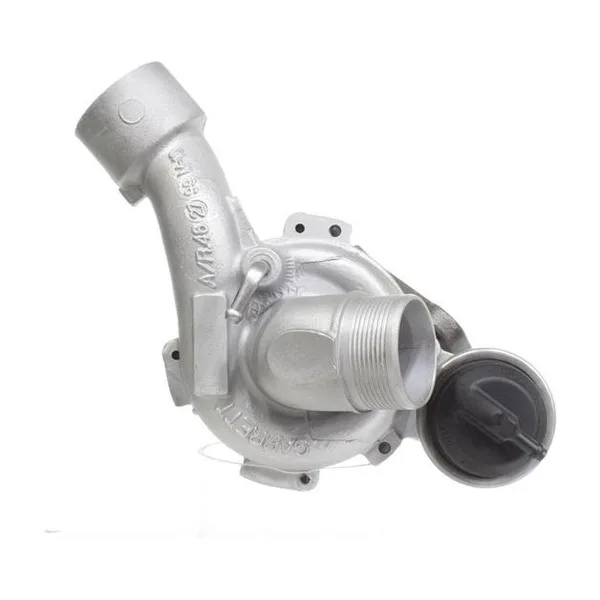
Frequently asked questions
About this category
This category brings together turbochargers, cartridges, and CHRA units offered through standard exchange: the buyer sends back a worn core and receives a remanufactured equivalent in return, a model widely known in Germany as Pfand and increasingly common across independent repair channels. It serves anyone confronted with a failing turbo, from an independent garage sourcing a part for a customer's car, to a driver stuck with reduced power, to a DIY owner working from a service manual. References are organized around engine platforms rather than brand names alone.
The range is built engine by engine: each turbocharger is selected against a documented engine code, OEM reference, and known equivalence chain, rather than a single catalogue number that may have been superseded years ago. A wholesaler's role here is to keep that mapping current, cross-checking geometry, cartridge type, and injector or high-pressure pump pairing so that a garage or independent buyer can move from a symptom description to a confirmed part without guessing.
Professional uses by trade
Every profile listed below approaches this range from a different starting point: a technician diagnosing a fault code, a driver stranded with a warning light, or an owner working from a workshop manual at home. The following examples describe how each one is likely to use a turbocharger, cartridge, or CHRA reference from this listing.
- Independent garage owner: cross-checks a customer's engine code and OEM reference against this listing before ordering a replacement turbocharger for a scheduled repair.
- Independent garage owner: keeps a cartridge or CHRA reference on hand for vehicles that come in showing symptoms of variable geometry failure or limp mode.
- Automobilist stranded on the road: searches this listing by vehicle, engine, and power output after a warning light or a sudden loss of power appears.
- DIY enthusiast working alone: compares an OEM reference and known equivalences before ordering a turbocharger to fit on a car they maintain themselves.
- DIY enthusiast working alone: checks core deposit and return conditions before ordering, since the exchange process requires sending back the worn unit afterward.
- German buyer (DACH region): matches an engine code against this listing to identify a turbocharger, injector, or high-pressure pump equivalent to a superseded reference.
Range comparison
The table below lists each turbocharger reference available in this category, alongside the situation it typically answers and the general wholesale format it ships in, to help narrow a search before checking exact compatibility.
| Range | Use | Format |
|---|---|---|
| Turbo Garrett 465429-0002 | engine code and OEM match | |
| Turbo Garrett 465447-0002 | cartridge and CHRA replacement | |
| Turbo Garrett 701072-0001 | variable geometry compatibility | |
| Turbo Garrett 454162-5002S | power loss diagnosis |
How to choose
Choosing among these references comes down to a handful of checks that hold regardless of the vehicle: matching the engine code, confirming the OEM reference, and understanding what happens to the worn part once a replacement arrives.
- Confirm the engine code and OEM reference printed on the current part before ordering, since two similar-looking turbochargers can serve entirely different engines.
- Check whether the listed reference matches a fixed or variable geometry design, since the two are not interchangeable despite occupying a similar housing shape.
- Look for known symptoms such as power loss, visible smoke, a whistling noise, or a car entering limp mode, and match them against the likely failing component.
- Verify the core deposit and return conditions attached to a standard exchange reference before ordering, since the worn unit must usually be sent back afterward.
- Consider whether the failure point is the cartridge, the CHRA, the injector, or the high-pressure pump, since each carries its own separate reference.
- Ask about warranty terms and duration attached to a specific reference, since coverage can differ from one turbocharger to another within the same range.
- Plan for mounting by a qualified professional once the reference is confirmed, since fitting a turbocharger correctly depends on tools and steps beyond the part itself.
Storage & logistics
Turbochargers, cartridges, and CHRA units in this category are compact but sensitive to how they sit in storage: oil inlet and outlet ports should stay protected from dust and moisture until installation, and a unit awaiting return under a standard exchange process should be kept in the packaging it arrived in. Buyers managing a core deposit are expected to return the worn part within the timeframe stated at order, in a condition that allows it to be assessed and reintroduced into the remanufacturing process. Independent garages handling regular turnover typically keep a small rotation of references matched to their most common engine platforms.
Since 2026, our team has worked to keep this engine-by-engine mapping accurate, from engine code to OEM reference, so that a garage, a stranded driver, or a DIY owner can find the right turbocharger without guesswork.— autoKUR team
Related categories
Browse our other ranges:
Useful references
For regulatory and sector references, see Reglement (UE) 461/2010 — pieces de rechange et garantie constructeur.