
Available products
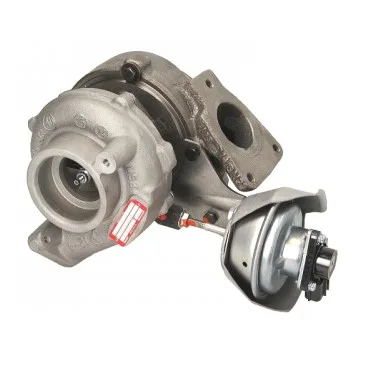
In stock
For the PEUGEOT 308 1 in 2.0 HDi 140 hp (103 kW diesel), the autoKUR catalogue holds 1 exchange-standard reference(s). At equal displacement, two outputs do not call for the same part.
Engine specification: 1997 cm³, diesel, built from 09/2007 to 10/2014. Matching part number: 756047-5005S (SL Turbo). Compare with the code stamped on your part.
Other engines of the PEUGEOT 308 1: 1.6 GTi 200 hp, 1.6 THP 200 hp, 1.6 16v 174 hp. If the code stamped on your part is legible, search by reference remains the safest route. 24-month warranty.
Related categories
Frequently asked questions
About this category
The 2.0 HDi 140 hp category covers diesel engines widely used in European vehicles from the mid-2000s onward, where turbochargers play a critical role in balancing performance and emissions. This section addresses the needs of mechanics, DIY enthusiasts, and drivers seeking reliable, cost-effective solutions for turbo-related failures without compromising on quality or compatibility.
autoKUR’s range for this category is built on partnerships with leading remanufacturers who specialize in restoring turbos to OEM specifications, ensuring consistent performance across brands. The focus remains on providing units that meet the technical demands of both professional workshops and private owners, with clear reference mapping to avoid mismatches.
Professional uses by trade
Different users approach turbo replacement with distinct priorities: garages prioritize speed and bulk availability, while DIYers value clarity in instructions and part identification. This section outlines how each group can leverage the same core product for their specific needs.
- Le garagiste independant : Replace a failing turbo on a 2012 Peugeot 308 2.0 HDi 140 hp within a single service slot by selecting a pre-calibrated unit with matching OEM reference.
- L'automobiliste depanne : Diagnose a whining noise under acceleration by cross-referencing the engine code DV6ATED4 (or equivalent) to identify the correct turbocharger variant for your vehicle.
- Le passionne qui fait lui-meme : Order a turbo with clear core return instructions to avoid delays, ensuring the faulty unit is properly documented for deposit refunds.
- Der deutsche Kaeufer (DACH) : Verify compatibility with your vehicle’s build year and engine code before purchasing, as German-market models may feature slight variations in turbo specifications.
- Le garagiste independant : Use bulk-packaged turbos to reduce per-unit costs when servicing multiple vehicles in the same motor family, such as the 2.0 HDi 140 hp across Citroën and Peugeot models.
- L'automobiliste depanne : Check for symptoms like excessive blue smoke or delayed throttle response, which often indicate a failing turbocharger requiring immediate replacement.
- Der deutsche Kaeufer (DACH) : Confirm the turbo’s variable geometry mechanism is free of carbon deposits, as this directly impacts engine efficiency and longevity.
Range comparison
Below, you’ll find the available turbocharger options for 2.0 HDi 140 hp engines, each listed with its exact reference, intended use case, and packaging format to simplify selection.
| Range | Use | Format |
|---|---|---|
| SL Turbo 756047-5005S | core deposit eligible for trade-in |
How to choose
Selecting the right turbocharger involves more than matching the reference; it requires evaluating condition, packaging, and compatibility with your workflow. These criteria help streamline the decision-making process for both professionals and private buyers.
- Prioritize turbos with a documented remanufacturing process, as this ensures consistent performance and longevity compared to untested units.
- Opt for units packaged in sturdy, stackable boxes to protect internal components during transit and storage, especially for bulk orders.
- Check the turbo’s variable geometry vanes for smooth operation, as stiffness or misalignment can lead to performance issues post-installation.
- Verify the inclusion of a core deposit label if you plan to return the faulty unit, as this simplifies the refund process and reduces administrative overhead.
- For high-volume garages, select turbos with pre-applied gaskets or seals to minimize installation time and potential leaks.
- Ensure the turbo’s CHRA (Center Housing Rotating Assembly) shows no signs of excessive wear, as this is the heart of the unit’s performance.
- For DIYers, choose turbos with clear identification tags and QR codes linking to installation guides or compatibility charts.
Storage & logistics
Bulk turbos for 2.0 HDi 140 hp engines should be stored in a climate-controlled environment, away from direct sunlight and moisture, to prevent corrosion of metal components. Garages are advised to rotate stock based on expiry dates (if applicable) and to keep units in their original packaging until installation to maintain calibration integrity. For private buyers, storing the turbo in a dry, temperature-stable space ensures it remains ready for use when needed.
With over a decade of sourcing experience, our team knows that a remanufactured turbo’s reliability hinges on the quality of its core components and the precision of its assembly—never on shortcuts in testing or packaging.— autoKUR team
Related categories
Browse our other ranges:
Useful references
For regulatory and sector references, see Reglement (UE) 461/2010 — pieces de rechange et garantie constructeur.