

Available products
5 references



Frequently asked questions
About this category
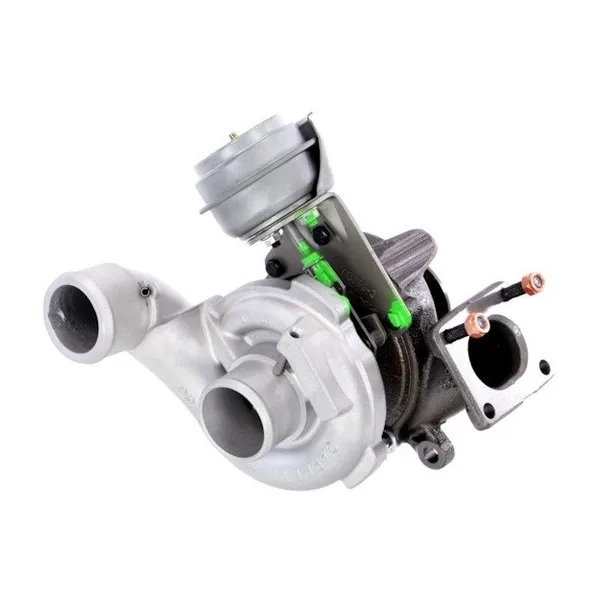
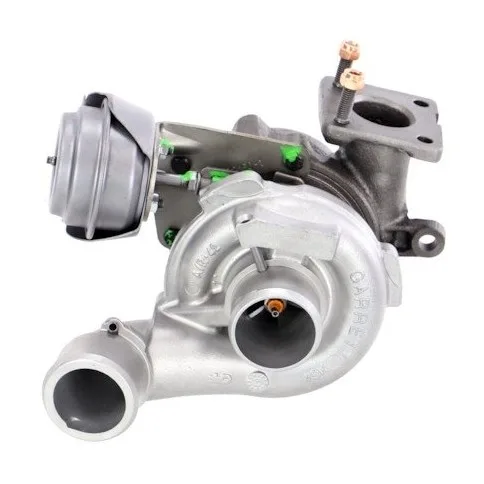
This category presents variable geometry turbochargers offered on an exchange standard basis: a remanufactured unit is supplied in place of the failed part, and the worn core is returned afterward under a core deposit arrangement, sometimes described elsewhere as a core charge or Pfand. The references gathered here share a family resemblance in construction — a cartridge, a CHRA, and an electronically or vacuum-controlled variable geometry actuator — while differing enough in casting and connector detail that the exact reference remains the only reliable way to confirm a match.
The range is built reference by reference rather than by vehicle guesswork: each Garrett or SL Turbo listing is entered under its own casting number, with equivalences noted only where a documented correspondence exists between production runs. The category deliberately stays on the turbocharging side of the engine: injectors and high pressure pumps, which can share similar failure symptoms, are handled elsewhere, keeping this reference list focused on the turbocharger itself.
Professional uses by trade
The same variable geometry turbocharger reference is approached differently depending on who is searching for it. A garage owner is comparing casting numbers against a diagnostic report, a stranded motorist is trying to understand a warning light, an enthusiast is planning a home replacement, and a buyer in the DACH region is reading the reference sheet in a second language.
- Le garagiste independant : Cross-checking a failed turbocharger's casting number against the reference list before ordering an exchange standard unit for a customer's vehicle.
- L'automobiliste depanne : Looking up an engine code after a warning light and a loss of power, to understand which turbocharger reference might be involved.
- Le passionne qui fait lui-meme : Comparing the cartridge and actuator type between two similar Garrett references before committing to a home turbocharger swap.
- Der deutsche Kaeufer (DACH) : Reading through the reference and equivalence details in English while budgeting for the core deposit, or Pfand, on the old unit.
- Le garagiste independant : Explaining to a customer why the returned core matters, since the exchange standard model depends on the worn turbocharger coming back intact.
- Le passionne qui fait lui-meme : Checking whether a whistling noise or a limp mode warning points toward the variable geometry actuator rather than the cartridge.
Range comparison
The table below lines up the five references covered in this category, each kept separate so the exact casting number, not a general description, remains the basis for comparison before an order is placed against a specific engine.
| Range | Use | Format |
|---|---|---|
| Turbo Garrett 777250-5002S | confirming exact casting match | |
| SL Turbo 716665-5002S | verifying actuator compatibility | |
| Turbo Garrett 777251-5002S | checking cartridge equivalence | |
| SL Turbo 708847-5002S | confirming casting number | |
| Turbo Garrett 712766-5003S | verifying reference before order |
How to choose
Before ordering, a few checkpoints reduce the risk of a mismatch: the points below apply across the Garrett and SL Turbo references in this category and are worth working through in order rather than relying on the listing title alone.
- Confirm the exact casting number stamped on the failed turbocharger rather than relying on the vehicle model alone, since references overlap across production years.
- Check whether the actuator is vacuum-operated or electronically controlled, since two visually similar variable geometry turbochargers can use different control systems.
- Verify the engine code against the OEM reference before ordering, since the same physical turbocharger sometimes carries several different part numbers.
- Note the condition of the CHRA and cartridge on the failed unit, since this determines whether the core will be accepted back under the deposit arrangement.
- Check for accompanying symptoms such as power loss, visible smoke, a whistling noise, or the engine entering limp mode, which help narrow down the fault.
- Ask whether mounting will be handled by a professional garage, since fitting a variable geometry turbocharger typically involves work beyond a simple part swap.
- Confirm the warranty coverage that applies to the exchange standard unit before finalizing the order, since terms can vary between references.
Storage & logistics
Exchange standard turbochargers are stored as complete units, cartridge and CHRA still assembled, and are generally kept in their original packaging until the moment of fitting to avoid loose debris entering the intake or exhaust housing. The core deposit process runs alongside storage: the worn unit removed from the vehicle should be kept intact, without disassembly, and returned within the timeframe stated on the deposit documentation. Warehousing by reference rather than by vehicle model keeps the Garrett and SL Turbo lines distinct on the shelf, which matters when successive revisions of the same engine family share a similar external appearance but differ in casting or connector detail.
Since we began working with this reference family, we have kept one habit: verify the casting number before anything else. It is a small step, but it is the one that keeps an exchange standard turbocharger order from turning into a return.— autoKUR team
Related categories
Browse our other ranges:
Useful references
For regulatory and sector references, see Reglement (UE) 461/2010 — pieces de rechange et garantie constructeur.