
Can turbo failure cause engine damage?
Can a failing turbo destroy your engine? Discover critical failure mechanisms, warning signs, runaway risks, and how to prevent catastrophic engine damage.
Mechanical Pathways: How Forced Induction Breakdown Damages the Engine
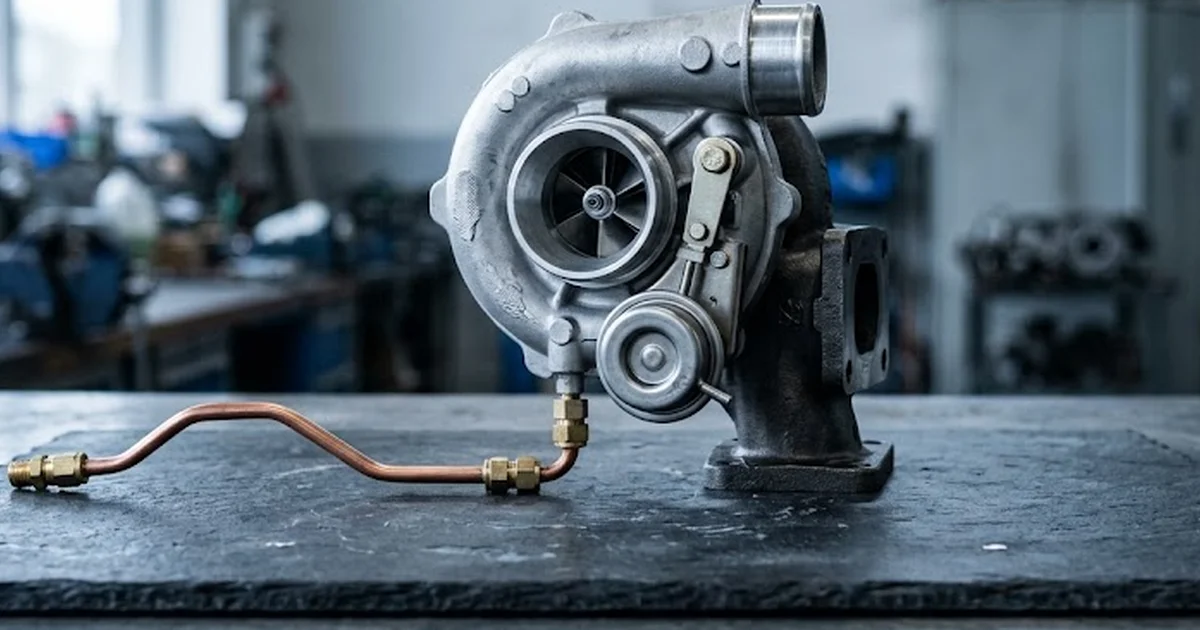
Understanding whether a failing replacement turbocharger or worn factory unit can destroy an internal combustion engine requires examining the physical connections between the forced induction system and the engine block. A turbocharger operates under extreme thermal and mechanical stresses, with the central shaft rotating at speeds exceeding 200,000 revolutions per minute while exposed to exhaust gas temperatures that frequently surpass 850 degrees Celsius. Because the turbocharger relies directly on the engine lubrication system for cooling and hydrodynamic bearing support, any structural breakdown within the turbocharger core immediately reverberates through the engine oil circuits and combustion chambers. When bearing clearances degrade or shaft fatigue occurs, the failure does not remain isolated within the turbocharger housing; it triggers secondary damage across pistons, valves, cylinder bores, and emission control systems.
The severity of engine damage depends heavily on which specific component of the turbocharger fails first and how rapidly the driver responds to early operating symptoms. When mechanical breakdown progresses unchecked, the forced induction circuit transitions from an air-supply component into a generator of abrasive metal debris and an uncontrolled fuel source. Sourcing a dedicated replacement before internal tolerances collapse protects the core engine block from irreversible mechanical destruction.
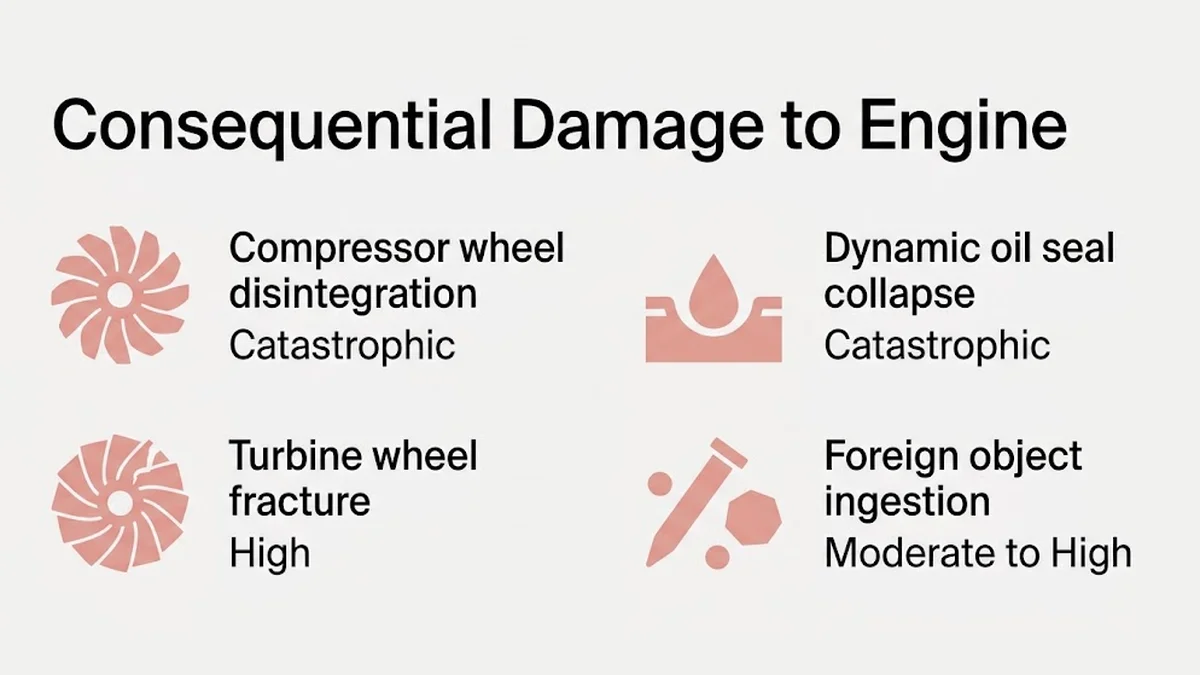
| Failure Mechanism | Direct Impact on Turbocharger | Consequential Damage to Engine | Severity Level |
|---|---|---|---|
| Journal and thrust bearing wear | Excessive radial and axial shaft play | Oil contamination, metallic sludge circulation, crankshaft journal scoring | High |
| Compressor wheel disintegration | High-speed blade fragmentation | Aluminum shrapnel ingestion, bent intake valves, piston crown gouging | Catastrophic |
| Dynamic oil seal collapse | High-pressure oil blow-by past piston rings | Diesel runaway, connecting rod buckling, hydraulic engine lock | Catastrophic |
| Turbine wheel fracture | Exhaust wheel detachment from shaft | Extreme exhaust backpressure, exhaust valve overheating, turbo housing rupture | High |
| Foreign object ingestion | Impeller blade curling and erosion | Intercooler contamination, loss of intake boost, cylinder liner abrasion | Moderate to High |
The Critical Warning Signs of Impending Turbocharger Failure
Modern turbocharged engines rarely suffer sudden catastrophic failure without providing audible, visual, or drivability symptoms beforehand. Catching these early indicators allows both vehicle owners and workshop technicians to intervene before shrapnel or engine oil enters the induction tracts. When drivers ignore early alerts, the risk of transferring metal particulates into the oil sump escalates rapidly, turning a straightforward component exchange into a full engine replacement. Monitoring operational performance helps determine whether the vehicle can be safely inspected or if immediate engine shutdown is necessary.
Recognizing the operational symptoms of an aging or failing unit prevents severe secondary damage to internal engine components:
- Excessive exhaust smoke emissions: Dense blue smoke issuing from the tailpipe under acceleration signals that engine oil is bypassing the internal turbocharger seals and burning inside the combustion chamber or baking within the exhaust system. Thick black smoke indicates a severe air-fuel imbalance caused by an inability to deliver targeted boost pressure.
- Abnormal acoustic signatures: A loud siren noise or high-pitched metallic whistling that rises and falls with engine RPM points directly to compressor wheel blade imbalance or contact between the rotating impeller and the alloy compressor housing. A metallic scraping or grinding noise indicates complete thrust bearing collapse where the shaft is physically rubbing against the housing walls.
- Sudden drop in engine boost and limp mode activation: When the variable geometry mechanism sticks or the compressor wheel loses aerodynamic efficiency, the engine control unit detects an underboost condition. This triggers emergency limp-home mode to restrict engine load and prevent excessive exhaust gas temperatures.
- Accelerated engine oil consumption: A noticeable drop in the engine oil level on the dipstick without external oil leaks on the ground is a classic sign of internal dynamic seal breakdown, where oil is being drawn directly into the intake tract or pushed into the exhaust manifold.
- Presence of oil inside the charge air cooler: While a light oil mist is normal in crankcase-ventilated engines, liquid oil pooling inside the lower intercooler hoses proves that the turbocharger compressor seal has failed and is pumping pressurized motor oil toward the engine intake valves.
Diesel Engine Runaway: The Ultimate Catastrophic Failure Mechanism
Among all potential failure modes, diesel engine runaway represents the most destructive consequence of a compromised turbocharger. Because diesel engines govern combustion rate primarily through fuel metering rather than throttled airflow, introducing an uncontrolled combustible liquid into the intake air stream causes the engine to accelerate violently outside electronic control. When the compressor-side dynamic piston ring seal degrades completely, lubricating oil supplied under pressure from the engine oil pump bypasses the bearing housing and atomizes directly into the boost pipework. This atomized oil enters the cylinders, where high compression and heat ignite it as unmetered fuel.
As the engine burns its own sump oil, engine speed escalates uncontrollably past the engineered redline, spinning the turbocharger even faster and drawing an ever-increasing volume of oil from the crankcase. Turning off the ignition key cuts off the electrical supply to the electronic fuel injection solenoids, but the runaway diesel continues running on engine oil until the sump runs completely dry or mechanical components suffer catastrophic structural failure. The resulting thermodynamic overload causes connecting rods to bend, pistons to seize against cylinder liners, and valve heads to strike piston crowns.
Key Takeaway: Shutting down the engine immediately at the first sign of an uncontrolled RPM surge or heavy blue smoke prevents catastrophic oil starvation and irreversible cylinder bore scoring. Continuing to drive with compromised turbo seals transforms a routine component replacement into a total engine write-off.
Drivers facing an active runaway on manual transmission vehicles can stall the engine by engaging a high gear, applying the footbrake firmly, and releasing the clutch pedal abruptly. For automatic vehicles, cutting off the intake air supply using a dry chemical fire extinguisher or suffocating the air duct remains the only physical method to stop combustion before the engine seizes permanently from total oil starvation.
Foreign Object Ingestion and Shrapnel: The Destruction of Cylinders and Valves
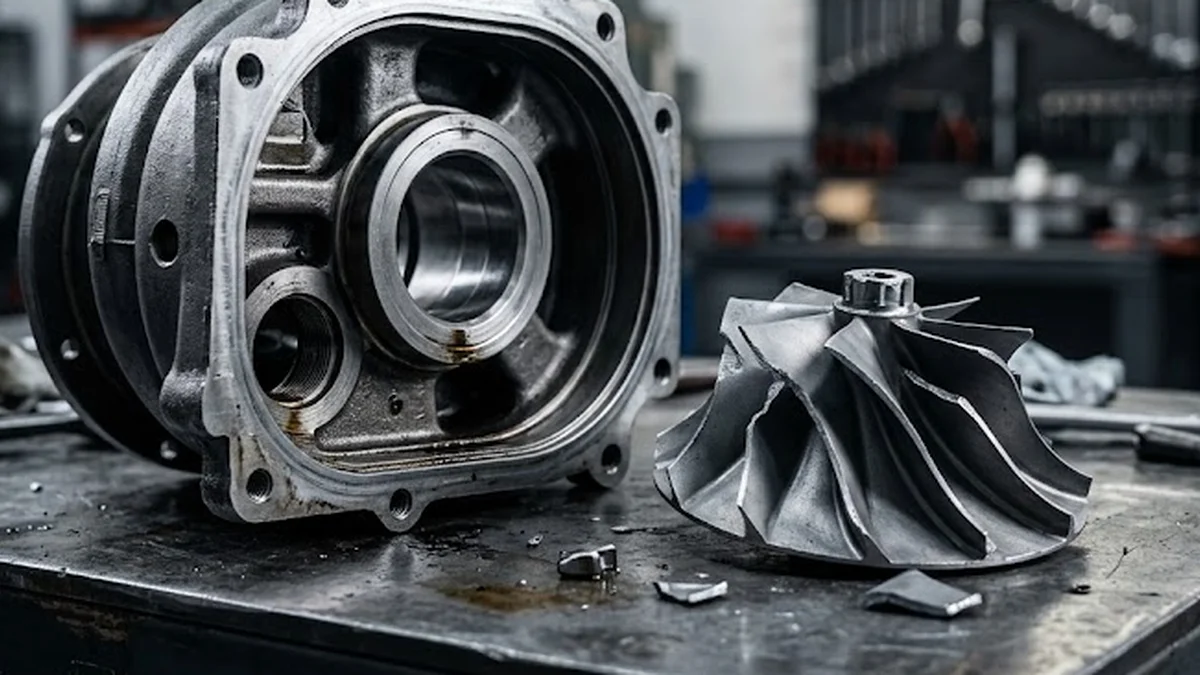
When bearing play reaches the threshold where the compressor wheel touches the stationary housing, the rotating aluminum alloy blades experience severe friction and structural deformation. Rotating at supersonic tip speeds, small fragments of aluminum shear away from the impeller blades. These high-velocity metal particles are propelled directly down the charge air pipework toward the engine cylinders. Understanding the route these fragments take demonstrates how a failing turbocharger mechanically ruins internal engine components downstream.
The progression of metallic debris through the induction system follows an aggressive mechanical sequence:
- Compressor wheel blade erosion and fragmentation: The impeller blades rub against the alloy housing wall, generating microscopic shavings and chipping off blade tips due to resonant harmonic vibration.
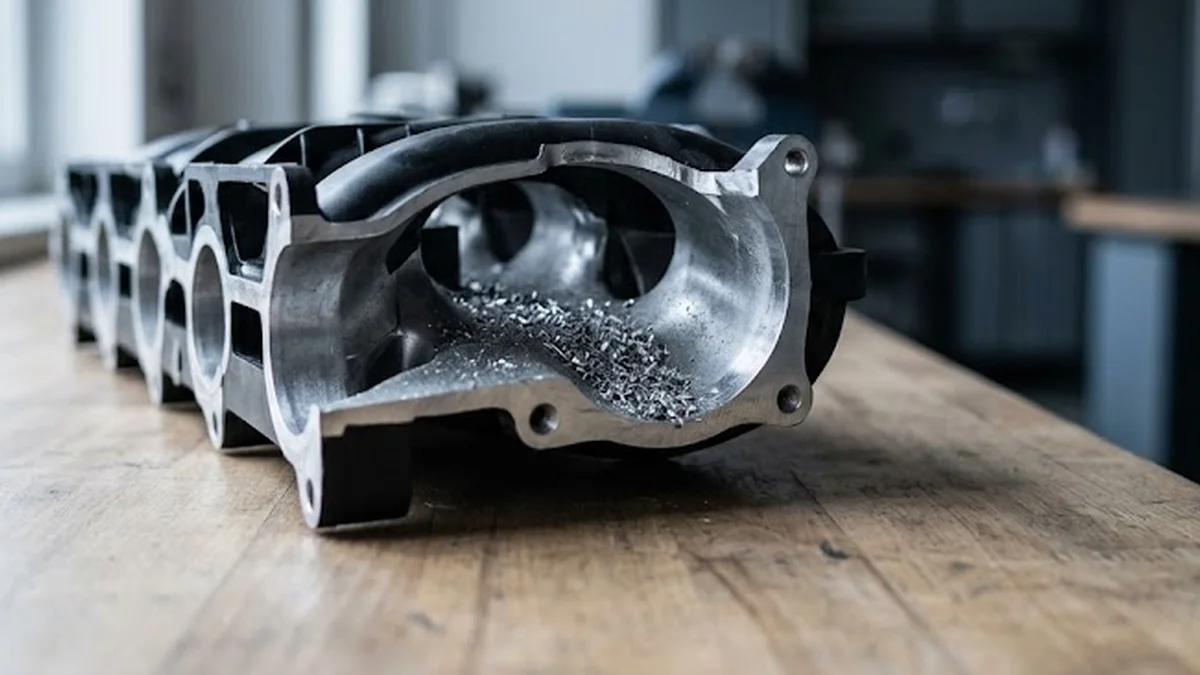
- Intercooler matrix contamination: The charge air cooler captures large chunks of metal, but fine metallic particles and splintered aluminum dust pass through or become trapped inside the micro-fins, creating a permanent reservoir of abrasive grit.
- Intake valve seat impingement: Metal shrapnel reaches the cylinder head intake ports, becoming trapped between the valve faces and hardened valve seats, preventing complete valve closure and leading to lost cylinder compression and scorched valve edges.
- Combustion chamber impact: Debris entering the cylinder is repeatedly hammered into the aluminum piston crown and cylinder head fire deck by reciprocating piston strokes, leaving heavy cratering and initiating stress fractures.
- Cylinder wall scoring: Hardened particles lodge between the piston ring lands and the cast iron or coated aluminum cylinder walls, carving deep vertical gouges that permanently destroy oil control and blow combustion gases into the crankcase.
If a technician replaces a failed turbocharger without thoroughly flushing or replacing the charge air cooler, trapped metal shrapnel will be ingested by the engine upon the very first full-throttle acceleration test, instantly destroying the brand-new replacement unit as well as the engine valves.
Diagnostic Checks and Oil Circuit Inspection Before Replacing the Turbo
A turbocharger is an integral component of the engine lubrication and breathing ecosystem; it rarely fails in a vacuum without an underlying external cause. Simply bolting on a replacement unit without addressing the root cause guarantees premature failure of the new assembly and continued risk to the engine block. Before commissioning a repair, workshop technicians and vehicle owners must execute a comprehensive forensic audit of the entire oil circulation and exhaust circuit.
Prior to installing a replacement unit, completing the following mechanical diagnostic steps ensures that the underlying cause of failure is eliminated:
- Oil supply and drain line flow rate verification: The flexible and rigid oil feed pipes must be checked for internal carbon coking, varnish buildup, and physical restrictions. A restricted feed pipe starves turbo bearings of oil within seconds of startup, while a clogged return pipe creates crankcase backpressure that forces oil past the turbine seals.
- Crankcase ventilation and PCV valve testing: Excessive blow-by or a blocked positive crankcase ventilation valve builds positive pressure inside the engine oil sump. This prevents gravity-assisted oil drainage from the turbocharger center housing, pushing clean oil through the seals into the exhaust and intake tracts.
- Exhaust particulate filter backpressure measurement: An exhaust system restricted by a clogged soot trap generates severe thermal buildup and exhaust manifold backpressure. To understand how soot saturation damages turbo bearings and turbine wheels, review the diagnostic relationship between blocked particulate filter backpressure and turbocharger breakdown.
- Foreign debris inspection across intake ducting: Every intake pipe between the air filter box and the turbo inlet must be inspected and vacuumed to guarantee that loose hose clamps, deteriorated plastic duct fragments, or failed air filter fibers cannot enter the compressor wheel.
- Oil sump inspection and removal of carbon sludge: Dropping the engine oil pan reveals whether carbonized sludge is choking the oil pickup strainer screen. Engines notorious for sludge accumulation require chemical flushing and oil strainer screen replacement before fresh oil is introduced.
Preventing Engine Catastrophe: Selecting the Right Reconditioned Replacement
When diagnostic checks reveal that an existing turbocharger has developed excessive shaft play or damaged seals, operating the vehicle further creates unacceptable financial and mechanical risks. Exploring driving with a failing turbo confirms that minor bearing wear can escalate into total engine breakdown over remarkably short driving distances. Taking prompt action by switching off the vehicle and replacing the worn unit with a high-precision standard exchange assembly protects the vehicle investment.
The standard exchange process provides a factory-grade remanufactured unit where the structural core is fully disassembled, ultrasonically cleaned, fitted with brand-new calibrated bearings, dynamic seals, and precision-balanced rotating assemblies. For popular European downsized passenger and commercial engines, sourcing an exact reference like a standard exchange Turbo MAHLE unit ensures precise mechanical fitment, factory-matched actuator calibration, and full dimensional parity with original manufacturer tolerances.
To ensure a reliable and leak-free installation, every turbocharger replacement must be fitted with a brand-new gasket kit rather than reusing compressed or heat-cycled exhaust gaskets. Furthermore, participating in the remanufacturing ecosystem through the core deposit system allows the return of your repairable damaged unit, maintaining the circulation of high-grade engineering components while keeping remanufacturing costs competitive. Identifying your exact powertrain requirements via an engine code reference guarantees that oil feed geometries and boost parameters match your vehicle specifications perfectly.
| Action Path | Initial Expense Order | Risk to Engine Block | Long-Term Reliability |
|---|---|---|---|
| Ignoring early turbo whistling and smoke | Zero immediate cost | Catastrophic (runaway, scored cylinder walls, bent valves) | Total vehicle breakdown |
| Driving in limp mode without repair | Low temporary cost | Severe (DPF clogging, carbon sludge, bearing seizure) | Compounded multi-component failure |
| Standard exchange replacement with clean oil circuits | Moderate controlled investment | Eliminated (clean oil feed, zero metal shrapnel) | Restored factory performance and longevity |
All replacement installations should be carried out by a professional automotive technician to guarantee that mandatory pre-lubrication procedures, oil pressure checks, and intercooler sanitization protocols are meticulously respected. By addressing early symptoms before shaft failure occurs, you safeguard your engine against catastrophic failure. Explore our comprehensive turbocharger catalogue to find the exact standard exchange unit matched to your engine code, vehicle model, and horsepower rating.
Frequently asked questions
Everything you need to know about this topic.
A question?
Get in touch directly.

Discussion
Our advice related to Turbocharger
 Turbocharger
Why Is My Turbo Whistling? Warning Signs and Causes
Is your turbo whistling under acceleration? Discover the differences between normal spooling and mechanical failure, from boost leaks to bearing play.
 Turbocharger
How Much HP Does a Turbo Add? Power Gains & Costs
Learn how much horsepower a turbo adds across engine sizes, what drives replacement costs, and how standard exchange delivers full factory performance.
 Turbocharger
Is a Turbo Covered Under Warranty? Coverage & Exclusions
Wondering if a turbo is covered under warranty? Learn what parts guarantees protect, common failure exclusions, and essential claim requirements to know.