
Why is my turbo whistling?
Is your turbo whistling under acceleration? Discover the differences between normal spooling and mechanical failure, from boost leaks to bearing play.
Normal Spool Sound vs Abnormal Turbo Whistle: How to Tell the Difference
Modern forced induction engines rely on high-velocity exhaust gases to spin a turbine wheel, which directly turns an intake compressor wheel on a common shaft. Operating at rotational speeds frequently exceeding 150,000 to 200,000 revolutions per minute, a turbocharger compresses ambient air to increase volumetric efficiency and engine output. When air rushes through the induction tract and into the intercooler, it naturally produces an aerodynamic tone. Understanding the boundary between this normal operational sound and an alarming mechanical whistle is the first step in diagnosing your forced induction system.
Under moderate acceleration, particularly between 1,500 and 2,500 engine RPM, a light, smooth whistle or air rush is completely standard across many modern diesel and petrol engines. This acoustic signature typically fades once cruising speed stabilizes and manifold boost pressure levels out. However, if the sound suddenly increases in volume, turns into a piercing siren, or introduces harsh metallic overtones, it serves as an immediate warning sign of mechanical wear or pressure loss.
- Subtle aerodynamic spool: A soft, progressive whistling tone that tracks throttle demand and smoothly subsides when cruising. This indicates normal compressor operation and healthy charge-air delivery.
- High-pitched siren whine: A loud, persistent sound reminiscent of an emergency vehicle siren that rises and falls directly with engine speed, audible even during light throttle applications and deceleration.
- Sharp boost hissing: A distinct escaping-air sound, similar to a punctured compressed air reservoir, occurring strictly when boost pressure builds under load.
- Rattling metallic scrape: A harsh, abrasive grinding or dentist-drill sound during spool-up, pointing to rotational instability and internal friction.
Operating temperature also alters these acoustic signatures. When an engine starts cold, engine oil exhibits higher viscosity, which can briefly cause a slightly more noticeable whistle until continuous hydrodynamic oil pressure cushions the central shaft bearings. Conversely, a whistle that grows louder as the powertrain reaches full operating temperature indicates that thinning hot oil can no longer maintain adequate bearing film thickness, pointing to progressive journal wear.
Primary Mechanical Causes Behind a Whistling Turbocharger
Turbocharger whistling generally originates from one of two mechanical categories: external charge-air or exhaust gas leaks, or internal rotational imbalance within the central bearing cartridge. Pinpointing whether the noise is aerodynamic or rotational is critical for determining the correct corrective action before secondary components suffer damage.
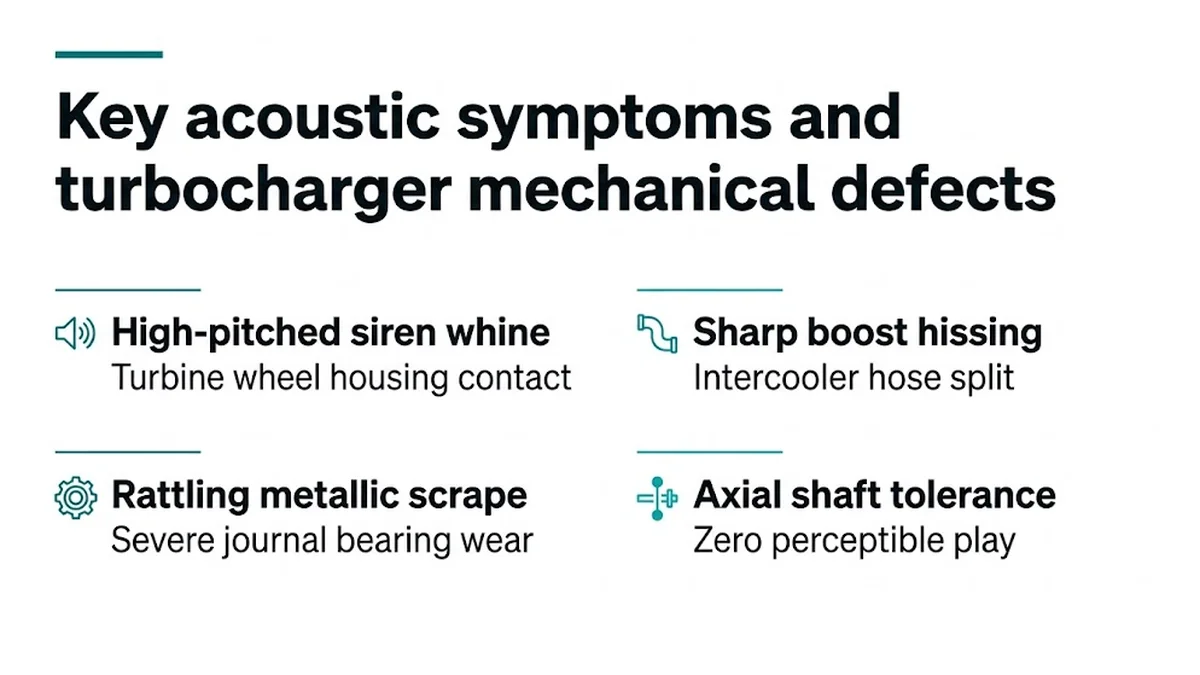
| Acoustic Symptom | Root Cause Location | Secondary Indicators | Operational Severity |
|---|---|---|---|
| Sharp boost hissing | Intercooler hose split | Noticeable power lag, black exhaust smoke under acceleration | Moderate (urgent pipe repair required) |
| High-pitched siren whine | Turbine wheel housing contact | Boost pressure instability, oil misting in charge-air pipes | Critical (imminent wheel disintegration) |
| Rattling metallic scrape | Severe journal bearing wear | Blue exhaust smoke, accelerated oil consumption, idle roughness | Severe (immediate engine shutdown required) |
| High-frequency exhaust chirp | Exhaust manifold gasket blow-by | Black soot around manifold studs, exhaust fumes entering vehicle cabin | Moderate (exhaust backpressure leak) |
Pressurized Air Circuit Leaks
The forced induction circuit between the compressor outlet, intercooler, and intake manifold operates under substantial positive pressure. Flexible reinforced silicone hoses, charge pipes, and intercooler end-tanks endure continuous thermal cycling and vibration. A minute split in a boost pipe or a loosened hose clamp allows pressurized charge air to escape at high velocity. This rapid air release creates an intense whistling or hissing sound under acceleration. Because the engine control unit meters air volume via the mass airflow sensor, escaped boost leads to an overly rich combustion mixture, causing sudden acceleration flat spots and dark exhaust smoke.
Bearing Clearance and Shaft Play
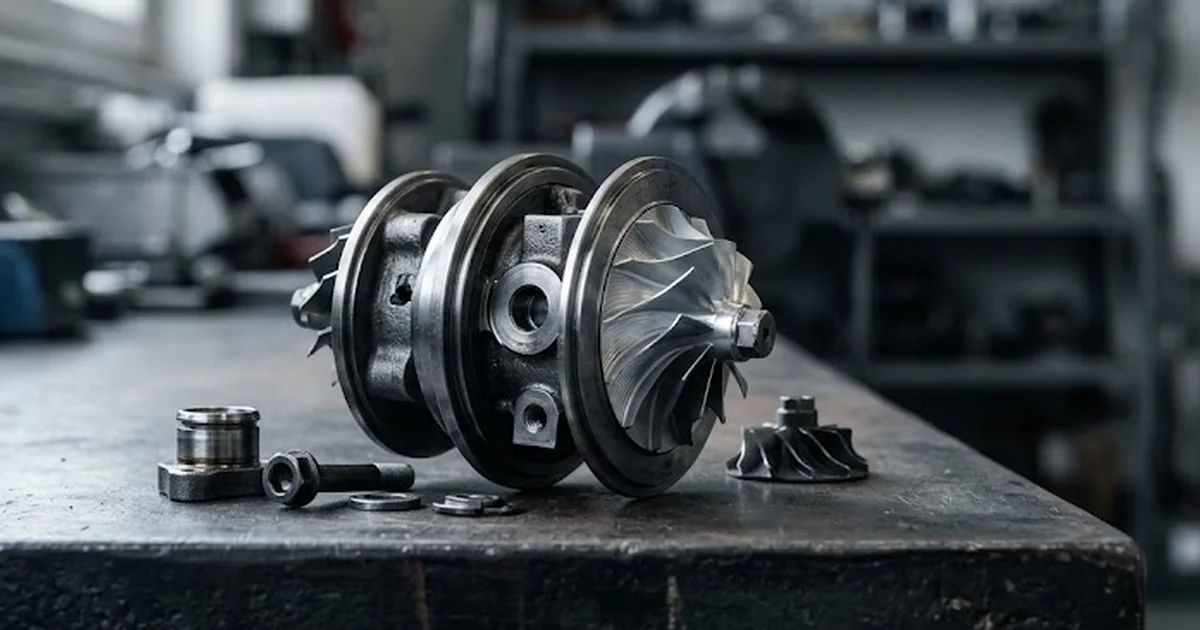
Inside the central cartridge, the rotor shaft is supported by hydrodynamic bronze journal bearings and an axial thrust bearing. Because these bearings rely entirely on a pressurized cushion of clean motor oil, any oil contamination, carbon soot accumulation, or momentary oil starvation rapidly erodes the microscopic bearing tolerances. When radial clearance widens, the shaft begins to oscillate eccentrically. This rotational deflection disrupts the airflow passage around the compressor inducer, generating a pronounced high-frequency siren noise that tracks engine revolutions.
Impeller Blade Friction and Housing Contact
The gap between the spinning compressor wheel tips and the stationary aluminium compressor housing is engineered to microscopic fractions of a millimeter. When bearing degradation allows excessive shaft tilt, centrifugal forces cause the blade tips to make physical contact with the scroll wall. This metal-to-metal rubbing produces an unmistakable screeching or siren whine. Over time, the blades suffer tip clipping and mechanical erosion, throwing the assembly further out of dynamic balance and dramatically accelerating shaft failure.
Exhaust Manifold and Flange Blow-By
Extreme thermal expansion can cause cast-iron exhaust manifolds to warp or crack over extended mileage. When the multi-layer steel gasket between the cylinder head and the manifold fails, pulsating exhaust gases escape before reaching the turbine inlet scroll. This high-pressure exhaust escape creates a high-pitched chirping or whistling sound that mimics a failing compressor wheel, often accompanied by powdery black soot around the manifold studs.
Critical Risks: What Happens If You Ignore the Whistle?
An abnormal turbocharger whistle is an early warning symptom that must never be ignored. Unlike minor cosmetic rattles, mechanical wear within a forced induction system accelerates exponentially. When shaft play or air leakage compromises dynamic stability, the risk of severe powertrain failure multiplies rapidly.
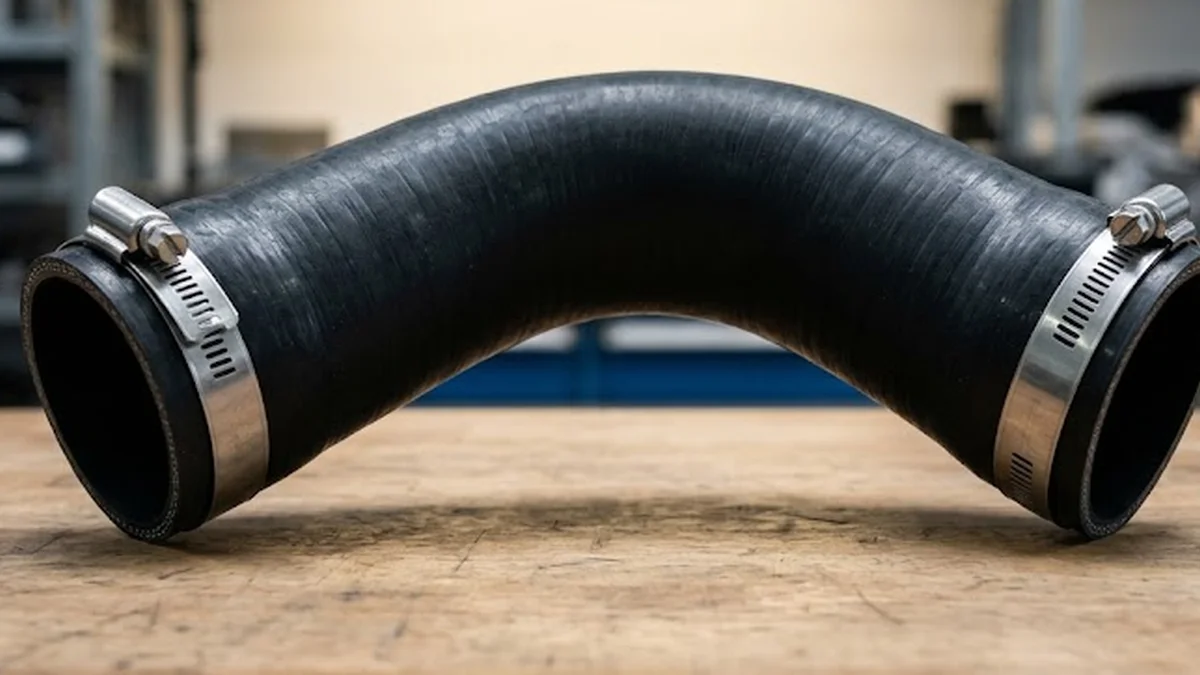
A whistling turbocharger indicates an immediate sealing or rotational imbalance; continuing to drive under heavy boost risks compressor wheel disintegration, sending metallic debris straight into the engine intake valves and combustion chambers.
Continuing to operate a vehicle with an actively whistling or whining unit triggers a chain reaction of costly mechanical damage across the powertrain:
- Ingestion of aluminium shrapnel: As blade tips rub against the compressor housing, metallic fragments fracture off the impeller. These sharp metal particles are blown straight through the charge-air piping into the intake manifold, scoring cylinder walls, embedding into piston crowns, and destroying intake valve seats.
- Dynamic seal blowout and diesel engine runaway: The dynamic piston ring seals on the turbo shaft require precise concentric alignment. Excessive shaft play destroys these seals, allowing pressurized engine oil to dump directly into the intake tract. In diesel engines, this atomized motor oil acts as an uncontrolled fuel source, triggering engine runaway where the motor revs beyond redline and cannot be shut down with the key until total seizure occurs.
- Exhaust aftertreatment contamination: Oil leaking past the turbine seal enters the red-hot exhaust stream, generating thick blue or white smoke. This unburned oil rapidly coats the porous ceramic monolith of the diesel particulate filter (DPF) and catalytic converter, creating severe backpressure and irreversible thermal poisoning.
- Rapid engine oil starvation: A compromised turbocharger bearing can drain several litres of oil from the engine sump in minutes, starving the crankshaft journals, camshaft lobes, and hydraulic lifters of vital lubrication.
When assessing whether your vehicle can still be moved under its own power, reviewing the timeline for driving with a failing turbo helps identify whether immediate recovery is needed. Pushing a whistling unit under load dramatically amplifies the engine damage risks from turbo failure, frequently turning an isolated component replacement into an entire engine rebuild.
Step-by-Step Diagnostic Routine Before Removing the Turbo
Before unbolting the turbocharger from the vehicle, a systematic inspection of the engine bay allows technicians and motorists to isolate the true root cause. Many turbochargers are removed prematurely when the actual culprit is a cracked intake elbow, a loose clamp, or an exhaust gasket leak.
- Pressure-test the charge-air induction tract: Connect a smoke tester or pressure test adapter to the compressor intake elbow. Pressurize the circuit up to operating boost levels to visually identify escaping smoke or audible hissing along intercooler seams, plastic end-tanks, sensor ports, and flexible silicone elbows.
- Check exhaust joints for carbon soot tracking: Inspect the cylinder head exhaust ports, exhaust manifold runners, turbocharger inlet flange, and exhaust gas recirculation (EGR) pipe connections. The presence of powdery black carbon tracking indicates an external exhaust leak that produces a whistling chirp under throttle.
- Inspect the compressor wheel and measure shaft play: With the engine switched off and completely cold, remove the flexible air intake hose from the turbocharger compressor inlet. Inspect the visible compressor blades with a bright inspection light, checking for chipped edges, bent fins, or scouring along the housing perimeter. Gently grasp the central shaft retaining nut with your fingers to assess radial and axial play.
- Examine the oil supply and drain lines: Inspect the rigid oil feed line for heat discolouration, severe kinks, or signs of external leaking. Detach the lower oil return pipe to verify that gravity drainage back to the engine sump is completely unrestricted and free of carbon sludge deposits.
During tactile evaluation, the Axial shaft tolerance must strictly reveal Zero perceptible play, as any forward or backward movement confirms thrust bearing destruction. While a minute amount of radial clearance (side-to-side float) is normal to accommodate the hydrodynamic oil film when running, the compressor blades must never touch the aluminium scroll when pushed manually.
Standard Exchange and Replacement Solutions: Restoring Engine Reliability
When diagnostic checks reveal damaged impeller blades, housing scoring, or excessive shaft clearance, attempting a localized patch repair is not technically sound. Modern forced induction units require precision dynamic balancing, calibrated high-speed equipment, and micro-machining tolerances that cannot be duplicated with hand tools in an ordinary garage.
The Standard Exchange Remanufacturing Process
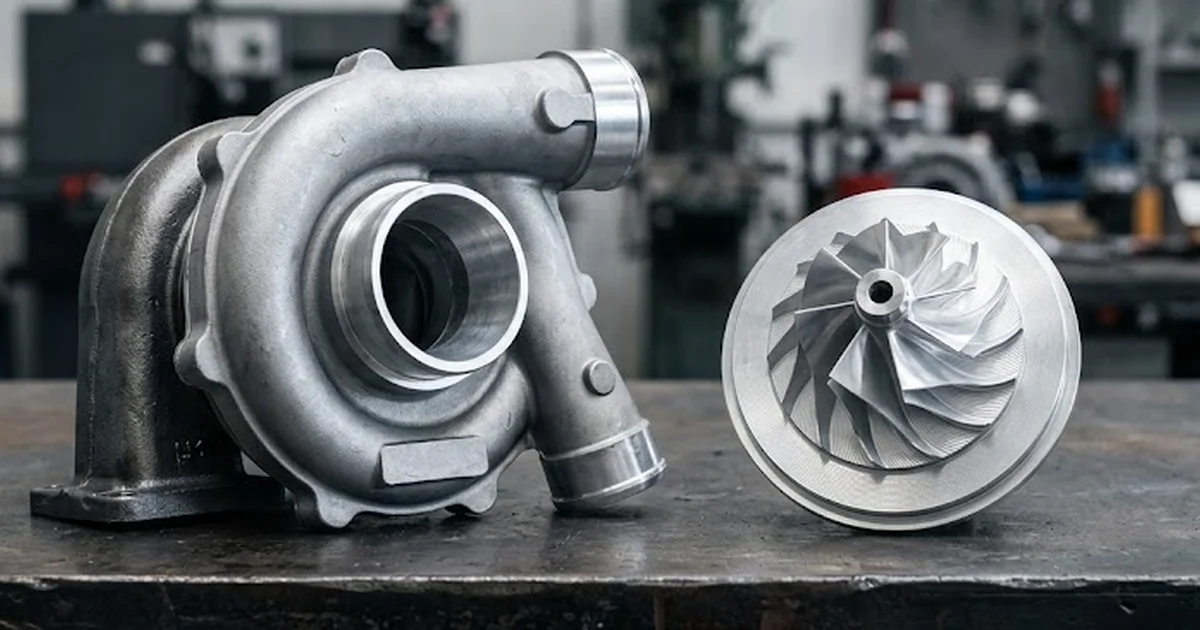
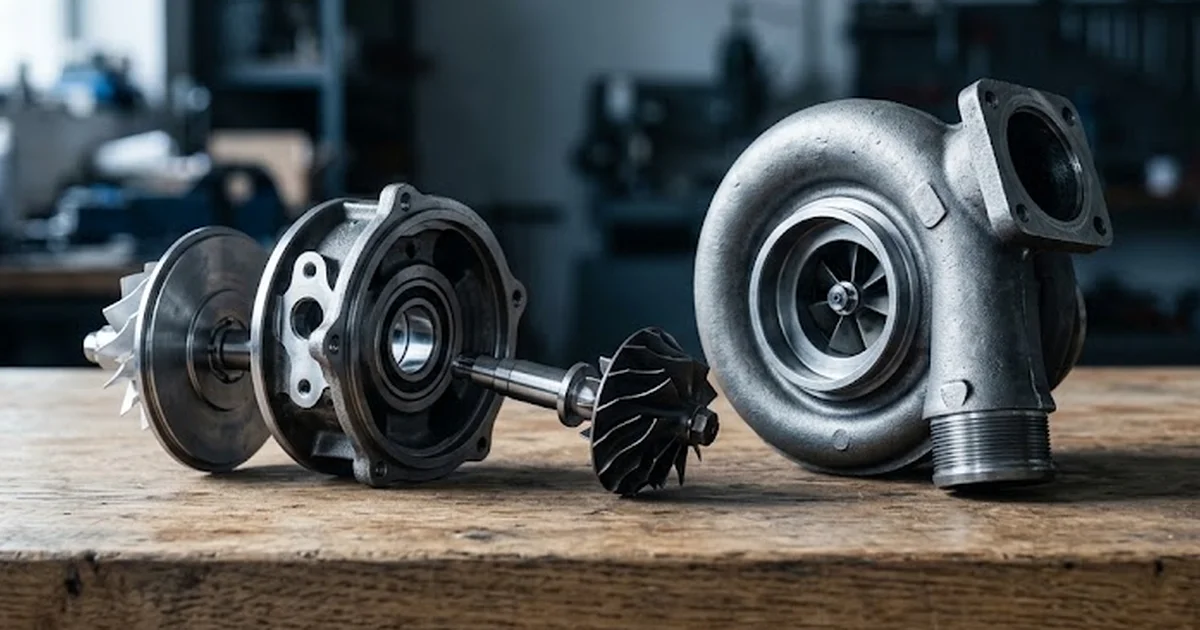
Standard exchange (remanufacturing) offers an industrially renewed, environmentally responsible alternative to expensive dealership parts or unreliable second-hand scrapyard units. In an industrial rebuilding cycle, genuine turbocharger cores are completely disassembled, degreased, and chemically cleaned. The cast-iron turbine housings and aluminium compressor scrolls are inspected for micro-cracks and remachined to exact factory dimensions.
All high-wear internal components are replaced with brand-new elements, including journal bearings, upgraded 360-degree bronze thrust plates, dynamic piston ring seals, and precision-machined shaft assemblies. The central rotating assembly (CHRA) is placed on a high-speed vibration sorting rig (VSR) running at speeds up to 200,000 RPM. This multi-plane dynamic balancing process eliminates harmonic micro-vibrations, ensuring completely quiet acoustic operation and long service life. Finally, variable geometry vanes and electronic actuators are calibrated on specialized airflow test benches to restore factory boost response curves.
The standard exchange model operates through a circular core deposit framework. When purchasing a remanufactured assembly, a core deposit is held until the customer's old, worn turbocharger unit is returned to the rebuilder. This core is then disassembled and recycled for industrial rebuilding, saving vital raw materials and reducing industrial energy consumption.
Matching by Motorisation and OEM References
Because turbochargers vary significantly across vehicle generations, selecting the correct replacement requires precise identification. Relying merely on vehicle model names can lead to costly fitment errors, as manufacturers alter compressor trim, actuator protocols, and oil port angles between different power outputs.
Always verify compatibility using your vehicle's official engine code reference and cross-reference the part number stamped on the turbo identification plate against verified OEM references. For workshops and vehicle owners requiring a proven standard exchange assembly, units such as the Turbo MAHLE 030TC11001000 illustrate the high manufacturing precision and dynamic balancing standards necessary to eliminate acoustic resonance under boost.
Best Practice Mounting Protocols for Professional Technicians
A newly fitted turbocharger will fail within minutes if the underlying cause of the original failure is left unaddressed. To ensure long-term reliability and quiet operation, adhere to these mandatory installation procedures:
- Fit a dedicated gasket kit: Always install a fresh vehicle-specific gasket kit containing multi-layer steel exhaust gaskets, copper crush washers, and oil port seals. Never apply liquid silicone or RTV sealant to oil flanges, as excess sealant tears off and fatally obstructs internal oil passages.
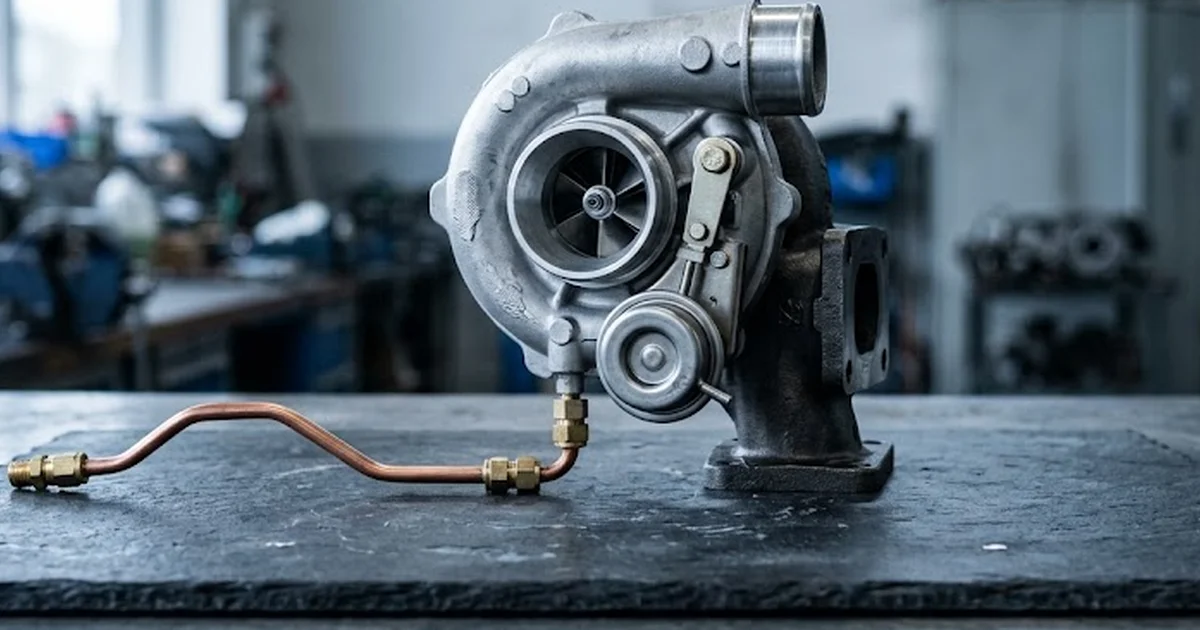
- Replace the oil feed pipe: Rigid oil feed pipes run close to scorching exhaust manifolds, leading to internal carbon coking over time. Clean oil cannot flow through a restricted pipe; installing a brand-new feed line is essential to safeguard the new bearings.
- Perform a complete engine flush and oil service: Drain contaminated motor oil, replace the oil filter, and install clean engine oil matching the manufacturer viscosity specifications to eliminate circulating metal particles.
- Pre-lube the central cartridge: Before attaching the oil feed line, inject clean engine oil directly into the turbocharger oil inlet port using a syringe. Rotate the compressor wheel smoothly by hand to coat the journal bearings before first ignition.
- Professional workshop installation: Turbocharger replacement must be performed by an experienced automotive professional who can verify boost pressure adaptation, clear diagnostic fault codes, and ensure optimal oil flow.
Diagnosing an abnormal turbo whistle early protects the rest of your powertrain from catastrophic collateral damage. When mechanical play or internal blade damage rules out basic pipe maintenance, exploring the complete turbocharger catalog provides both motorists and repair workshops with high-grade standard exchange units engineered for quiet, dependable performance.
Frequently asked questions
Everything you need to know about this topic.
A question?
Get in touch directly.

Discussion
Our advice related to Turbocharger
 Turbocharger
How Much HP Does a Turbo Add? Power Gains & Costs
Learn how much horsepower a turbo adds across engine sizes, what drives replacement costs, and how standard exchange delivers full factory performance.
 Turbocharger
Is a Turbo Covered Under Warranty? Coverage & Exclusions
Wondering if a turbo is covered under warranty? Learn what parts guarantees protect, common failure exclusions, and essential claim requirements to know.
 Turbocharger
Can Turbo Failure Cause Engine Damage? Key Risks & Signs
Can a failing turbo destroy your engine? Discover critical failure mechanisms, warning signs, runaway risks, and how to prevent catastrophic engine damage.