
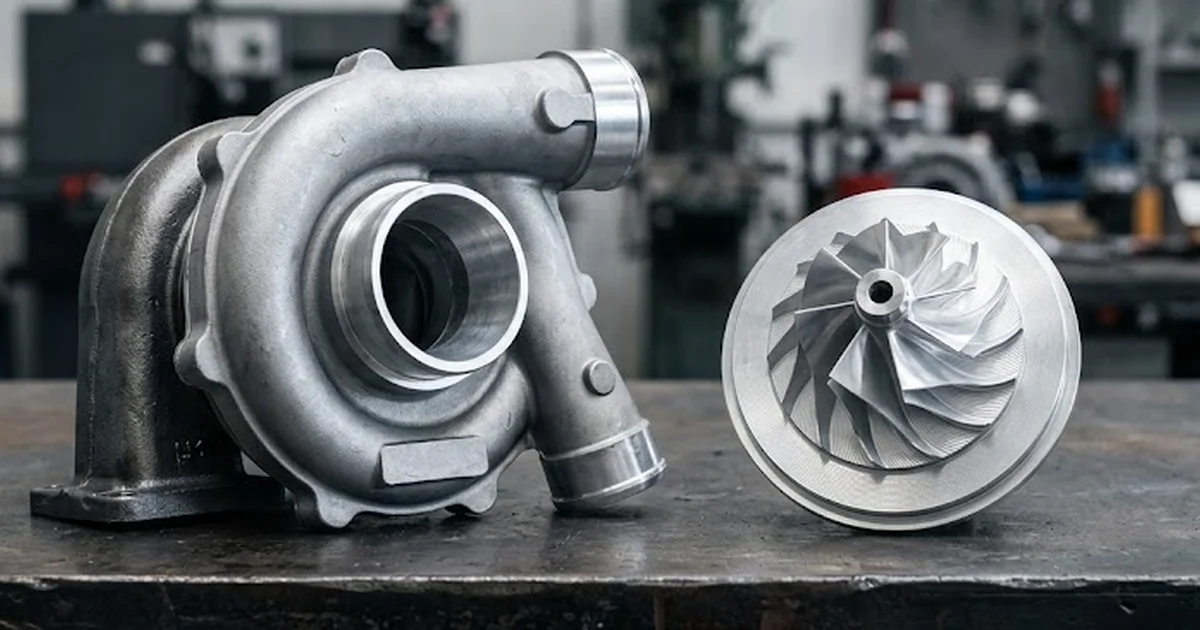
How much hp does a turbo add?
Learn how much horsepower a turbo adds across engine sizes, what drives replacement costs, and how standard exchange delivers full factory performance.
Understanding Horsepower Gains from Turbocharging: Volumetric Efficiency and Air Density
Understanding how forced induction alters engine performance begins with the central unit itself: adding or replacing a turbocharger transforms how an internal combustion engine breathes. In a naturally aspirated engine, ambient atmospheric pressure forces air into the cylinders during the downward stroke of the piston. Because atmospheric pressure at sea level is approximately 1.0 bar (14.7 psi), the maximum volume of air an unassisted cylinder can draw is physically restricted by its swept displacement and intake manifold resistance. As explored in our technical breakdown of how does a turbo work, the turbine harnesses kinetic energy from spent exhaust gas to spin a linked compressor wheel at rotational speeds exceeding 150,000 to 200,000 revolutions per minute.
By forcing compressed intake air into the combustion chambers above ambient pressure, forced induction dramatically increases volumetric efficiency. Standard naturally aspirated road engines typically operate at volumetric efficiencies between 75% and 88%. A properly matched turbocharger can push volumetric efficiency well beyond 100%, effectively packing a higher mass of oxygen molecules into each cylinder charge. Because combustion requires a precise stoichiometric balance between air and fuel, increasing the density of oxygen allows the engine management system to inject more fuel per combustion stroke, generating greater thermal expansion and driving the piston down with substantially higher force.
- Air density versus air volume: Compressing air increases its physical density, delivering more oxygen molecules per cubic centimetre into the cylinders without altering physical engine displacement.
- Thermal expansion and intercooling: Compressing air generates heat, which reduces oxygen density. Integrating an efficient intercooler lowers the intake air temperature, safeguarding horsepower gains and preventing premature detonation or engine knock.
- Exhaust energy recuperation: Unlike mechanical superchargers that draw parasitic rotational power directly from the crankshaft via belts, a turbocharger recycles thermal and kinetic waste energy from the exhaust stream.
- Dynamic boost regulation: Modern turbocharger assemblies utilize internal wastegates or variable nozzle turbine vanes to regulate boost pressure precisely across the operating rev band, preventing overboost and mechanical overload.
How Much Horsepower Does a Turbo Add Across Different Engine Displacements?
The exact horsepower gain generated by forced induction depends directly on engine displacement, compression ratio, charge cooling efficiency, and the boost pressure delivered by the compressor. When examining factory-calibrated forced induction, the Typical factory boost power gain generally ranges from 20% to 40% over naturally aspirated counterparts of identical displacement. For standard passenger and light commercial vehicles, a Typical boost pressure increase delivers between 0.5 to 1.2 bar of positive gauge pressure into the intake tract, shifting both peak horsepower and the torque curve significantly lower into the usable rev range.
On small-displacement three-cylinder petrol engines (such as modern 1.0-litre units), adding a low-inertia turbocharger typically increases output from roughly 65-75 horsepower up to 95-125 horsepower, while virtually doubling low-end torque. On mid-sized four-cylinder petrol and diesel engines (1.5 to 2.0 litres), the horsepower jump is even more pronounced, frequently elevating base outputs from 110-140 horsepower to 180-250 horsepower. In diesel applications, where lean combustion and high cylinder pressures are standard, turbocharging is not merely an optional power enhancer but a mechanical necessity that provides the dense airflow required to achieve efficient fuel burn without excessive particulate soot.
| Engine Architecture & Displacement | Naturally Aspirated Baseline Output | Typical Turbocharged Factory Output | Average Boost Pressure Range | Approximate Horsepower Increase (%) |
|---|---|---|---|---|
| 1.0L – 1.2L 3-Cylinder Petrol | 65 – 75 hp | 95 – 125 hp | 0.6 – 1.0 bar | 45% – 65% |
| 1.5L – 1.6L 4-Cylinder Diesel (e.g., dCi / HDi) | 60 – 70 hp (Theoretical NA) | 90 – 120 hp | 0.8 – 1.4 bar | 50% – 70% |
| 2.0L 4-Cylinder Petrol (e.g., TSI / TFSI) | 140 – 150 hp | 200 – 245 hp | 0.7 – 1.2 bar | 40% – 60% |
| 2.0L 4-Cylinder Diesel (e.g., TDI / BlueHDi) | 80 – 90 hp (Theoretical NA) | 140 – 190 hp | 1.1 – 1.6 bar | 75% – 110% |
| 3.0L V6 Turbo Diesel | 130 – 150 hp (Theoretical NA) | 230 – 286 hp | 1.2 – 1.8 bar | 75% – 90% |
Factory Replacement Versus Forced Induction Upgrades: Restoring Lost Power
When vehicle owners notice their vehicle losing acceleration, struggling on highway inclines, or triggering limp-mode warnings, the issue is rarely a desire for aftermarket tuning; it is the degradation of factory boost. When an engine suffers from reduced performance due to wastegate wear or carbon accumulation on variable vanes, precision remanufacturing facilitates Volumetric efficiency recovery reaching Up to 100% of original factory parameters. Motorists often underestimate how much horsepower is quietly lost over thousands of miles as carbon accumulates within the variable nozzle mechanism or as axial journal bearing play increases.
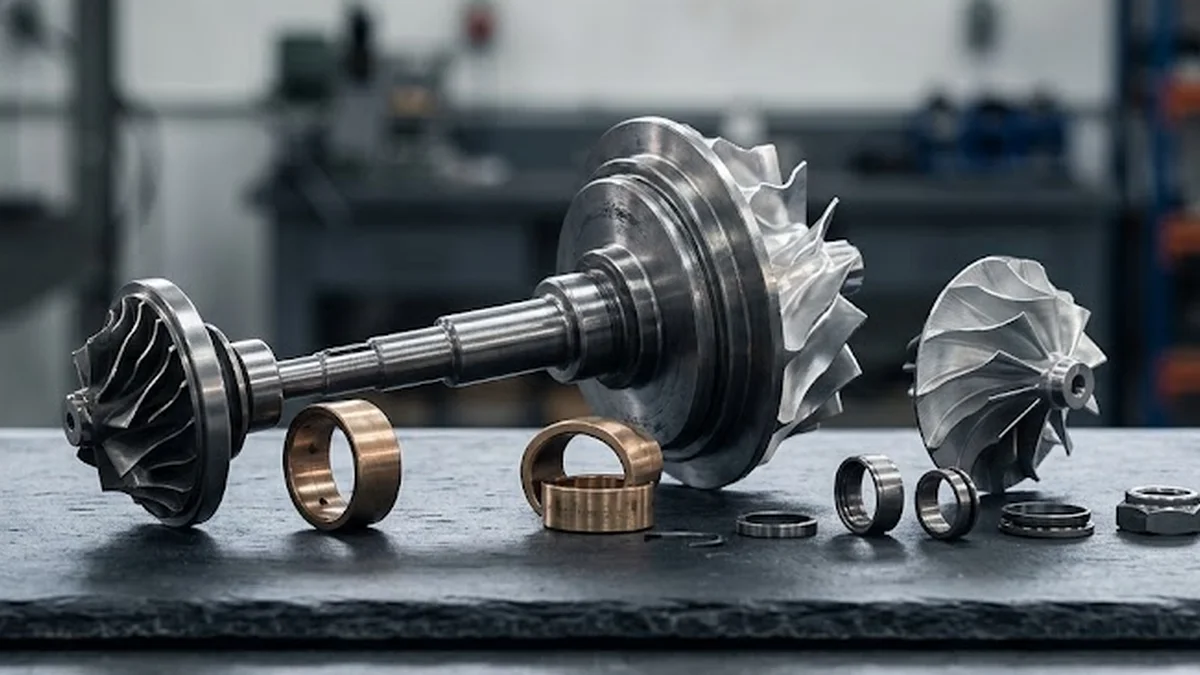
Before considering any performance modifications, restoring factory boost pressure through proper component replacement should always be the priority. Installing an uncalibrated performance hybrid unit onto an engine with tired internal seals or degraded fueling will lead to rapid component failure. Conversely, installing a precision-balanced assembly such as the Turbo MAHLE unit ensures that airflow dynamics, turbine response, and wastegate regulation operate strictly within original equipment tolerances. This restores factory responsiveness without risking destructive pressure spikes or manifold cracking.
- Dynamic boost pressure logging: A technician connects diagnostic equipment to measure actual manifold absolute pressure against the ECU target pressure during full-load road tests.
- Exhaust backpressure and VNT inspection: Sticking variable-geometry vanes fail to narrow at lower engine speeds, resulting in severe turbo lag and an apparent loss of 30 to 50 horsepower during acceleration.
- Compressor wheel and housing inspection: Ingested debris or airborne dust erodes the leading edges of the compressor blades, altering blade aerodynamics and reducing total mass airflow.
- Shaft play and oil seal assessment: Excessive radial or axial play allows pressurized intake air to bypass the compressor housing or leak lubricating oil into the intercooler tract, choking engine breathing.
What Drives the Price of a Turbocharger and Supporting Components?
The total investment required to restore or enhance turbocharged horsepower is driven by component architecture, manufacturing precision, and the ancillary engine systems that must support higher intake volumes. When evaluating the variables that dictate overall car turbo price structures, the internal technology of the turbocharger represents the largest single hardware variable. A simple wastegated turbocharger utilizing a cast compressor wheel features fewer moving parts and simpler calibration than a modern variable nozzle turbine equipped with heat-resistant superalloys and an electronic actuator.
Furthermore, air mass cannot produce horsepower without matching fuel volume. Generating sustained power requires clean, atomized fuel delivery from each fuel injector to maintain stoichiometric balance across all cylinders. In common-rail diesel and direct-injection petrol engines, this must be supported by the high-rail delivery of a high-pressure pump capable of maintaining steady fuel pressure under peak load. If fuel supply is restricted while boost remains high, the air-fuel mixture runs excessively lean, generating catastrophic cylinder temperatures that can melt piston crowns and burn exhaust valves. Additionally, replacing all installation seals with a fresh gasket kit prevents exhaust blow-by and oil leaks that degrade boost efficiency.
- Turbine geometry complexity: Fixed-geometry housings with basic internal wastegates represent the most economical architecture, whereas Variable Nozzle Turbine (VNT) assemblies require precision vane synchronization rings that increase remanufacturing complexity.
- Actuator technology: Pneumatic vacuum actuators are relatively straightforward to service, whereas electronic stepper motors require dedicated diagnostic calibration benches to synchronize mechanical vane stop positions with electronic signals.
- Turbine metallurgy: Exhaust gas temperatures in petrol engines frequently exceed 950°C, requiring turbine housings and wheels cast from high-nickel alloys such as Inconel, which carry higher raw material costs than diesel housings operating around 750°C.
- CHRA balancing standards: High-speed VSR (Vibration Sorting Rig) balancing of the Centre Housing Rotating Assembly at operating speeds eliminates micro-harmonics, directly determining the longevity of the journal bearings and shaft seals.
What You Should Expect to Pay: Total Budgeting and Standard Exchange Savings
When budgeting for turbocharger replacement or power restoration, the overall expenditure must be divided into three distinct categories: hardware acquisition, supporting mechanical hardware, and professional workshop labour. Purchasing a brand-new unit directly from a franchised main dealership often represents the highest possible price tier, largely driven by brand distribution markups. Choosing a high-quality remanufactured unit provides an economical alternative to dealership hardware, where Standard exchange savings typically represent 30% to 50% compared to purchasing an entirely new assembly.
Standard exchange remanufacturing relies on reclaiming structurally sound cast housings while replacing every rotating, wearing, and sealing component with brand-new precision hardware. Because the durable cast-iron turbine housing and aluminium compressor housing are thoroughly cleaned, inspected, and reused, the transaction operates on a circular exchange basis involving a refundable core deposit that is credited once the old worn unit is returned to the supplier. In terms of overall project budgeting, hardware typically accounts for 50% to 65% of the total cost, while workshop labour, new engine oil, oil feed lines, and fresh filtration make up the remaining 35% to 50%.
Key Takeaway: A turbocharger generates horsepower by increasing charge air mass, but sustainable output depends entirely on matched fuel delivery and thermal management. Prioritising standard exchange components restores factory performance parameters without the unpredictable strain associated with uncalibrated overboost.
Labour charges vary according to the physical accessibility of the turbocharger in the engine bay. In transverse four-cylinder front-wheel-drive configurations (such as an Astra 1.0 Turbo or a Megane 1.5 dCi), replacement typically requires three to five workshop hours. Conversely, in all-wheel-drive platforms or longitudinal V6 diesel engine bays, the turbocharger may be situated deep behind steering columns, subframes, or exhaust particulate filters, requiring six to ten workshop hours. Attempting to reduce costs by skipping mandatory procedures—such as flushing contaminated engine oil or replacing the oil feed pipe—frequently results in the immediate failure of the replacement unit.
Critical Steps Before Turbo Installation to Protect Your Power and Investment
A replacement turbocharger should never be installed as an isolated repair. A turbocharger does not fail without an underlying cause; in the vast majority of cases, turbocharger failure and the resulting loss of horsepower are symptoms of external engine faults, such as lubricating oil starvation, carbon contamination, or particulate blockage in the exhaust system. Before fitting a reconditioned unit, automotive repairers must perform a systematic root-cause analysis to ensure the new component operates in a clean, healthy environment.
Accurate component selection is the first critical step in ensuring full power recovery. Vehicle manufacturers frequently alter compressor wheel diameters, turbine A/R ratios, and actuator calibrations across different model years of the same engine displacement. Cross-referencing vehicle engine codes and verified OEM references ensures the replacement unit matches the exact compressor geometry and actuator calibration specified for that vehicle chassis. Once the correct reference is confirmed, following strict workshop cleanliness protocols guarantees that full factory horsepower is restored safely and durably.
- Replace the oil feed pipe and banjo bolts: Never reuse the existing oil feed pipe. Carbon coking inside the narrow metal pipe restricts oil volume, starving the new journal bearings of hydrodynamic lubrication within seconds of initial startup.
- Drop and clean the engine oil sump: Sludge and carbon particulates settling at the bottom of the oil pan can bypass the oil filter during cold starts, causing immediate abrasive scoring on the precision-ground turbine shaft.
- Inspect and flush the intercooler: If the previous turbocharger suffered compressor wheel disintegration or oil seal failure, the charge air cooler may contain metal shards or pools of engine oil. If not cleaned, these particles will be ingested by the engine, destroying pistons or ruining the new compressor.
- Prime the centre housing rotating assembly: Before connecting the oil feed line, inject fresh engine oil directly into the turbocharger oil inlet port and spin the compressor wheel gently by hand to ensure the internal bearings are fully wetted before first ignition.
- Verify exhaust and DPF backpressure: A clogged catalytic converter or saturated diesel particulate filter creates severe exhaust backpressure, forcing hot exhaust gas past the turbine piston rings and cooking the oil inside the bearing housing.
Whether maintaining a high-mileage diesel workhorse or revitalising a turbocharged petrol saloon, matching the exact engine code and selecting a thoroughly tested unit from our comprehensive turbocharger catalog ensures that your vehicle regains its full rated horsepower, responsive low-end torque, and long-term mechanical reliability without unexpected workshop expenditure.
Frequently asked questions
Everything you need to know about this topic.
A question?
Get in touch directly.

Discussion
Our advice related to Turbocharger
 Turbocharger
Why Is My Turbo Whistling? Warning Signs and Causes
Is your turbo whistling under acceleration? Discover the differences between normal spooling and mechanical failure, from boost leaks to bearing play.
 Turbocharger
Is a Turbo Covered Under Warranty? Coverage & Exclusions
Wondering if a turbo is covered under warranty? Learn what parts guarantees protect, common failure exclusions, and essential claim requirements to know.
 Turbocharger
Can Turbo Failure Cause Engine Damage? Key Risks & Signs
Can a failing turbo destroy your engine? Discover critical failure mechanisms, warning signs, runaway risks, and how to prevent catastrophic engine damage.