
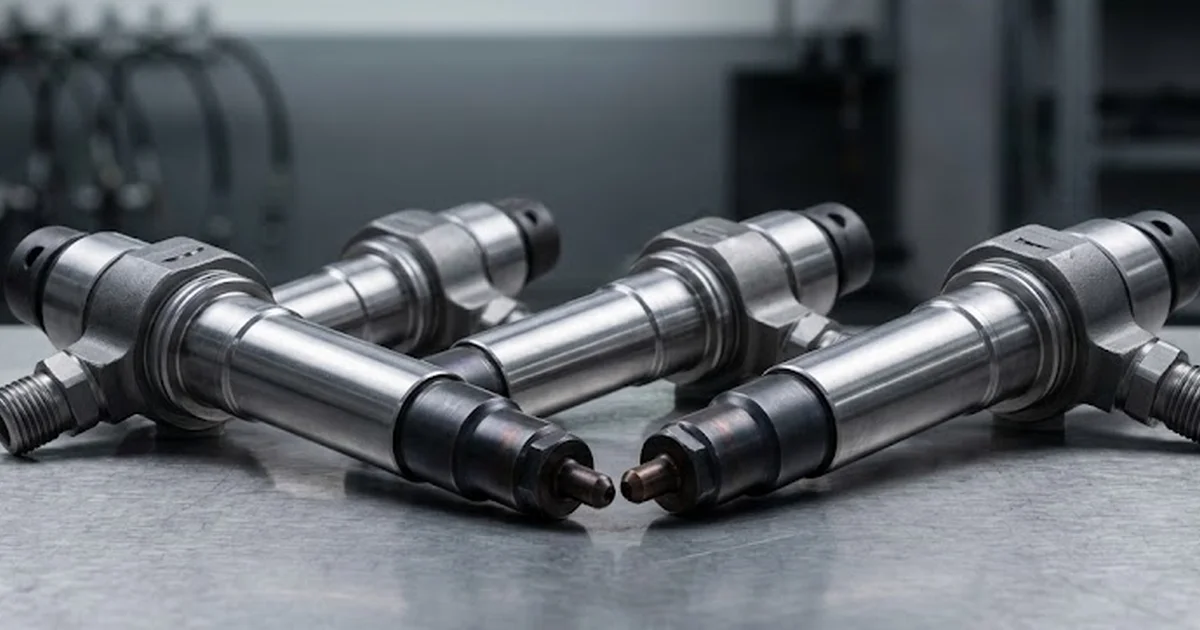
Reconditioned injectors: choosing between new, exchange and used
Compare new, reconditioned, and used fuel injectors. Discover technical differences, core deposit savings, and calibration standards for reliable engine repair.
Understanding fuel injection: how wear affects modern injector operation
Modern internal combustion engines rely on extreme precision to deliver atomized fuel into the combustion chamber. Whether managing common rail direct injection or advanced unit injector setups, electronic fuel injectors operate under immense thermal, mechanical, and hydraulic stress. Operating pressures frequently exceed 1500 to 2000 bar, with fuel metered in microsecond intervals across multiple injection phases per combustion cycle. Over tens of thousands of miles, continuous exposure to high pressures, combustion residues, and fuel contaminants inevitably causes mechanical wear. When an injector fails to deliver the exact spray pattern, volume, or timing mandated by the engine control unit (ECU), engine efficiency drops rapidly, leading vehicle owners and technicians to search for reliable replacement options such as reconditioned injectors.
Mechanical degradation in precision injection equipment rarely happens overnight; it progresses through distinct wear mechanisms that affect both internal hydraulics and electrical actuators:
- Nozzle needle seat erosion: Repeated high-pressure impacts between the injector needle and its seating surface cause microscopic pitting, preventing a hermetic seal and resulting in post-injection fuel dripping.
- Microscopic spray hole carbonization: Combustion by-products clog the microscopic spray orifices, distorting the conical fuel spray pattern and leading to incomplete fuel combustion.
- Internal return flow leakage: Wear along the command piston and control valve allows pressurized fuel to bypass the nozzle and return directly to the fuel tank, causing rail pressure drops during high engine load.
- Electromechanical actuator fatigue: Solenoid magnetic coils or piezoelectric crystal stacks suffer thermal degradation, altering activation response times and disturbing injection timing.
When these degradation mechanisms occur, the vehicle exhibits unmistakable operational symptoms. Drivers typically observe sluggish acceleration, dark or gray exhaust smoke, erratic engine idling, knocking sounds under load, or an illuminated check engine warning light triggering limp-home mode. Prolonged operation with a malfunctioning injector risks severe collateral damage, including localized piston crown melting from continuous dripping, cylinder wall oil dilution, and premature diesel particulate filter (DPF) saturation. When replacement becomes necessary, choosing between brand-new components, professionally remanufactured exchange units, and uninspected used parts requires understanding the mechanical and economic reality of each category.
New, standard exchange, and used injectors: technical and structural differences
Navigating the automotive aftermarket presents three primary sourcing avenues when replacing compromised injectors. While brand-new units represent pristine factory manufacturing, standard exchange units—commonly referred to as reconditioned or remanufactured parts—restore an existing core to strict operating tolerances through industrial processes. At the opposite end of the spectrum, used injectors sourced directly from scrap yards or dismantled vehicles represent uninspected salvage components. Understanding how these alternatives differ in assembly quality, component renewal, testing verification, and risk profile is critical for making an informed technical decision.
| Evaluation Criteria | Brand-New Injector | Standard Exchange (Reconditioned) | Used / Salvage Injector |
|---|---|---|---|
| Component Condition | 100% newly manufactured components, unused casing and body | Inspected original casing with critical internal wear parts fully replaced | Original parts intact with unknown previous mileage and indeterminate wear |
| Wear Parts Replacement | Factory original new components throughout | New calibrated nozzles, valves, command pistons, and high-pressure seals | Zero parts replaced; original worn seals and internal valves remain intact |
| Calibration & Testing | Factory calibrated on automated production test benches | Calibrated and certified on specialized computerized test benches | No testing verification; unmeasured flow rates and unknown spray patterns |
| ECU Coding Generation | Supplied with original factory calibration code (IMA/EMA) | Supplied with newly generated calibration offset code for ECU matching | Previous calibration code obsolete; does not match current physical wear |
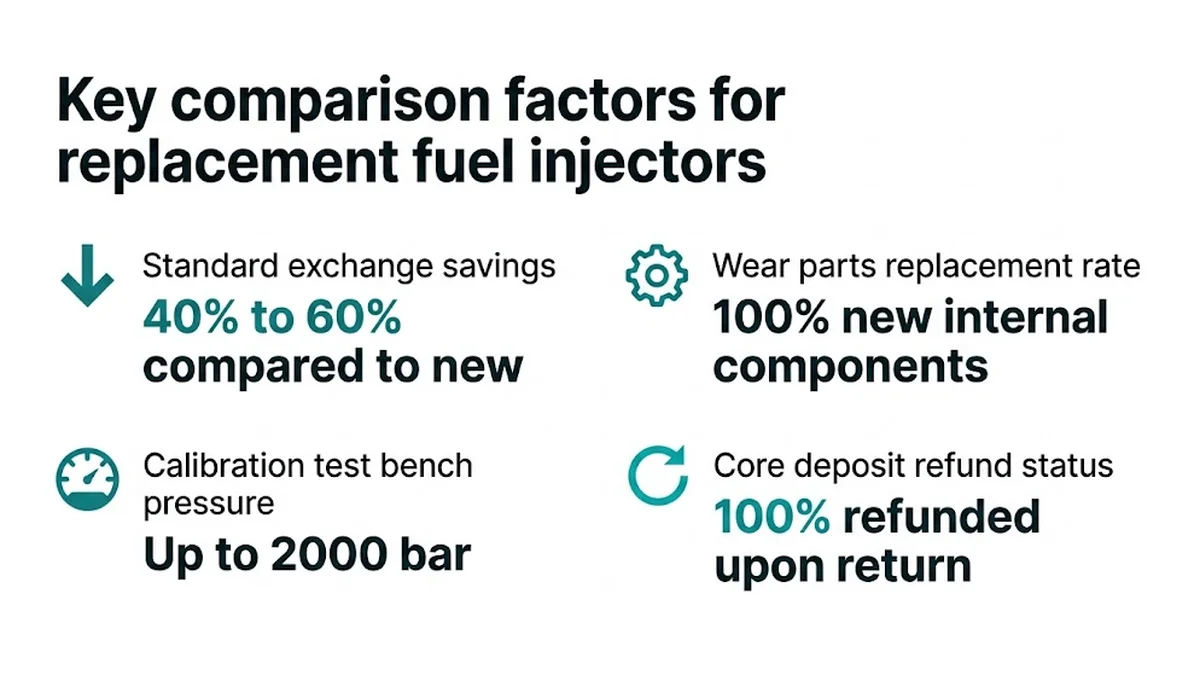
| Acquisition Cost Level | Baseline manufacturer retail cost representing maximum initial expense | Standard exchange savings deliver 40% to 60% compared to new parts | Lowest initial purchase price with significant exposure to hidden failure costs |
| Technical Risk Profile | Negligible operating risk with full manufacturer performance | Very low operating risk matching original functional tolerances | High operating risk; potential for immediate leakage, imbalance, or engine fault |
Standard exchange savings deliver 40% to 60% compared to new parts, offering substantial financial relief while restoring original mechanical tolerances. By contrast, acquiring used injectors directly from a vehicle breaker introduces substantial mechanical hazards. Salvage injectors typically sit exposed to atmospheric moisture for weeks or months, allowing internal condensation to oxidize sensitive needle valves and internal control surfaces. Because internal tolerances inside modern common rail systems are measured in micrometers, even microscopic surface rust or dried fuel varnish can seize an injector the moment fuel pressure builds. While uninspected salvage parts appear economical at the checkout counter, their lack of calibration and unpredictable operational state frequently lead to repeated labor expenses, diagnostic frustrations, and safety risks.
The industrial remanufacturing process for reconditioned injectors
A widespread misconception assumes that reconditioning an injector merely involves soaking the unit in an ultrasonic cleaning tank or replacing an external rubber O-ring. In reality, authentic automotive remanufacturing is an exacting industrial discipline that rebuilds the mechanical and hydraulic core of the unit to mirror original functional capabilities. True standard exchange remanufacturing follows a rigorous multi-stage protocol executed in cleanroom conditions by specialized technicians utilizing dedicated precision tooling.
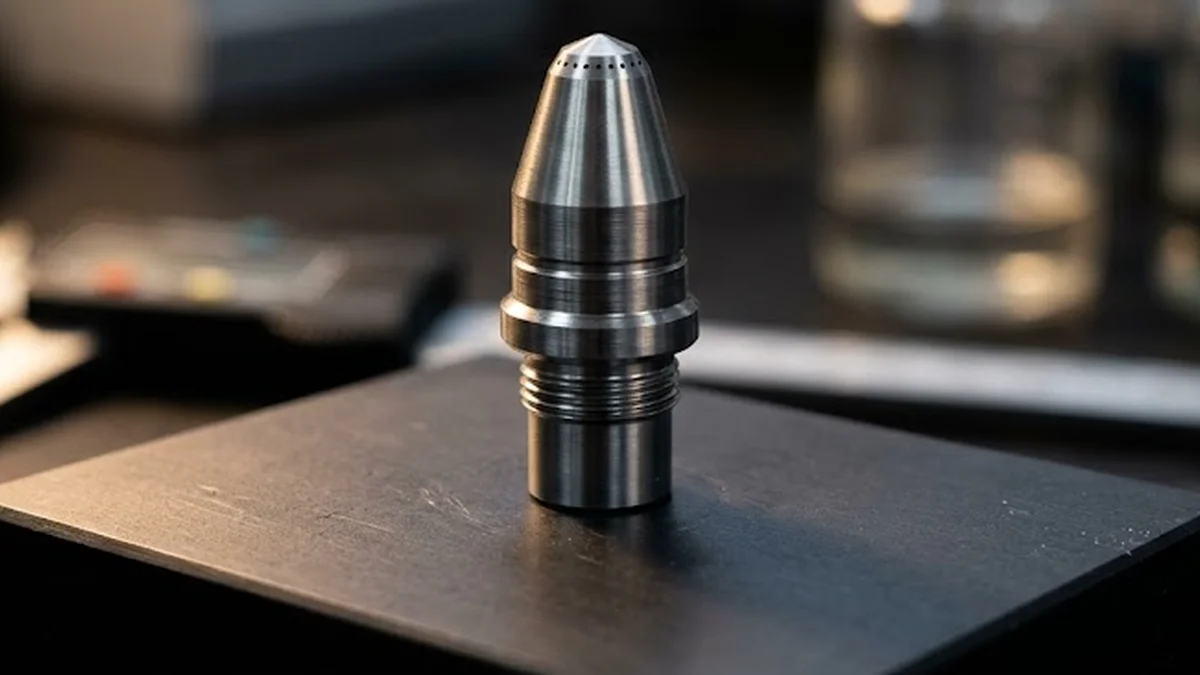
- Complete disassembly and decontamination: The core injector is stripped down to its bare metal casing. All components undergo multi-stage thermal and ultrasonic cleaning in specialized degreasing solvents to eliminate carbon deposits, fuel lacquer, and mineral residues.
- Dimensional inspection and non-destructive testing: The structural casing, electrical connectors, and threaded ports undergo rigorous dimensional measurement and magnetic particle inspection to detect micro-cracks, thread fatigue, or internal cavitation erosion. Any casing showing structural compromise is scrapped immediately.
- Total renewal of critical wear parts: During industrial remanufacturing, the wear parts replacement rate ensures 100% new internal components, including control valves, nozzles, and high-pressure seals. The old needle, spring assemblies, calibration shims, and internal return valves are discarded and replaced with brand-new precision-engineered components.
- High-precision mechanical reassembly: The unit is assembled in a contamination-free cleanroom environment. Specialized micrometric shims are calculated and positioned with micrometer accuracy to establish precise needle lift, valve spring tension, and magnetic air gap tolerances.
- Computerized dynamic testing: Specialized computerized test benches subject each rebuilt unit to calibration test bench pressure reaching up to 2000 bar across diverse engine load cycles. The injector is tested through pre-injection, idle delivery, main injection, full load, and dynamic back-leakage parameters.
- Generation of individual calibration coding: Modern direct injection systems require individual compensation codes (such as Bosch IMA, Delphi C2i/C3i, or Denso QR codes). The test bench measures the exact volumetric delivery at multiple pressure stages and generates a unique alpha-numeric code reflecting the rebuilt injector's specific physical behavior.
The distinction between genuine remanufacturing and deceptive cosmetic cleaning is recognized internationally as a matter of trade integrity and consumer protection. Under the FTC regulatory guides for rebuilt and reconditioned parts (16 CFR Part 20), regulatory principles establish that "It is unfair or deceptive to represent, directly or by implication, that any industry product is new or unused when such is not the fact, or to misrepresent the current condition, or extent of previous use, reconstruction, or repair of any industry product." This legal framework highlights why reputable remanufacturers implement strict internal inspection criteria, ensuring that an exchange unit delivers documented mechanical performance rather than speculative secondhand reliability.
Managing the standard exchange process: the core deposit system
The standard exchange economic model functions on circular economy principles, relying on the continuous recovery of high-value metallic casings. When purchasing a remanufactured injector, the transaction is structured around a core exchange system. The purchaser pays for the rebuilt part alongside a temporary surcharge known as a core deposit (or Pfand). This deposit is held until the customer removes their old, worn component from the engine and returns it to the remanufacturer for processing.
Key takeaway: The standard exchange model relies on returning an intact old core, ensuring circular economy benefits while securing significant cost savings through industrial remanufacturing rather than unverified salvage sourcing.
Understanding how the core deposit functions allows both automotive workshops and individual car owners to organize their repair projects smoothly. Under the standard exchange protocol, the core deposit refund status guarantees the deposit is 100% refunded upon return of an intact, rebuildable old casing. However, remanufacturers enforce clear criteria regarding what constitutes an acceptable core:
- Physical integrity: The main injector body must not be cracked, snapped, bent, or damaged by violent mechanical extraction tools such as slide hammers applied to fragile sections.
- Component completeness: The returned core must be fully assembled with its nozzle holder, top body, and electrical connector intact; stripped or partially scavenged casings cannot be processed.
- Absence of external fire or severe chemical corrosion: Units that have been submerged in floodwater, heavily oxidized by acid exposure, or melted in an engine bay fire are structurally unfit for re-machining.
- Reference correspondence: The returned core must match the physical type and generation of the injector purchased, ensuring the remanufacturer replenishes the exact inventory family.
By returning an eligible core promptly following installation, motorists keep the circular manufacturing cycle active, reduce raw material consumption, and achieve premium mechanical performance without paying for newly cast steel bodies.
Vehicle compatibility: matching engine codes and injector references
A frequent pitfall during fuel system maintenance is relying solely on broad vehicle descriptions such as make, model, or year of manufacture. Automobile manufacturers regularly update fuel injection hardware across a single vehicle generation to comply with evolving emission regulations (such as Euro 4, Euro 5, and Euro 6 standards) or to adjust power outputs. For example, a 2.0-liter diesel engine produced across a four-year window may feature three distinct injection systems utilizing entirely incompatible operating voltages, flow characteristics, and nozzle geometries. To avoid costly ordering mistakes, replacement injectors must be identified through exact technical identifiers.
To establish unambiguous compatibility before ordering, mechanics and motorists should cross-reference specific physical markings:
- Manufacturer part number: Stamped directly onto the metal casing or laser-etched onto the electrical connector head, this code represents the primary identifier assigned by the injection system developer (for instance, Bosch ten-digit codes, Delphi numbers, or Siemens-VDO designations).
- Original equipment manufacturer (OEM) part number: The vehicle brand's internal part catalog number (such as numbers assigned by VAG, PSA, BMW, or Mercedes-Benz), often stamped alongside the component maker's reference.
- Engine code verification: The alphanumeric code stamped on the engine block or vehicle registration documentation (such as 1.9 TDI BKD, 1.5 dCi K9K, or 2.0 HDi DW10), which dictates the exact combustion chamber profile and injection timing map.
When selecting between available market options, reviewing detailed guides like our overview of standard exchange injector options clarifies how specific motorizations interact with rebuilt hardware. For example, when servicing a pump-injector setup on older generation Volkswagen-Audi Group vehicles requiring a specialized unit injector, identifying the exact reference such as the Injector Bosch 0414720028 ensures that volumetric delivery rates and mechanical pre-tension characteristics align seamlessly with factory camshaft actuation profiles.
Installation prerequisites: why professional mounting is essential
Even the most meticulously calibrated injector will fail prematurely or operate erratically if installation practices fall short of stringent industry standards. Modern fuel injection systems operate within microscopic mechanical clearances where a single particle of dust or metal swarf can score a valve seat or obstruct an orifice. Consequently, injector installation must be carried out by a professional third-party workshop equipped with the specialized tooling, diagnostic software, and cleanroom handling practices required for common rail technology.
- Rigorous fuel system cleanliness inspection: Prior to unboxing new or remanufactured units, the technician must inspect the fuel filter housing and fuel rail for metallic contamination. If an upstream failure has occurred in the high-pressure pump, microscopic metal shavings will circulate through the rail; installing replacement injectors into a contaminated fuel circuit without complete flushing and pump replacement will destroy the new injectors within minutes of ignition.
- Cleaning and re-facing the injector well: The cylinder head injector well must be thoroughly cleaned of all carbon crust, oil varnish, and corrosion. A specialized well-cutting tool is often employed by technicians to ensure the bottom seating surface is perfectly flat and perpendicular to the combustion chamber axis.
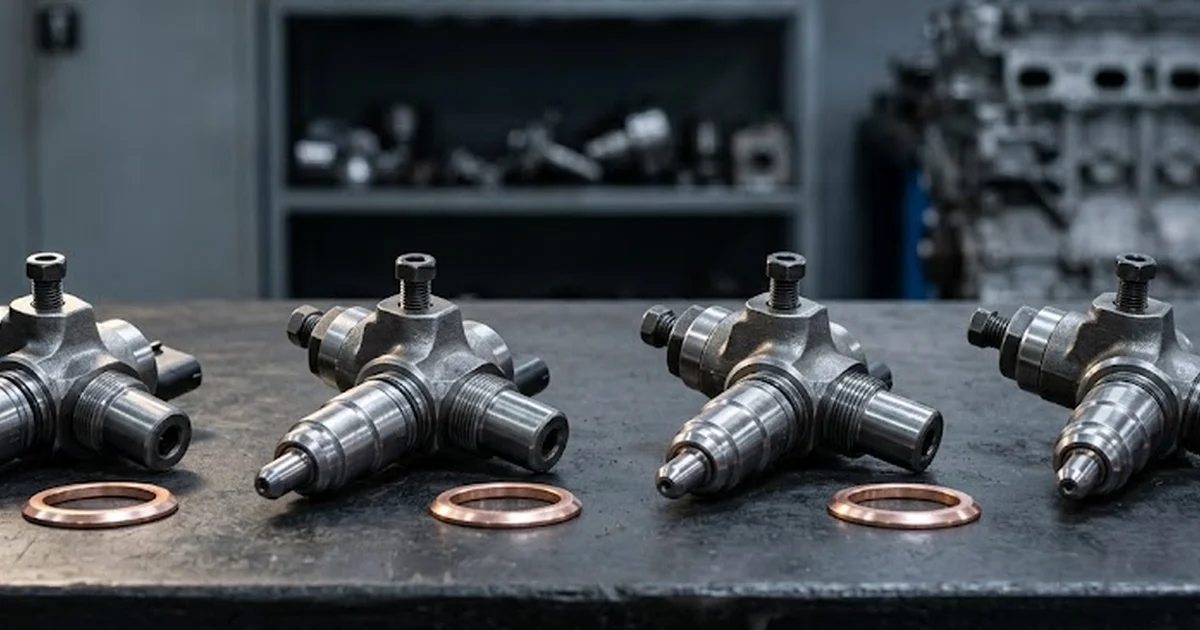
- Mandatory copper seal washer replacement: Injector heat shield copper crush washers must never be reused. A brand-new copper washer of the exact manufacturer-specified thickness must be installed with every fitting to maintain correct nozzle projection into the cylinder and prevent combustion gas blow-by.
- Calibrated torque tightening: Injector hold-down clamps and high-pressure fuel pipe unions must be torqued strictly according to factory workshop manuals using a calibrated torque wrench. Over-tightening distorts the internal cylindrical injector body, pinching the needle valve, while under-tightening leads to compression leakage and injector seizure.
- Electronic ECU coding and adaptation: Following mechanical mounting, the technician connects a professional diagnostic scanner to input the new individual calibration codes (IMA codes) into the engine management computer. This step informs the ECU of the minute hydraulic characteristics of each individual cylinder, allowing smooth idle stabilization, balanced emissions, and optimal fuel economy.
- Fuel circuit priming and air bleeding: Common rail systems must be thoroughly primed using diagnostic activation or a manual priming bulb before cranking. Cranking an engine with air trapped in the high-pressure system starves the internal injector needles of fuel lubrication, risking instant metal-on-metal galling. Detailed mounting protocols are reviewed further in our technical guide on injector mounting requirements.
Making the right choice: balance between reliability and budget
Deciding between brand-new, standard exchange, and used fuel injectors ultimately comes down to balancing mechanical risk against total project investment. While brand-new injectors provide pristine factory perfection, their steep retail cost can render major mechanical repairs economically unfeasible on vehicles past their initial warranty period. Conversely, unverified used salvage injectors represent an uncontrolled gamble: the lack of testing history, unknown internal wear, absent calibration codes, and high probability of early failure make them a poor choice for anyone needing dependable transportation.
To determine the most appropriate approach for your specific vehicle and financial constraints, consider this practical decision framework:
- Select brand-new injectors if the vehicle is relatively new, operating under active commercial fleet duty, or if the specific engine management setup does not yet have established aftermarket remanufacturing channels.
- Select standard exchange (reconditioned) injectors as the balanced, industry-proven benchmark for the vast majority of vehicle repairs. You benefit from 100% renewed wear components, comprehensive computerized test bench validation, fresh ECU calibration codes, and significant cost savings over retail parts, all while supporting sustainable circular manufacturing.
- Avoid unverified used salvage injectors unless you are performing temporary diagnostic testing on an non-operational test engine where long-term reliability, balanced cylinder emissions, and fuel economy are not required.
Investing in verified mechanical quality ensures that your engine regains smooth power delivery, clean exhaust emissions, and reliable cold-starting capabilities. When selecting replacement components, browsing the specialized fuel injector catalog ensures you find parts matched to your exact vehicle engine specifications, providing the precision your common rail or unit injector system demands.
A question?
Get in touch directly.

Discussion
Our advice related to Injector
 Injector
Car Injector Replacement: Fitting & Refitting Guide
Discover what car injector replacement really involves: mechanical seating, copper washer renewal, clamp torquing, ECU coding, and high-pressure fuel priming.
 Injector
How to Remove a Stuck Injector: Safe Extraction Guide
Learn how to remove a stuck injector safely without damaging the cylinder head. Discover proven chemical, mechanical, and hydraulic extraction techniques.
 Injector
Does Petrol Injector Cleaner Work? Truth & Limits
Does petrol injector cleaner work? Discover what fuel additives can clean, where they fail on direct injection engines, and when replacement is necessary.