
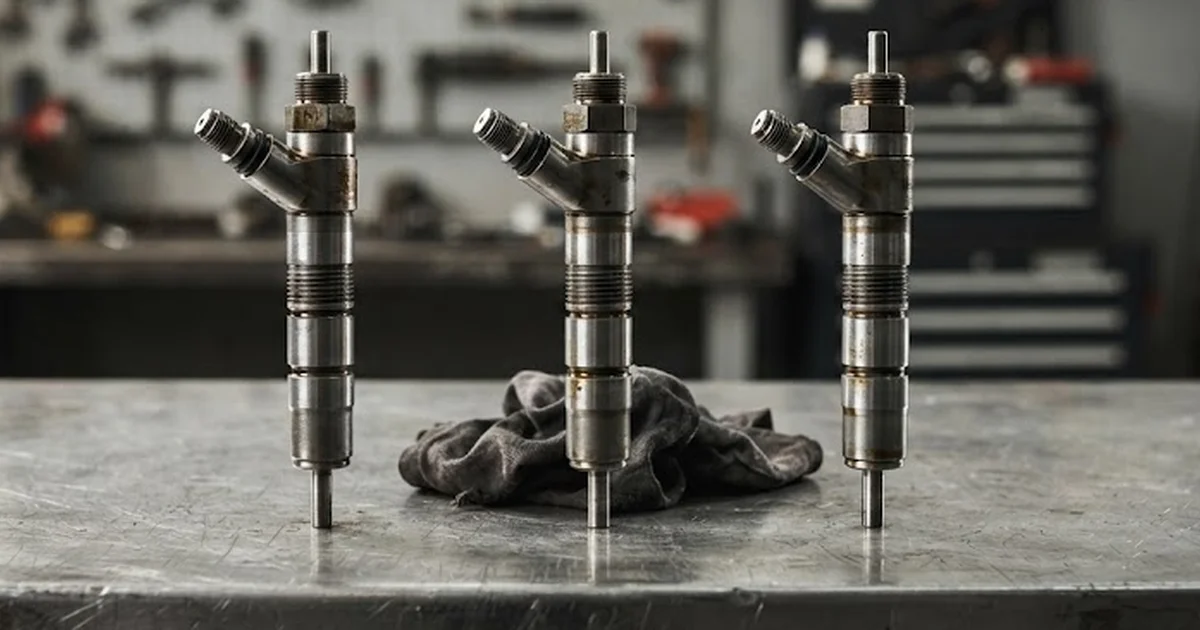
Standard exchange injector: the choice between new part, standard exchange, and used part
New injector, standard exchange, or used part: a complete comparison to choose the most reliable and cost-effective solution based on your vehicle and budget.
Replacing a faulty injector always raises the same question: should you opt for a brand-new original part, a reconditioned standard exchange injector, or a used part from a scrapped vehicle? This choice affects both your budget, reliability, and the lifespan of your repair. This article details the advantages and limitations of each solution to help you decide with full knowledge of the facts.
Understanding how an injector works before choosing a replacement solution
Before comparing the options available on the market, it is useful to recall the precise role of an injector and why its replacement requires special attention. The injector sprays fuel under high pressure directly into the combustion chamber, with a precision that directly influences the engine's performance, fuel consumption, and pollutant emissions.
- A faulty injector can cause misfires, increased fuel consumption, and a noticeable loss of power.
- On modern diesel engines, a malfunctioning injector can damage the particulate filter due to excess unburned fuel.
- The electronic calibration of each injector is specific: improper replacement can generate persistent fault codes.
- Replacing a single injector on a multi-cylinder engine often requires reprogramming or individual coding.
This technical complexity explains why the choice of replacement part is never trivial and should be made methodically.
New injector: the manufacturer’s warranty at a high price
The new part, often from the original manufacturer or equivalent in OEM quality, theoretically represents the safest solution. It comes from a calibrated production line and has never been used. However, this level of reliability comes at a cost that may be disproportionate to the vehicle's value.
- Main advantage: maximum reliability and manufacturer’s warranty generally aligned with the part’s theoretical lifespan.
- Major drawback: the price can amount to several hundred euros per injector, a cost that quickly adds up on a four- or six-cylinder engine.
- Target audience: recent vehicles still under warranty, classic cars, or motorists seeking complete peace of mind without budget constraints.
For an old or high-mileage vehicle, investing in a new part is not always economically justified, which is why the standard exchange alternative is worth considering.
Standard exchange injector: the preferred compromise among professionals
Standard exchange involves replacing your faulty injector with a part reconditioned through a rigorous industrial process: complete disassembly, ultrasonic cleaning, replacement of worn components, recalibration, and testing on a bench under real pressure. This is the most sought-after solution by motorists and garages, as it combines reliability and budget control.
| Criteria | New injector | Standard exchange injector | Used injector |
|---|---|---|---|
| Average price | High | Moderate | Low |
| Reliability | Very high | High | Variable |
| Warranty | Long | Generally several months to a year | Often limited or nonexistent |
| Traceability | Full | Controlled by the reconditioner | Random |
| Availability | Varies by stock | Generally quick | Depends on the supplier |
This table highlights why standard exchange is often the most balanced option: it offers a quality control level close to new, at a significantly more affordable price.
At autoKUR, we see every week that the standard exchange injector is the most popular solution among our customers, and for good reason: the balance between reliability and price is hard to match. Our advice is simple: always opt for a reconditioned part tested on a bench with a control certificate, and avoid parts reconditioned without clear traceability of the replaced components. This is often where the difference lies between a lasting repair and a return to the garage three months later.
Used injector: a risky bet to be reserved for specific cases
The used injector, typically sourced from a scrapped or accident-damaged vehicle, appeals due to its very low price. It can serve as a temporary fix, but its use carries risks that should be assessed before committing.
- No reliable guarantee on the actual condition of internal components (nozzle, needle, control coil).
- The mileage and maintenance history of the original vehicle are rarely verifiable with certainty.
- The absence of a pressure bench test exposes you to blind installation, with the risk of rapid failure.
- Electronic compatibility may be an issue if the software version differs from what the ECU expects.
This solution may be considered for a low-residual-value vehicle, intended for temporary use, or as an emergency repair while waiting for a reconditioned part. However, it should never be seen as a permanent solution for a daily-driven vehicle.
How to choose the right solution for your vehicle and budget
The final choice depends on several parameters specific to your situation: vehicle age, mileage, intended use, available budget, and reliability requirements. Here’s a simple method to guide your decision.
- Assess the residual value of the vehicle: if it is low, investing in a new part is generally not cost-effective.
- Check the condition of the other injectors: if they have similar mileage, group replacement with standard exchange may be more economical than repeated individual replacements.
- Find out about the warranty offered by the standard exchange part supplier, including duration and conditions for implementation.
- Anticipate labor costs, often identical regardless of the option chosen, which makes the choice of part even more decisive for the final bill.
- Prioritize traceability: a reconditioned injector with a bench test certificate remains the most solid guarantee outside of new.
This methodical approach helps avoid impulsive decisions driven solely by the listed price, which is often misleading in the medium term.
Signs that indicate an injector replacement is necessary
Before even choosing between new, standard exchange, or used, it is essential to confirm that replacement is truly justified. An accurate diagnosis avoids unnecessary expenses or, conversely, an intervention that comes too late.
- Engine warning light on, accompanied by fault codes related to the common rail or injection flow.
- Unstable idle or engine stalling frequently when cold.
- Abnormal black or white smoke from the exhaust, indicating incomplete combustion.
- Unusual knocking noise from the engine block, more pronounced on certain cylinders.
- Increased fuel consumption noted without any other apparent cause.
- Noticeable loss of power during acceleration or uphill driving.
An electronic diagnosis combined with a leak and flow test remains the most reliable method to confirm that one or more injectors actually need to be replaced before incurring the corresponding costs.
Maintenance and best practices after replacing an injector
Whether you opted for a new part, a standard exchange, or a used part, the lifespan of the replaced injector also depends on the maintenance habits following the intervention.
- Use high-quality fuel and avoid stations with uncertain supply reliability.
- Always replace the fuel filter when changing an injector to avoid cross-contamination.
- Have the injection rail pressure checked after a few hundred kilometers to validate the stability of the installation.
- Avoid repeatedly driving with a very low fuel level, as this can promote the suction of deposits from the bottom of the tank.
These simple steps significantly extend the lifespan of the installed part, regardless of the solution initially chosen.
Summary: which solution to prioritize based on your profile
The choice between a new injector, standard exchange, and used part does not have a single answer but involves a trade-off between budget, expected reliability, and vehicle use. A new part remains relevant for recent vehicles or those under manufacturer warranty. A used part may serve as a temporary fix for a low-residual-value vehicle but carries hard-to-measure reliability risks. Standard exchange, on the other hand, stands out in most cases as the best compromise between controlled cost and performance guarantee, thanks to a controlled and tested reconditioning process.
To find all available injector references, both new and reconditioned, and compare models compatible with your vehicle, check the Injector category in our catalog.
Also read
A question?
Get in touch directly.

Discussion
Our advice related to Injector
 Injector
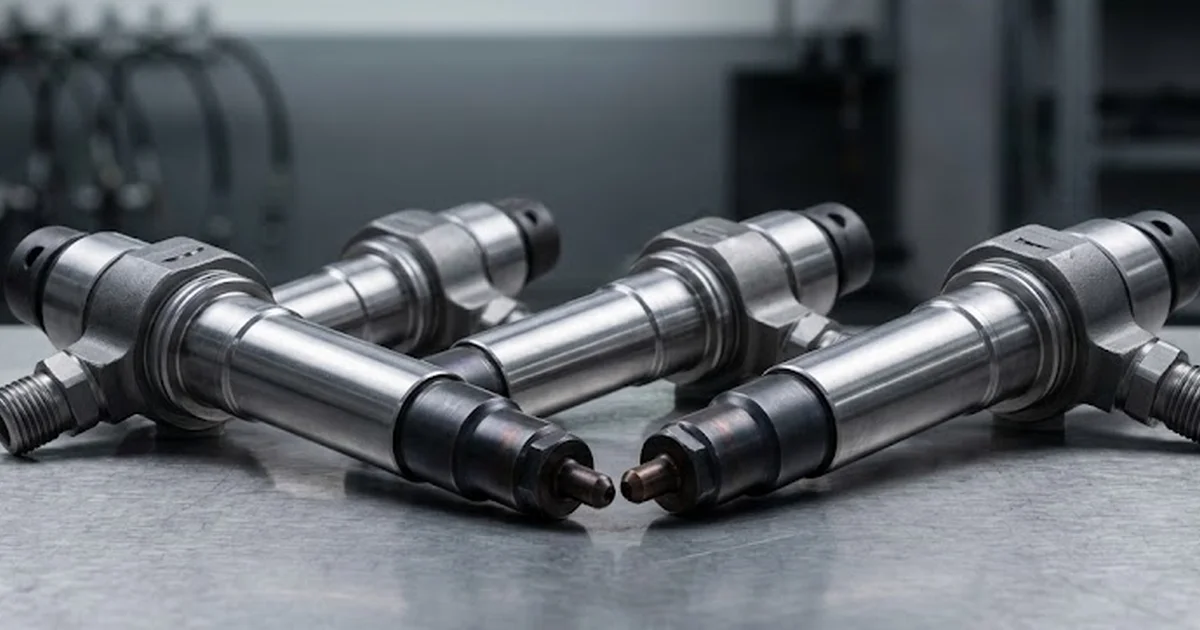
Reconditioned Injectors: New vs Exchange vs Used
Compare new, reconditioned, and used fuel injectors. Discover technical differences, core deposit savings, and calibration standards for reliable engine repair.
 Injector
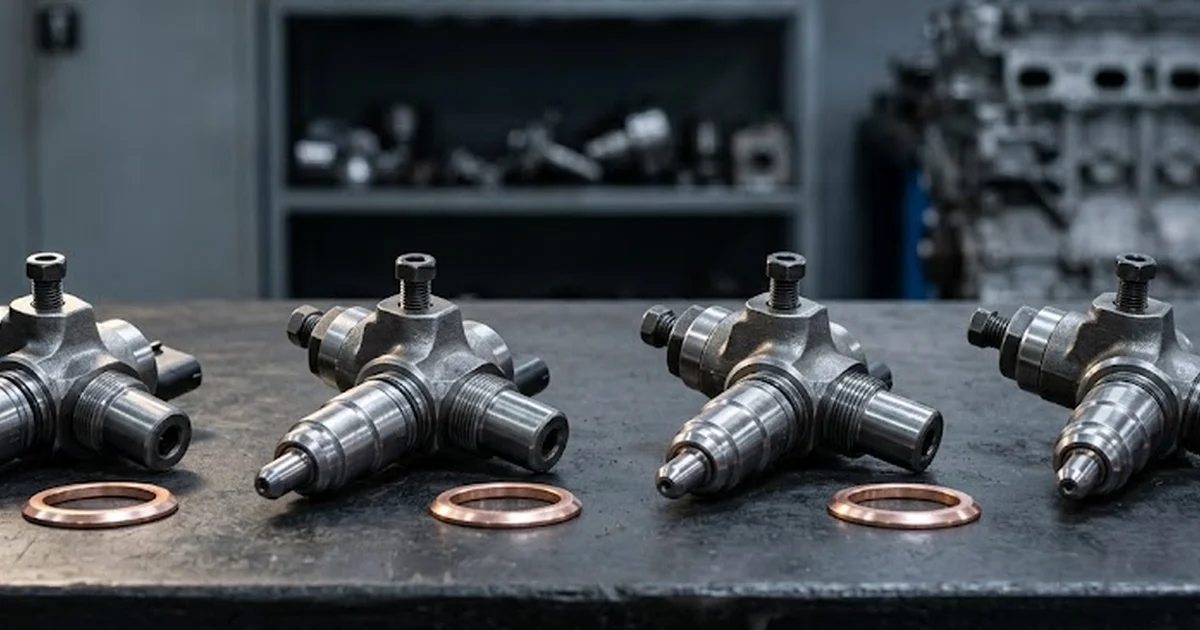
Car Injector Replacement: Fitting & Refitting Guide
Discover what car injector replacement really involves: mechanical seating, copper washer renewal, clamp torquing, ECU coding, and high-pressure fuel priming.
 Injector
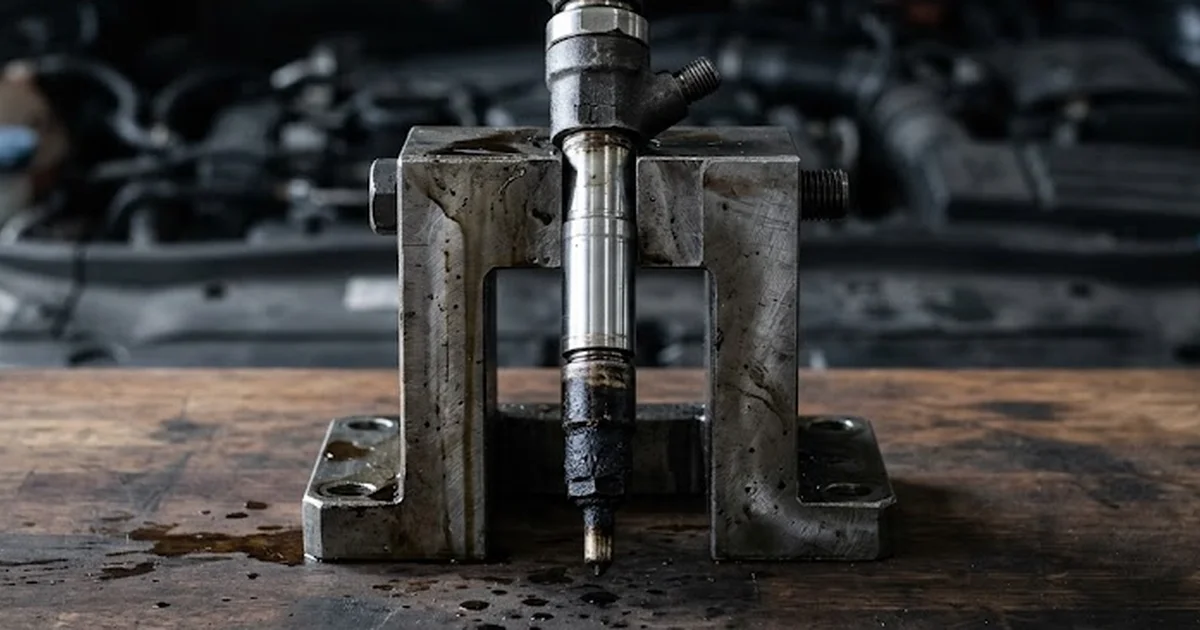
How to Remove a Stuck Injector: Safe Extraction Guide
Learn how to remove a stuck injector safely without damaging the cylinder head. Discover proven chemical, mechanical, and hydraulic extraction techniques.