

Available products
3 references


Frequently asked questions
About this category
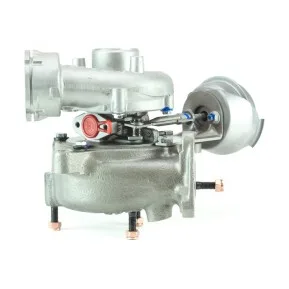
This category groups the turbocharger references stocked for exchange on the 2.0 TDI 140 hp engine code, covering the version of this diesel engine most commonly found across compact and mid-size platforms built on it. It brings together independent garages sourcing a part for a customer's car, drivers researching a replacement before a breakdown becomes a bigger repair, and enthusiasts who prefer to handle the swap themselves. Each listing ties back to the engine code and power rating rather than a single vehicle model, since the same turbocharger can serve several badges built on the same engine platform.
The range is built around remanufactured, exchange-ready units rather than new-only stock, reflecting how this engine's turbocharger is most often replaced in practice: the failed part goes back through a core deposit, and a reconditioned unit takes its place. As a wholesale source, the listings are organised so a repair shop can identify the right reference for this engine code quickly, without wading through unrelated engine families or unrelated vehicle ranges.
Professional uses by trade
The turbocharger reference in this category is ordered by several distinct profiles, each with a different starting point and a different reason for needing it. The list below sets out how a garage, a stranded driver, a DIY enthusiast, and a buyer in the DACH region typically approach this same part.
- The independent repair shop: checks the engine code and OEM reference against the customer's vehicle before ordering, avoiding a core deposit spent on the wrong part.
- The stranded motorist: searches for this exact turbo exchange reference after a garage diagnosis, comparing the part against the engine code stamped on the vehicle documents.
- The DIY enthusiast: cross-checks the OEM reference and equivalences listed here against the part number removed from the vehicle before placing an order.
- The DACH-region buyer: reviews the same engine-code reference in a market where installation is carried out exclusively by a workshop, never as a self-fit exchange.
- The independent repair shop: keeps a small stock of the most requested references for this engine code to shorten turnaround on recurring turbocharger failures.
- The DIY enthusiast: replaces the cartridge or the full CHRA depending on the failure pattern observed, using the reference that matches the original geometry.
Range comparison
The table below lines up the three turbocharger references available for the 2.0 TDI 140 hp engine code in this category, showing how each one is typically requested by a garage or driver and the wholesale format it ships in for exchange orders.
| Range | Use | Format |
|---|---|---|
| SL Turbo 765261-5008S | standard exchange replacement | |
| SL Turbo 758219-5004S | core-deposit exchange order | |
| SL Turbo 724930-5010S | OEM reference match order |
How to choose
Selecting the right reference for this engine code comes down to a short list of checks a professional runs before confirming an order, since the vehicle model alone is not enough to confirm a correct match for the turbocharger.
- Engine code confirmation: match the reference against the code stamped on the engine block rather than the vehicle's commercial name, which can cover several engine variants.
- OEM reference and equivalences: cross-check the part number removed from the vehicle against the equivalences listed for this reference before placing an order.
- Core deposit terms: confirm how the exchange and return of the worn unit is handled before ordering, since this affects the total cost of the job.
- Failure symptoms: note whether the vehicle shows loss of power, smoke, a whistling noise, or a limp mode, since these point toward different underlying faults.
- Cartridge or full CHRA: decide, based on the failure observed, whether a cartridge alone or the complete CHRA assembly is the appropriate reference to order.
- Variable geometry mechanism: check that the reference matches the variable-geometry design fitted to this engine code, since not every turbocharger on this platform shares it.
- Warranty terms: confirm the coverage conditions attached to this reference at the point of order, since terms differ between a standard exchange unit and an OEM-equivalent part.
Storage & logistics
Exchange turbochargers for this engine code are typically stored boxed and upright, protected from moisture, until they are matched to a confirmed order rather than held loose on a shelf. Because the reference depends on exact engine code and OEM matching, a repair shop benefits from keeping the part identified by its full reference number from intake through to installation, avoiding mix-ups between visually similar units. The return leg of the core deposit follows the same logic: the worn unit is packaged and identified the same way it arrived, which keeps the exchange process traceable from the original order through to the return of the removed part.
Since 2026, our approach for the 2.0 TDI 140 hp platform has stayed the same: we match the reference to the engine code and OEM data first, letting the vehicle model follow from there.— autoKUR team
Related categories
Browse our other ranges:
Useful references
For regulatory and sector references, see Reglement (UE) 461/2010 — pieces de rechange et garantie constructeur.