

Frequently asked questions
About this category
The 2.0 TDI 170 hp turbo exchange standard category addresses a persistent challenge for drivers and mechanics: locating a remanufactured turbo that restores engine efficiency without the expense of a brand-new unit. This range is designed for owners of vehicles powered by the 2.0 TDI engine producing 170 horsepower, a motorization widely used in passenger cars and light commercial vehicles across Europe. Here, you will find turbocompressors engineered to match the original equipment manufacturer’s performance benchmarks, ensuring compatibility with the vehicle’s motorization, power output, and operational years.
This category is curated to serve the needs of independent garages, motorists performing their own repairs, and German-speaking buyers in the DACH region who require turbos that meet strict remanufacturing standards. The range is built around core components like the CHRA (Center Housing Rotating Assembly) and variable geometry systems, which are essential for maintaining optimal engine performance. As a specialist in exchange standard turbos, the selection prioritizes units that have undergone rigorous testing to ensure they meet the demands of daily use.
Professional uses by trade
Different user profiles approach the 2.0 TDI 170 hp turbo exchange standard category with distinct priorities, whether for professional repair workflows, emergency replacements, or DIY projects. Each group seeks a solution that balances reliability, compatibility, and ease of installation.
- Le garagiste independant : Uses this range to source turbos that fit seamlessly into repair workflows, reducing downtime for customers whose vehicles exhibit symptoms like power loss or excessive smoke.
- Le garagiste independant : Relies on the exchange standard turbos to offer cost-effective alternatives to OEM parts, ensuring repairs remain competitive while maintaining quality standards.
- L'automobiliste depanne : Seeks a direct replacement turbo to restore their vehicle’s performance after noticing warning signs such as unusual noises or reduced acceleration.
- L'automobiliste depanne : Prefers exchange standard options to avoid the high costs of new turbos, especially when the vehicle’s motorization is no longer under warranty.
- Le passionne qui fait lui-meme : Values turbos that come with clear compatibility data, allowing them to perform the replacement themselves without professional assistance.
- Le passionne qui fait lui-meme : Looks for units that include detailed OEM reference cross-references to simplify the identification process for their specific motorization.
- Der deutsche Kaeufer (DACH) : Prioritizes turbos that meet the technical and regulatory standards of the German market, ensuring compliance with local automotive repair practices.
- Der deutsche Kaeufer (DACH) : Chooses exchange standard turbos to align with the expectations of German-speaking workshops, where remanufactured parts are a common and accepted solution.
Range comparison
The following turbos are selected for their compatibility with the 2.0 TDI 170 hp motorization, covering a range of OEM references and exchange standard formats. Each unit is presented with its specific use case to guide professionals and private buyers toward the right choice.
| Range | Use | Format |
|---|---|---|
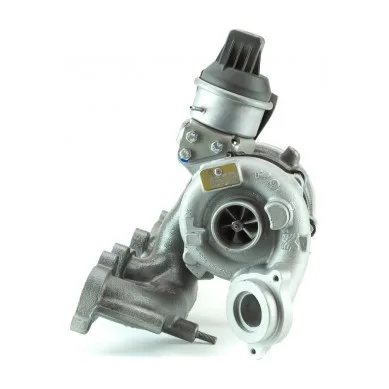
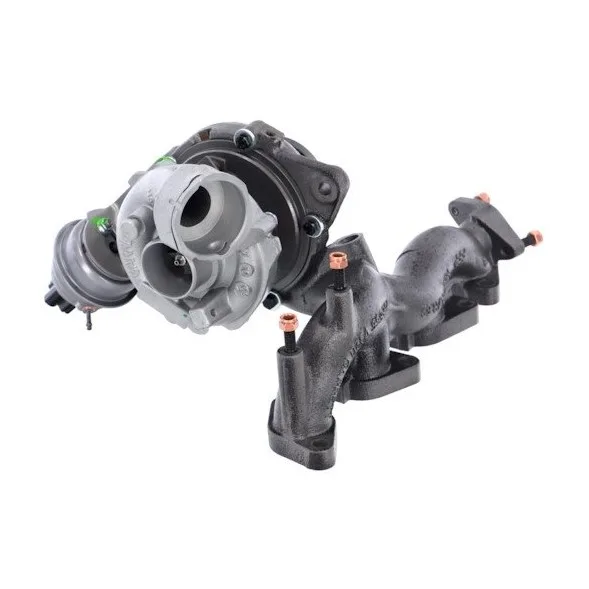
| SL Turbo 757042-5018S | Direct fit for 2.0 TDI 170 hp applications | |
| SL Turbo 5303 988 0207 | Replacement for high-mileage vehicles with variable geometry |
How to choose
Selecting the right turbo for a 2.0 TDI 170 hp motorization requires attention to several key factors, including compatibility, condition, and the specific needs of the repair scenario. Professionals and private buyers alike must evaluate these criteria to ensure a successful replacement.
- Conditioning of the turbo matters: opt for units described as generalüberholt or remanufactured to ensure they meet performance and durability expectations.
- Compatibility extends beyond the motorization: verify the vehicle’s model year and power output to avoid mismatches with the turbo’s specifications.
- Packaging and handling are critical: choose turbos that arrive in protective casings to prevent damage during transit, especially for bulk orders.
- Consistency in quality is non-negotiable: prioritize turbos from suppliers with a track record of reliable remanufacturing processes.
- Rotation of stock ensures freshness: select suppliers who maintain a steady turnover of exchange standard turbos to avoid outdated or overstocked units.
- Cross-referencing OEM parts simplifies selection: use the provided reference numbers to match the turbo with the vehicle’s original equipment.
- Documentation supports the repair process: request units that include clear compatibility charts or technical datasheets for reference during installation.
Storage & logistics
For businesses sourcing turbos in bulk, proper storage is essential to maintain the integrity of the exchange standard units. Keep turbos in a climate-controlled environment to prevent corrosion or damage to the variable geometry components. Organize inventory by motorization and power output to streamline retrieval during repair workflows. Implement a first-in, first-out system to ensure turbos are used before their shelf life expires, particularly for units with sensitive components like the CHRA. Label storage areas clearly to avoid mix-ups between different motorizations or turbo types, and conduct regular audits to confirm stock levels and condition.
With over a decade of experience in turbo exchange standards, our team has refined the process of matching turbos to motorizations like the 2.0 TDI 170 hp. We focus on delivering units that restore performance without compromising reliability, ensuring every customer—whether a garage or a DIY enthusiast—receives a product that meets their needs.— autoKUR team
Related categories
Browse our other ranges:
Useful references
For regulatory and sector references, see Reglement (UE) 461/2010 — pieces de rechange et garantie constructeur.