


Frequently asked questions
About this category
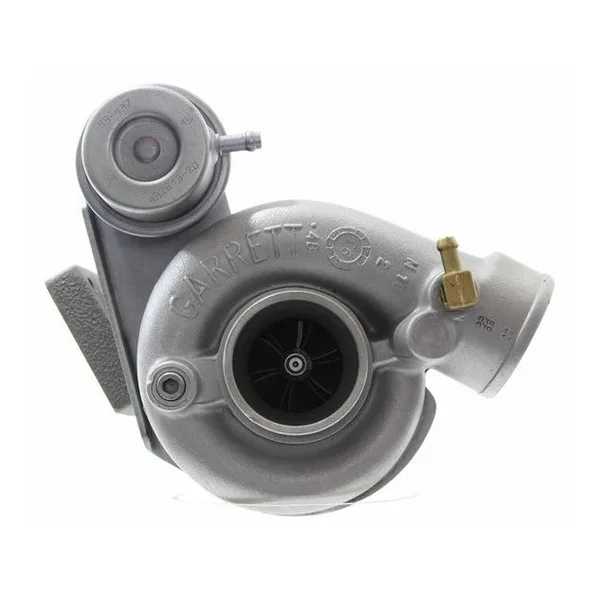
This section of the catalog gathers turbocharger core exchange units built to replace a failing turbo rather than repair it in place. It serves the independent garage sourcing a part for a customer's vehicle, the driver troubleshooting a loss of power at home, and the hands-on enthusiast working through a known engine code. Each entry in this category is presented as an exchange unit: a remanufactured turbocharger delivered in place of the failed core, with the used part returned once the replacement is fitted by a professional.
The range is built engine code by engine code rather than by vehicle brand, since a turbocharger core exchange only matches its listed application, not a make or a model in general. As a distributor of reconditioned parts, autoKUR sources and lists each reference against its known compatibility so a garage or an owner can check a code against a failing unit before ordering, instead of guessing from a vehicle name alone.
Professional uses by trade
The same turbocharger core exchange is approached differently depending on who is ordering it: a workshop planning a scheduled repair, a driver reacting to a sudden fault, an enthusiast working from a known engine code, or a buyer in the DACH region comparing references before choosing a part.
- Independent garage: ordering a turbocharger core exchange matched to a customer's engine code, then returning the failed core once the replacement has been fitted.
- Independent garage: checking the OEM reference against the vehicle's actual motorization before committing a professional account to an exchange order.
- Stranded driver: identifying a turbocharger core exchange by engine code after a workshop diagnosis points to the turbo following a loss of power or a warning light.
- Stranded driver: comparing symptoms such as visible smoke or a persistent whistle against the listed application before asking a professional to fit the replacement.
- Hands-on enthusiast: matching a variable geometry turbocharger to a known engine code before ordering the exchange unit for a planned repair.
- Hands-on enthusiast: reviewing the cartridge and CHRA details of a listed reference before deciding which turbocharger core exchange fits a specific build.
- German buyer (DACH): comparing engine code and application range across listed references before selecting a turbocharger core exchange for a vehicle registered in the region.
- German buyer (DACH): confirming the core deposit and return process for a turbocharger core exchange before a professional carries out the fitting.
Range comparison
The two references below cover the turbocharger core exchange units currently listed in this category, each matched to its own engine code and application.
| Range | Use | Format |
|---|---|---|
| Turbo Garrett 466450-0001 | engine-matched core exchange | |
| Turbo Garrett 466448-0002 | engine-matched core exchange |
How to choose
Choosing between two similar references comes down to a handful of checks that protect both the repair schedule and the exchange process itself.
- Match the engine code and OEM reference before ordering, since a turbocharger core exchange rejected for a wrong reference disrupts a workshop's return and refit schedule.
- Confirm the exchange core is intact and complete, because a professional core return process depends on the returned housing matching the exchanged application.
- Check the stated application range against the vehicle's actual motorization, since two similar engine codes can call for two distinct turbocharger core exchange units.
- Keep the packaging sealed until the fitting appointment, so dust and moisture never reach the actuator or the compressor housing before installation by a professional.
- Track the core deposit status for each order, since a professional account manages several turbocharger exchanges in parallel across different customer vehicles.
- Read the failure symptoms reported by the customer, since power loss, visible smoke or a persistent whistle each point toward a different turbocharger fault.
Storage & logistics
A turbocharger core exchange should be stored upright in its original packaging until the fitting appointment, away from moisture and dust that could reach the actuator or the compressor housing. For a professional account managing several exchanges at once, labeling each unit by engine code keeps orders from being mixed up on the shelf. The returned core should stay in the same packaging it arrived in, ready for pickup, since the exchange cycle only closes once that used unit travels back. Batch handling by application range keeps stock rotation predictable for a workshop placing repeat orders.
Since 2026, our team has built this category one engine code at a time, listing each turbocharger core exchange against the application it actually fits, so a garage or a careful owner can order with a checked reference rather than a guess.— autoKUR team
Related categories
Browse our other ranges:
Useful references
For regulatory and sector references, see Reglement (UE) 461/2010 — pieces de rechange et garantie constructeur.