

Available products
4 references
Frequently asked questions
About this category
This category presents Garrett turbochargers offered as exchange units, intended for anyone working from a specific engine reference rather than browsing by brand alone. It serves the independent garage that needs a part matched to a customer's vehicle, the driver whose vehicle has lost power or shows a warning light, and the enthusiast planning to fit the replacement without outside help. Every listing ties back to a documented OEM reference and engine application, so identification starts from the vehicle rather than from the turbocharger itself. German-speaking buyers will find the same references described without any wording implying on-site fitting or repair work.
The range is built reference by reference: each Garrett part number corresponds to a documented set of engine applications, so coverage grows as new vehicle and engine code combinations are verified rather than by adding unrelated variants. A turbocharger enters this list only once its OEM equivalence and CHRA specification are established, keeping the selection anchored to what a workshop or a DIY installer can actually confirm against a vehicle before ordering the exchange unit.
Professional uses by trade
A turbocharger reference is chosen differently depending on who is ordering it. The overview below separates the concerns of a professional workshop, a driver dealing with a breakdown, an owner fitting the part personally, and a German-speaking buyer, so each finds the detail relevant to their own situation.
- Independent garage: Cross-checks the engine code and OEM reference against the customer's vehicle before quoting a turbocharger core exchange rather than ordering by brand name alone.
- Independent garage: Keeps a documented equivalence table on hand so a single Garrett reference can be confirmed against several engine variants sharing the same block.
- Stranded motorist: Recognises a sudden loss of power, visible smoke or a dashboard warning light as signs pointing toward the turbocharger rather than another engine component.
- Stranded motorist: Looks up the vehicle's engine code before contacting a workshop, since the correct turbocharger reference depends on that code rather than the model name.
- DIY enthusiast: Compares CHRA specification and variable-vane geometry against the outgoing part before ordering, to avoid mismatching a reference that looks similar but differs by application.
- DIY enthusiast: Prepares the core deposit return of the worn turbocharger as part of the exchange process, alongside the replacement unit being fitted personally.
- DACH buyer (Der deutsche Kaeufer): Verifies the OEM equivalence and engine code independently before ordering, relying on the reference documentation rather than any claim about origin or certification.
Range comparison
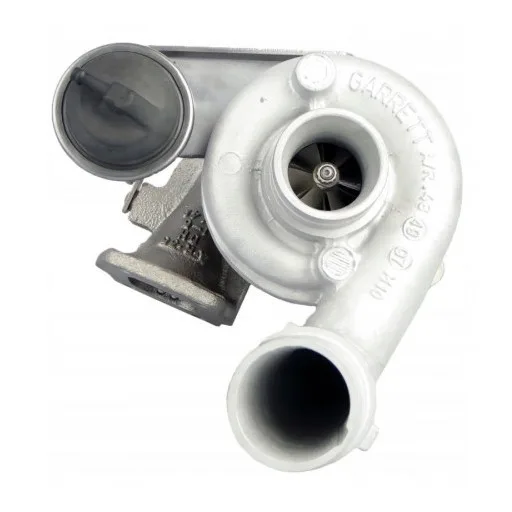
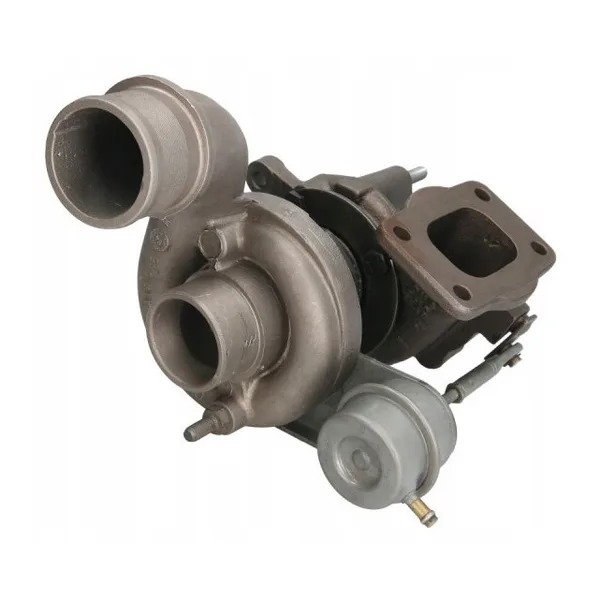
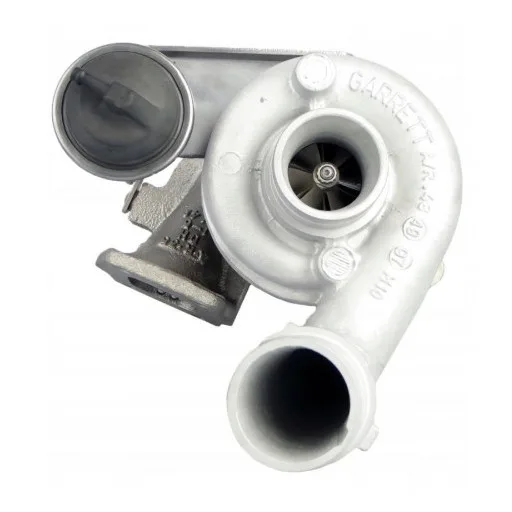
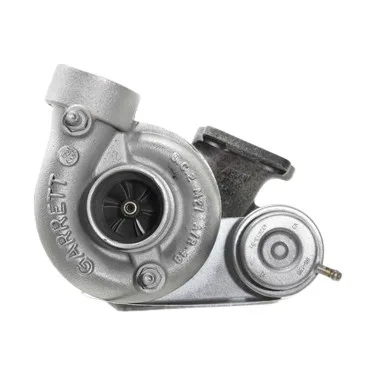
The table below lists the Garrett references currently carried in this category, each tied to a documented engine application rather than a generic turbocharger description, so the comparison starts from the reference itself.
| Range | Use | Format |
|---|---|---|
| Turbo Garrett 454112-0002 | engine power loss diagnosis | |
| Turbo Garrett 454087-0001 | OEM reference replacement | |
| Turbo Garrett 465465-0001 | variable-vane geometry match | |
| Turbo Garrett 454076-0001 | CHRA and cartridge fitting |
How to choose
Choosing among these references means working from documentation rather than appearance, since two Garrett turbochargers can look alike while serving different engine codes. The following points guide that comparison before an order is placed.
- Confirm the exact engine code and displacement against the reference's documented application list, rather than relying on the vehicle's commercial model name alone.
- Compare the CHRA specification and variable-vane mechanism where fitted, since these determine whether the replacement will behave as the original part did.
- Check the OEM reference and known equivalences before ordering, so a single part number can be matched across the vehicles it was originally fitted to.
- Anticipate the core deposit terms of the turbocharger core exchange process, including the condition expected of the worn unit being returned.
- Read the listed symptoms, such as reduced power, visible smoke or a warning light, against what the vehicle is actually showing before ordering.
- Verify whether the fitting will be carried out by a professional workshop or personally by the owner, since that choice does not change the reference required.
Storage & logistics
Turbochargers in this range should be kept in their original packaging until the moment of fitting, protected from dust and moisture that could reach the compressor and turbine housings or the variable-vane mechanism. Ports and openings are typically capped for transport, and those caps should stay in place until the unit is connected, whether the exchange takes place in a professional workshop or as part of a fitting carried out personally by the vehicle owner. The worn core being returned under the exchange process should be drained and packaged with the same care to avoid damage in transit.
Since our work on this range began in 2026, we have kept every Garrett reference tied to its documented engine code and OEM equivalence, so identification starts from the vehicle rather than from an assumption about the part.— autoKUR team
Related categories
Browse our other ranges:
Useful references
For regulatory and sector references, see Reglement (UE) 461/2010 — pieces de rechange et garantie constructeur.