

Available products
4 references


Frequently asked questions
About this category
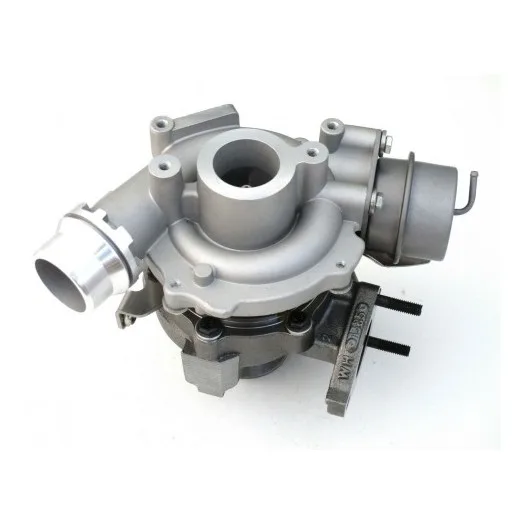
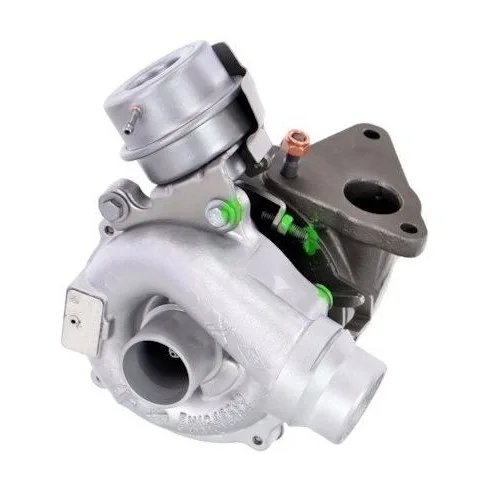
The 1.5 dCi 110 category brings together the exchange turbochargers built for this widely fitted Renault-Nissan-Dacia diesel engine. It serves independent garages sourcing a dci 110 turbo replacement for a customer's vehicle, drivers dealing with a sudden loss of power, home mechanics who prefer to handle the swap themselves, and buyers across the DACH region searching in German for the same K9K-based unit. Every reference listed here is tied to this specific engine and its known production variants, not to a broader, unrelated catalogue.
The range is built around the exchange standard: a reconditioned unit is supplied against the return of the worn part, known as a core deposit or Pfand depending on the market. A distributor's role is to keep the SL Turbo and BorgWarner KKK references distinct, since the 1.5 dCi 110 went through several revisions during its production run. Grouping them by exact reference, rather than by engine name alone, avoids the confusion that a single generic listing would create.
Professional uses by trade
A dci 110 turbo replacement is approached differently depending on who is behind it. The following points outline how each type of buyer typically uses this category, from a garage confirming a reference before ordering to a home mechanic comparing two visually similar units before committing to one.
- Le garagiste independant : Confirms the exact SL Turbo or BorgWarner KKK reference against the customer's vehicle build sheet before ordering an exchange unit for a 1.5 dCi 110.
- Le garagiste independant : Keeps a short list of confirmed references on hand so a dci 110 turbo replacement can be quoted to a customer without delay.
- L'automobiliste depanne : Searches by engine code and power figure after noticing a loss of power or a warning light, rather than by a part number found online.
- L'automobiliste depanne : Uses the category to understand which core deposit process applies before sending the old turbocharger back.
- Le passionne qui fait lui-meme : Compares the SL Turbo and BorgWarner KKK variants side by side to identify which one matches the vehicle's production date.
- Der deutsche Kaeufer (DACH) : Looks for the same 1.5 dCi 110 references under their German engine designation before confirming compatibility with a Renault, Nissan or Dacia model.
Range comparison
The table below lists the four references currently held for the 1.5 dCi 110, each tied to a distinct production variant of the K9K engine. It is meant to help a buyer narrow down the exact unit before placing an order.
| Range | Use | Format |
|---|---|---|
| SL Turbo 5439 988 0070 | early K9K production runs | |
| Turbo BorgWarner - KKK 5439 988 0080 | later revision compatibility | |
| SL Turbo 5438 988 0006 | specific model-year fitment | |
| SL Turbo 5439 998 0127 | alternate production variant |
How to choose
Choosing between four close references calls for a few consistent checks, not guesswork. The points below cover what an independent garage or a careful individual buyer should verify before confirming a dci 110 turbo replacement.
- Match the reference number stamped on the removed unit against the listing rather than relying on the engine name alone, since several variants share it.
- Check the production date range associated with each reference, since the 1.5 dCi 110 went through more than one revision during its run.
- Confirm which core deposit terms apply before ordering, so the used turbocharger can be returned without delay once the replacement is fitted.
- Ask whether the vehicle has already received an aftermarket modification that could affect which of the four references actually fits.
- Keep the removed unit protected from dust and moisture while awaiting the exchange, since its condition affects the return process.
- Verify the vehicle's registration document or build sheet whenever the visual difference between two references is not obvious.
Storage & logistics
Handling the core unit correctly matters as much as choosing the right reference. The used turbocharger should be drained where possible, its oil and air connections capped to keep contaminants out, and it should be kept upright rather than laid on its housing. Store it somewhere dry until the return process is completed, since a core exchange typically depends on the part arriving in a condition close to how it left the vehicle. A garage handling several 1.5 dCi 110 exchanges at once benefits from labelling each core with its original reference, avoiding mix-ups between the SL Turbo and BorgWarner KKK variants.
Since 2026, our team has paid close attention to how the 1.5 dCi 110 range evolved across its production run, so garages and individual buyers can rely on a reference list built from that ongoing attention rather than a single generic entry.— autoKUR team
Related categories
Browse our other ranges:
Useful references
For regulatory and sector references, see Reglement (UE) 461/2010 — pieces de rechange et garantie constructeur.