

Available products
3 references


Frequently asked questions
About this category
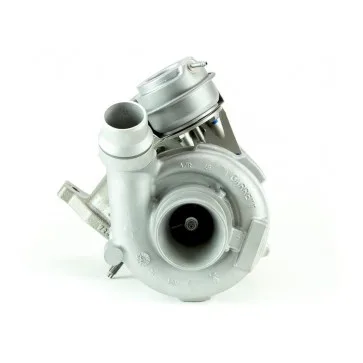
This 2.0 dCi 173 hp category brings together the turbocharger references most often requested for this engine code, whether the vehicle shows a loss of power, exhaust smoke, a whistling noise under load or has entered limp mode. It is built for anyone who needs to replace the part rather than diagnose the whole vehicle: independent garages ordering for a customer, motorists dealing with a breakdown, owners comfortable fitting the part themselves, and buyers in Germany, Austria and Switzerland searching by engine code rather than by brand name.
The range is organised around the standard exchange principle: each reference corresponds to an original engine code and variable geometry configuration, not a generic catalogue entry. A returnable core, tracked through a deposit process, keeps the exchange loop closed and the reconditioned unit traceable back to its donor part. The wholesaler's role here is to hold enough reference coverage across engine codes that a workshop can find the exact match without waiting on a special order.
Professional uses by trade
Buyers reach this category from different starting points: some already know their reference, others only know the vehicle and the engine noise. The uses below reflect how each audience actually approaches the part, from a garage restocking a common reference to a driver trying to understand a warning light before calling anyone.
- Independent garage owner: keeps a small stock of dCi 173 references on hand to cover recurring customer requests without waiting on a special order each time.
- Motorist stranded by a breakdown: arrives with a vehicle already showing limp mode or a loss of power and needs the correct reference identified from the engine code.
- DIY enthusiast: compares the CHRA and cartridge details against the original part before ordering, then fits the replacement personally with tools already on hand.
- German buyer (DACH market): searches by engine code and OEM equivalence rather than by brand, expecting the listing to state the exact reference clearly.
- Independent garage owner: orders the core-deposit exchange to control repair cost for the customer while returning the failed unit through the same process.
- DIY enthusiast: checks variable geometry actuator compatibility before purchase to avoid a mismatch between the replacement and the original turbocharger.
Range comparison
The table below lines up the references available for this engine code side by side, so a buyer can see at a glance which one matches their vehicle and how each is typically ordered before comparing fitment notes further.
| Range | Use | Format |
|---|---|---|
| Turbo Garrett 770116-5002S | engine code match, DIY or garage fitting | |
| SL Turbo 765016-5006S | garage restocking, workshop orders | |
| Turbo Garrett 765015-5006S | breakdown replacement, DACH buyers |
How to choose
Choosing between references on this engine code comes down to a handful of practical checks rather than guesswork, especially for a garage ordering several units a year or a driver trying to avoid a second failure soon after the first.
- Confirm the original reference stamped on the failed part before ordering, since engine code alone does not always distinguish between close production variants.
- Check that the variable geometry actuator type matches, because a mismatched actuator is one of the most common causes of an early repeat failure.
- Verify the core deposit and return process in advance so the failed unit can be sent back without holding up the exchange.
- Ask about packaging when ordering several units at once, since garages restocking a reference need cartons that survive repeated handling and transport.
- Cross-check the OEM equivalence listed against the number already on the vehicle rather than relying on the engine code label alone.
- Consider consistency of quality across a run of units when a garage plans to order the same reference repeatedly over a season.
Storage & logistics
Reconditioned turbochargers should be stored upright in their original packaging until fitting, away from damp conditions that can affect seals and connectors left exposed during transit. For a garage holding several references at once, grouping stock by engine code rather than by brand shortens the time spent matching a part to an incoming vehicle. The core deposit process depends on the returned unit staying identifiable, so keeping the original packaging and any paperwork together until the exchange is closed avoids delays. Buyers ordering ahead of a season, rather than reactively after a breakdown, tend to see fewer mismatches at the counter.
We have matched turbocharger references to engine codes long enough to know that most repeat failures trace back to a missed actuator or geometry mismatch, not the part itself — which is why our team checks fitment before checking price.— autoKUR team
Related categories
Browse our other ranges:
Useful references
For regulatory and sector references, see Reglement (UE) 461/2010 — pieces de rechange et garantie constructeur.