

Available products
4 references


Frequently asked questions
About this category
The 2.0 dCi 150 category regroups the turbochargers designed for the diesel engine shared by numerous Renault, Nissan and Dacia models delivering 150 horsepower. It is built for independent garages sourcing an exchange-standard part for a customer's vehicle, for automobilists dealing with a sudden loss of power or warning light, for hands-on owners who prefer to fit the part themselves, and for buyers across the DACH region searching in German for the same engine code. Each listing states the vehicle applications it covers.
The range is built around the OEM references actually fitted at the factory to the 2.0 dCi 150 engine, then cross-referenced against the part numbers used across Renault, Nissan and Dacia production runs. As a distributor working with exchange-standard parts, autoKUR groups these references so that a single engine code search surfaces every compatible turbocharger, rather than leaving the buyer to compare part numbers across separate manufacturer catalogues one by one.
Professional uses by trade
The 2.0 dCi 150 turbocharger is bought for different reasons depending on who is searching for it: a workshop replacing a failed part for a customer, a driver managing a breakdown on the road, an owner planning a home repair, or a buyer in Germany, Austria or Switzerland searching under the local engine designation. The usages below reflect each of these situations.
- Le garagiste independant : Sources the correct exchange-standard turbocharger reference before booking a customer's vehicle in, avoiding a wasted workshop slot on a mismatched part.
- L'automobiliste depanne : Identifies the failing turbocharger behind a sudden loss of power, a warning light or unusual smoke, and orders the matching reference before contacting a garage.
- Le passionne qui fait lui-meme : Compares the OEM reference against the listed equivalences to confirm the turbocharger fits the exact chassis and production date of the vehicle.
- Der deutsche Kaeufer (DACH) : Searches under the German engine designation to find a 2.0 dCi 150 turbocharger reference covering vehicles registered in Germany, Austria or Switzerland.
- Le garagiste independant : Orders several references at once across Renault, Nissan and Dacia models to keep a rotating stock of common exchange-standard parts on hand.
- L'automobiliste depanne : Checks the listed vehicle applications against the registration document to confirm the part matches the exact motorisation before ordering.
- Le passionne qui fait lui-meme : Reviews the CHRA and geometry details of each reference to understand what is being exchanged before fitting the part with a professional.
Range comparison
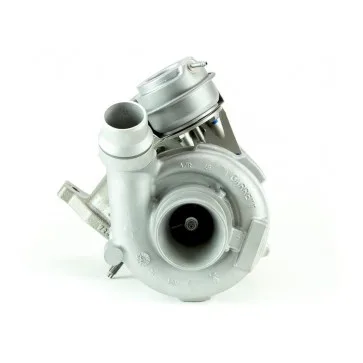
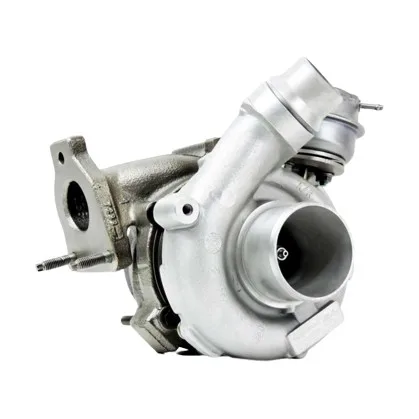
The table below lines up the four turbocharger references available for the 2.0 dCi 150 engine, so a buyer can see at a glance which reference matches their vehicle and how each one is typically ordered.
| Range | Use | Format |
|---|---|---|
| Turbo Garrett 770116-5002S | engine code matching | |
| Turbo Garrett 765015-5006S | cross-reference verification | |
| Turbo Garrett 774833-5002S | chassis-specific fitment | |
| SL Turbo 765016-5006S | OEM equivalence check |
How to choose
Choosing between these references comes down to a handful of practical checks a buyer can run before ordering, rather than trusting the reference number alone. The points below cover what garages and hands-on buyers typically verify first.
- Confirm the OEM reference and chassis number against the listed equivalences, since several vehicle brands share the same 2.0 dCi 150 engine block under different names.
- Check the condition required for the returned core, since an exchange-standard turbocharger depends on the old unit being sent back in a usable state.
- Verify the geometry and CHRA details match the original part, particularly on models where the variable geometry mechanism differs between production years.
- Ask about the reference's rotation in stock, since a commonly ordered turbocharger reference is typically easier to source again if a second unit is needed.
- Cross-check the injector and high-pressure pump compatibility separately, since a failing turbocharger can sometimes accompany other symptoms on the same engine.
- Compare the warning signs described, such as a loss of power, visible smoke or a limp mode, against the reference's documented failure pattern.
- Confirm the vehicle's registration details, including the exact motorisation and production date, before ordering a chassis-specific reference.
Storage & logistics
Turbocharger references sold as exchange-standard parts are handled under a core deposit system: the old, failed unit is returned once the replacement has been fitted by a professional, and the deposit is settled once the returned part has been checked. For garages managing several references at once, keeping the correct reference paired with its vehicle application avoids confusion between similar-looking part numbers. Buyers in the DACH region should note that the same logic applies under the German term Pfand, even where the listing itself is in English or French.
Since 2026, we have organised this catalogue engine code by engine code, so that a 2.0 dCi 150 turbocharger reference can be found and cross-checked in one place instead of across scattered manufacturer listings.— autoKUR team
Related categories
Browse our other ranges:
Useful references
For regulatory and sector references, see Reglement (UE) 461/2010 — pieces de rechange et garantie constructeur.