
Available products
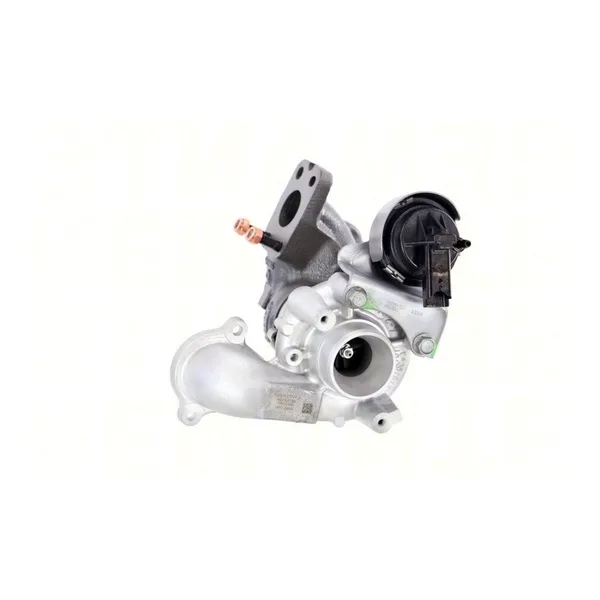
In stock
For the PEUGEOT 308 2 in 1.6 HDi 100 hp (73 kW diesel), the autoKUR catalogue holds 1 exchange-standard reference(s). At equal displacement, two outputs do not call for the same part.
Engine specification: 1560 cm³, diesel, built from 04/2014 to 06/2021. Matching part number: 49172-03000 (SL Turbo). Compare with the code stamped on your part.
Other engines of the PEUGEOT 308 2: 1.6 THP 272 hp, 1.6 THP 250 hp, 1.6 PureTech 225 hp. If the code stamped on your part is legible, search by reference remains the safest route. 24-month warranty.
Related categories
Frequently asked questions
About this category
This category brings together the turbochargers matched to the 1.6 HDi 100 engine, a diesel motorisation fitted across a wide range of light vehicles over several production years. It is built for anyone who needs to identify the correct part from an engine code rather than a catalogue number: the independent garage quoting a repair, the driver whose vehicle has entered limp mode, and the home mechanic who prefers to fit the part personally. Each listing states the reference clearly so compatibility can be checked before ordering.
The range is built around exchange-standard units: each turbocharger is a reconditioned core matched to its original reference, offered against the return of the failed part rather than as a brand-new casting. This exchange logic keeps the catalogue focused on parts that already have a documented fitment history for the 1.6 HDi 100, instead of listing every variant found across the wider engine family. New references are added only once their equivalence to the original part number is confirmed.
Professional uses by trade
The same 1.6 HDi 100 turbocharger serves several very different situations, from a scheduled repair planned by a workshop to a breakdown that leaves a vehicle undriveable overnight. The uses below reflect how each type of buyer actually approaches the purchase, from the reference they search for to the moment they need the part.
- Independent garage: confirms the engine code on the vehicle before ordering, then quotes the customer using the exchange-standard reference rather than a full new unit.
- Stranded driver: searches by engine code once the vehicle enters limp mode, needing a reference that matches without a workshop visit to identify it first.
- Home mechanic: compares the exchange reference against the original part number, planning to fit the turbocharger personally rather than book a workshop slot.
- German-speaking buyer (DACH): relies on the engine code and OEM reference to confirm fitment remotely, since the part is ordered without a repair service attached.
- Independent garage: keeps a small stock of the most requested references on hand, so a diagnosis can move straight to ordering the matching part.
- Home mechanic: checks the production years listed for the reference, avoiding an order for a part built for a related but different engine.
Range comparison
The table below lists the reference available in this category alongside how it reaches the buyer and the use it is intended for, so the exchange-standard unit can be matched to the vehicle before ordering.
| Range | Use | Format |
|---|---|---|
| SL Turbo 49172-03000 | 1.6 HDi 100 fitment |
How to choose
Selecting the right unit for a 1.6 HDi 100 comes down to a handful of checks that take a few minutes but prevent an order that does not fit the vehicle or the deposited core.
- Confirm the engine code stamped on the vehicle or listed on the registration document, since several closely related motorisations share a similar power rating.
- Cross-check the OEM reference printed on the old turbocharger against the equivalence listed for this part, rather than relying on the vehicle model alone.
- Check the geometry mechanism fitted on the old part, since a variable geometry unit and a fixed geometry unit are not interchangeable references.
- Inspect the condition of the removed unit before it is sent back, since the core exchange depends on returning a complete, undamaged assembly.
- Verify that the packaging protects the actuator and connectors during transit, since damage to either component can affect fitment on arrival.
Storage & logistics
A turbocharger held in stock before fitting should stay in its original packaging until the moment it is mounted, protecting the actuator, hoses and electrical connectors from dust and impact. The removed core awaiting return follows the same logic: drained of any residual oil, kept upright, and boxed separately from tools or other parts so the reference stays legible for the exchange. In a workshop that handles several engine families at once, keeping each 1.6 HDi 100 unit labelled with its reference avoids it being mixed up with a similar turbocharger destined for a different motorisation.
Since we started listing exchange-standard turbochargers in 2026, the question we hear most often is whether a reference truly matches an engine code, which is why we anchor every listing to that code before anything else.— autoKUR team
Related categories
Browse our other ranges:
Useful references
For regulatory and sector references, see Reglement (UE) 461/2010 — pieces de rechange et garantie constructeur.