
Available products
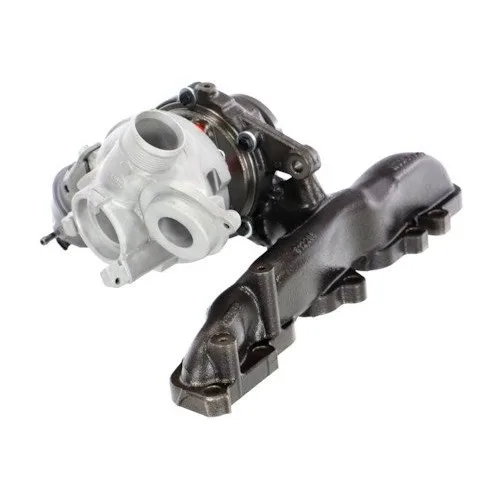
In stock
For the AUDI A3 Sportback (8VA / 8VF) in 2.0 TDI 184 hp (135 kW diesel), the autoKUR catalogue holds 1 exchange-standard reference(s). At equal displacement, two outputs do not call for the same part.
Engine specification: 1968 cm³, diesel, built since 05/2013. Matching part number: 821866-5009S (SL Turbo). Compare with the code stamped on your part.
Other engines of the AUDI A3 Sportback (8VA / 8VF): 2.0 TFSI 300 hp, 2.0 TFSI 190 hp, 40 TFSI 190 hp. If the code stamped on your part is legible, search by reference remains the safest route. 24-month warranty.
Related categories
Frequently asked questions
About this category
The 2.0 TDI 184 hp turbo exchange standard category addresses a common pain point for Volkswagen Group vehicles, where turbo failure disrupts performance and reliability. This range includes remanufactured units designed to match original equipment specifications, offering a cost-effective alternative to new OEM parts. Whether for a 2010 Audi A4, a 2015 Skoda Octavia, or a 2018 Seat Leon, the turbos in this category restore power delivery and fuel efficiency without compromising on quality.
Curated for professionals and enthusiasts, this range is built on a foundation of OEM-compatible references and remanufacturing standards that ensure longevity. The turbos are sourced from suppliers adhering to strict quality benchmarks, with each unit tested for performance and durability. The role of the wholesaler here is to bridge the gap between remanufacturers and end-users, providing bulk availability and logistical support for workshops and DIY markets.
Professional uses by trade
Different user profiles rely on this category for distinct reasons, from restoring a daily driver to maintaining a fleet of commercial vehicles. Independent garages prioritize reliability and turnaround time, while DIY enthusiasts seek cost savings and self-sufficiency. German buyers, in particular, value precision-engineered solutions that align with local automotive standards.
- Independent garage: Replace a failing turbo on a 2012 VW Passat 2.0 TDI 184 hp with a remanufactured unit to avoid costly OEM delays.
- Stranded motorist: Order an exchange turbo for immediate installation, ensuring the vehicle remains drivable until a permanent solution is found.
- DIY enthusiast: Source a turbo with clear OEM references to perform the replacement at home, leveraging online guides and community support.
- German workshop: Procure turbos with German-language documentation and packaging, streamlining compliance with local regulations.
- Fleet manager: Maintain a stock of exchange turbos to minimize vehicle downtime across multiple 2.0 TDI 184 hp models.
- Performance tuner: Select a turbo that supports mild upgrades while retaining OEM-like reliability for daily use.
- Classic car restorer: Find a remanufactured turbo that matches the original specifications of a vintage 2.0 TDI engine.
Range comparison
The following turbos are verified for compatibility with the 2.0 TDI 184 hp engine, covering a range of vehicle models and model years. Each reference is sourced from reputable remanufacturers and tested for performance consistency.
| Range | Use | Format |
|---|---|---|
| SL Turbo 821866-5009S | Includes variable geometry for efficiency |
How to choose
Selecting the right turbo for a 2.0 TDI 184 hp engine requires attention to compatibility, remanufacturing standards, and packaging. Professionals should prioritize units with clear OEM references and documented testing procedures.
- Verify the turbo matches the vehicle’s model year and engine code to ensure a direct fit without modifications.
- Choose a remanufactured unit with a documented core deposit process to simplify returns of the old turbo.
- Prioritize turbos with consistent quality control, as evidenced by supplier certifications or batch testing records.
- Select packaging that protects the turbo during transit, especially for bulk orders to workshops.
- Opt for a turbo with a warranty period that aligns with industry standards for exchange parts.
- Ensure the turbo includes all necessary components, such as gaskets and mounting hardware, for a complete installation.
- Check for compatibility with the vehicle’s power output and intended use, whether for daily driving or performance tuning.
Storage & logistics
For B2B customers, storing exchange turbos requires controlled conditions to maintain performance and prevent contamination. Units should be kept in a dry, temperature-stable environment away from direct sunlight, with packaging intact until installation. Bulk orders benefit from organized shelving systems that allow for first-in, first-out rotation, ensuring older stock is used before newer deliveries. Regular inspections for damage or moisture ingress are critical, as even minor issues can affect turbo performance. Wholesalers should also maintain clear documentation for each batch, including supplier details and remanufacturing dates, to track quality and compliance.
With over a decade of experience in sourcing remanufactured turbos, our team has refined the process of matching exchange units to OEM specifications. We prioritize consistency in quality and compatibility, ensuring that every 2.0 TDI 184 hp application receives a turbo that performs as intended from day one.— autoKUR team
Related categories
Browse our other ranges:
Useful references
For regulatory and sector references, see Reglement (UE) 461/2010 — pieces de rechange et garantie constructeur.