
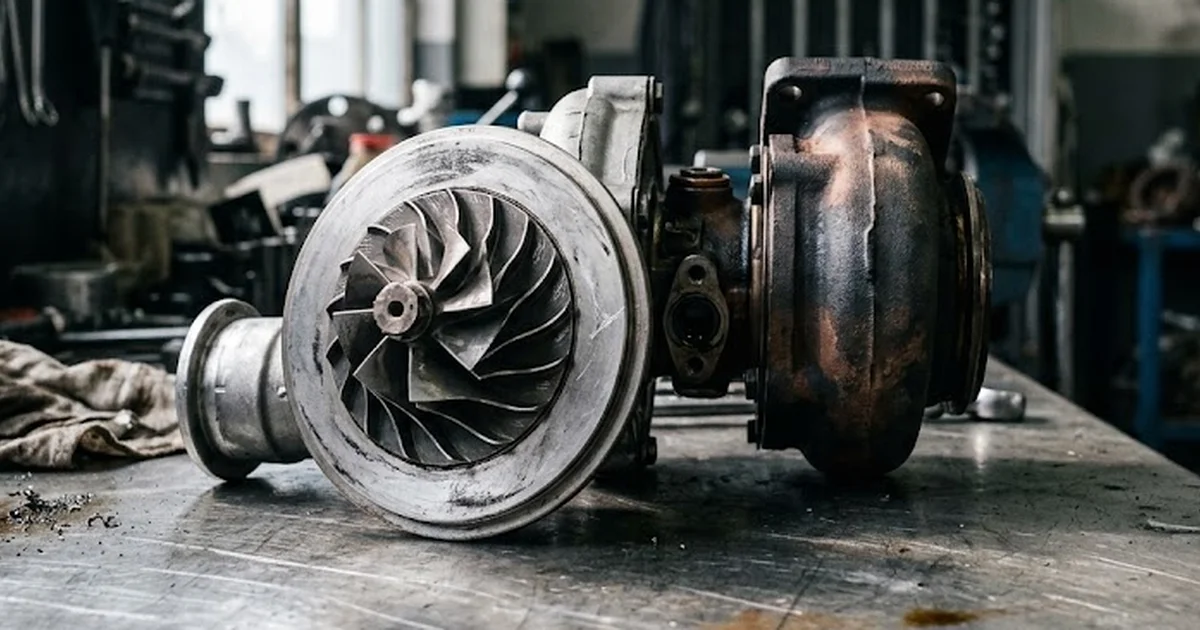
Turbo warranty: the warranty and what it actually covers
Turbo warranty: conditions, exclusions, and procedures clearly explained. Discover what is actually covered before any replacement.
A faulty turbocharger is rarely an isolated bad surprise: in most cases, it is a mechanical part subjected to considerable thermal and pressure stresses, whose wear or premature failure may be covered by a warranty, provided its terms are precisely understood. Between legal warranty, commercial warranty, and manufacturer’s warranty, motorists often get lost in technical vocabulary that masks essential differences. This article details what a turbo warranty actually covers, its limits, and the steps to take to enforce it effectively.
Turbo warranty: what exactly are we talking about?
Before discussing the terms of coverage, it is important to distinguish between the different types of warranties applicable to a turbocharger. This distinction directly determines the scope of coverage and the steps to take in the event of a breakdown.
- Legal warranty of conformity: applicable when purchasing a new vehicle or part from a professional, it covers defects existing at the time of sale.
- Commercial warranty from the seller: provided by the garage or parts dealer, it is in addition to legal warranties and varies significantly from one professional to another.
- Manufacturer’s warranty from the turbo maker: offered by the part’s manufacturer, generally for new or reconditioned turbos, with specific durations and conditions.
- Warranty on used or reconditioned parts: often shorter, it requires particular attention as the exclusion conditions are generally more numerous.
Each of these warranties follows a different logic, and the same turbo can theoretically be covered by multiple layers of overlapping warranties, provided the application conditions are met.
What a turbo warranty actually covers
The effective coverage of a turbo warranty depends on the contractual conditions set by the seller or manufacturer. It is essential to read the clauses carefully before considering a part automatically protected against any failure.
As a general rule, a proper turbo warranty covers the following:
- Manufacturing defects in the turbine, compressor, or central housing.
- Premature failure of bearings or bushings when wear cannot be attributed to poor maintenance.
- Oil leaks due to an original sealing defect and not to clogging of the circuit.
- Replacement or repair of the part if the malfunction occurs within the contractual period and without unauthorized external intervention.
However, the warranty almost never covers indirect consequences of a pre-existing engine failure, nor damage caused by non-compliant installation with technical recommendations.
Common exclusions that limit coverage
It is often at the time of the claim that motorists discover the real extent of warranty exclusions. These clauses, although legitimate from a technical standpoint, should be known in advance to avoid any disappointment.
| Cause of the breakdown | Covered by the warranty | Remark |
|---|---|---|
| Manufacturing defect in the part | Yes | Subject to a diagnosis confirming the origin of the defect |
| Lack of engine oil or unsuitable oil | No | Considered a maintenance defect attributable to the owner |
| Clogging of the air filter or intake circuit | No | Falls under regular vehicle maintenance |
| Non-compliant installation by an unauthorized third party | No | Generally voids any coverage, even in the case of an original defect |
| Over-revving or undeclared engine remapping | No | Modifies the mechanical stresses intended by the manufacturer |
| Normal wear after the contractual period | No | The warranty is not an unlimited-time insurance |
This table clearly shows that a turbo warranty is not universal coverage: it protects against an intrinsic defect in the part, not against the consequences of improper use or maintenance.
How to effectively enforce your turbo warranty
Enforcing a turbo warranty requires following a rigorous procedure, otherwise the claim may be rejected for purely administrative reasons, even when the breakdown is indeed due to a covered defect.
- Keep the purchase invoice and warranty certificate issued at the time of the transaction carefully.
- Have a diagnosis performed by an authorized professional, capable of establishing the precise origin of the breakdown.
- Never disassemble or have a third party intervene before the warranty claim is approved.
- Contact the seller or manufacturer as soon as possible after the breakdown is noticed.
- Provide a maintenance history of the vehicle, particularly oil changes and filter replacements.
- Keep the defective part if requested for inspection, rather than discarding it immediately.
Compliance with this procedure very often determines whether the claim is accepted or rejected, regardless of the technical legitimacy of the breakdown.
Warranty duration and the difference between new, exchange standard, and used parts
The duration and scope of the warranty vary significantly depending on the type of turbocharger purchased. This distinction is fundamental when choosing a replacement part, as it directly impacts the level of security offered in the event of a breakdown.
- New turbo: generally benefits from the most extensive coverage, often including labor depending on the seller’s conditions.
- Reconditioned exchange standard turbo: warranty is more limited in time, with more frequent exclusions on wear components.
- Used turbo: coverage is often reduced to the strict legal minimum, or even non-existent depending on the context of a private sale.
It is also worth noting that the warranty never replaces a rigorous inspection during installation: a poorly installed new turbo can fail quickly without this being due to a manufacturing defect.
At autoKUR, we regularly observe that warranty refusals do not stem from a lack of good faith on the manufacturer’s part, but from a lack of rigor during installation or subsequent maintenance. A new turbo installed without flushing the oil circuit or without prior priming can fail within a few kilometers, and this failure will never be covered, no matter how solid the original part. Our advice is simple: document every step of the installation and keep all maintenance records; they are your best protection in case of a dispute.
Turbo warranty and the garage’s responsibility during installation
The warranty on the part itself should not be confused with the responsibility of the professional who installs it. These two aspects are legally distinct, even if they often overlap in practice.
A garage that installs a new or reconditioned turbo assumes its own responsibility for the quality of its work, regardless of the warranty provided by the part’s manufacturer. In concrete terms, this means that:
- If the turbo fails due to a manufacturing defect, it is the manufacturer’s or seller’s warranty that applies.
- If the breakdown results from an installation error, it is the garage’s labor warranty that must be invoked.
- In some cases, both warranties may apply if the dispute is not clearly resolved from the initial diagnosis.
This distinction explains why it is recommended to have the installation performed by an experienced professional, capable of certifying the compliance of their work in the event of a subsequent dispute.
Best practices to preserve your turbo warranty over time
Beyond administrative procedures, certain maintenance habits help preserve the validity of the warranty throughout its contractual duration, while naturally extending the turbocharger’s lifespan.
| Best practice | Impact on the warranty |
|---|---|
| Respect the recommended oil change intervals | Avoids refusals due to proven poor maintenance |
| Use oil that meets the engine’s specifications | Preserves the lubrication of bearings and bushings |
| Let the engine idle before turning it off after sustained driving | Reduces thermal stress on the turbo |
| Regularly check hoses and the intake circuit | Limits the risk of clogging that could invalidate the warranty |
| Keep all maintenance invoices | Provides essential proof in case of a dispute |
These simple daily practices significantly reduce the risk of having a warranty claim rejected due to insufficient maintenance.
Summary: anticipate rather than endure a warranty dispute
The turbo warranty protects against manufacturing defects and premature failures not attributable to the user, but it includes strict exclusions that should be known before any purchase or replacement. Understanding the difference between legal, commercial, and manufacturer warranties, strictly following claim procedures, and adopting good maintenance practices are the best guarantees for smooth coverage in the event of a breakdown. To choose a part suited to your vehicle and benefiting from clear coverage, the Turbocharger category on the autoKUR website allows you to compare available references based on your needs.
You may also like
A question?
Get in touch directly.

Discussion
Our advice related to Turbocharger
 Turbocharger
 Testing: Diagnose Faults Before You Order
Master systematic turbocharger testing to pinpoint power loss, smoke, and whistling before ordering a replacement standard exchange turbocharger.
 Turbocharger
What Is Turbo Lag? Causes, Symptoms & Solutions | autoKUR
Understand what turbo lag is, how it differs from boost threshold, and how to diagnose sluggish throttle response. Expert mechanical advice by autoKUR.
 Turbocharger
What Is a Twin Scroll Turbo? How It Works & Benefits
Discover what is a twin scroll turbo, how divided exhaust scrolls eliminate lag, boost low-end torque, and optimize efficiency. Complete technical guide.