
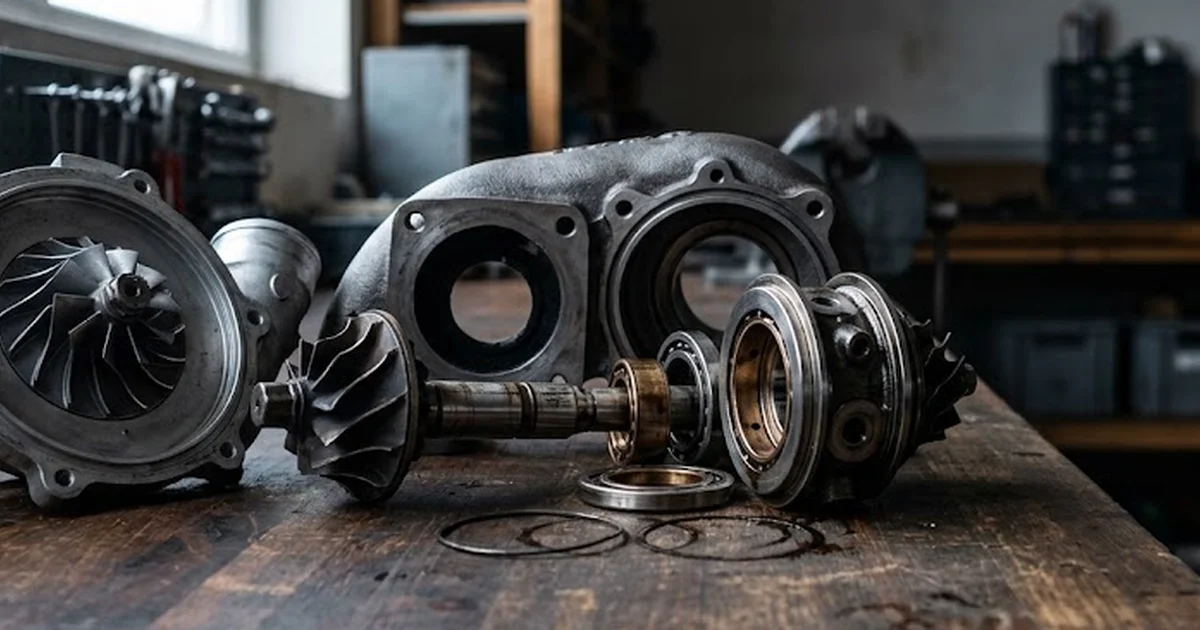
What causes turbo failure?
What causes turbo failure? Learn the 5 main causes of turbocharger breakdown, early warning signs, diagnostic checks, and expert prevention tips from autoKUR.
Understanding How a Turbocharger Operates and Why It Fails
Modern internal combustion engines rely on forced induction to extract maximum efficiency, torque, and power from reduced displacements. At the heart of this thermodynamic achievement sits the turbocharger. Operating as a precision-engineered turbine pump, the unit utilises thermal and kinetic energy from discarded exhaust gases to drive a compressor wheel, packing dense, oxygen-rich ambient air directly into your engine cylinders. Under optimal operating conditions, this cycle is remarkably efficient. However, because a turbocharger operates at the absolute frontier of automotive physics, small irregularities within your engine can quickly trigger severe mechanical failure.
To understand what causes turbo failure, you must first appreciate the extraordinary mechanical environment within the turbo assembly. In a high-output petrol or diesel engine, the central shaft assembly routinely spins between 100,000 and 280,000 revolutions per minute. Concurrently, the exhaust turbine housing is exposed to incandescent exhaust gas temperatures that easily exceed 850°C in modern diesels and up to 1,050°C in high-performance petrol applications. The internal rotating assembly floats on an ultra-thin hydrodynamic oil film measuring mere thousandths of a millimetre. When that protective barrier falters or foreign debris breaches the housings, destruction happens within seconds.
The Anatomy of Forced Induction Stress
A turbocharger does not work in isolation; it is intrinsically linked to the vehicle lubrication, breathing, exhaust, and engine management circuits. The rotating assembly—often referred to as the cartridge or Centre Housing Rotating Assembly (CHRA)—contains precision journal bearings and a 360-degree thrust collar designed to withstand immense radial and axial thrust loads. If any surrounding support circuit degrades, the turbocharger absorbs the collateral damage.
- Hydrodynamic bearing load: The central rotor shaft relies entirely on uninterrupted pressurised engine oil to remain suspended without contacting the bronze journal bearings.
- Extreme thermal gradient: The turbine wheel operates at near-molten exhaust temperatures, whilst the compressor wheel mere centimetres away handles incoming ambient air.
- Centrifugal blade stress: At speeds exceeding 200,000 RPM, the outer tips of the aluminium compressor wheel experience immense centrifugal forces that punish microscopic metal fatigue.
- Axial thrust fluctuations: Rapid acceleration, deceleration, and variable exhaust pressure constantly push the shaft back and forth along its longitudinal axis against the thrust bearing.
What Causes Turbo Failure? The Five Major Root Mechanisms
Automotive technicians frequently encounter damaged turbochargers that have suffered catastrophic failure, yet the turbo itself is rarely the original culprit. Instead, the turbocharger acts as an early victim of underlying engine deficiencies. Through extensive workshop diagnostics, failure causes can be categorised into five distinct root mechanisms, each leaving specific forensic signatures across the turbine, compressor, and bearing surfaces.
1. Oil Starvation and Lubricant Supply Interruption
Lubrication starvation is the swiftest killer of forced induction systems. Because the shaft rotates at astronomical velocities, even a momentary drop in oil pressure lasting two to three seconds generates catastrophic friction. Dry friction between the hardened steel shaft and the journal bearings produces instantaneous surface temperatures exceeding 1,000°C. This frictional heat welds the bearing brass to the shaft, bluing the metal and ultimately snapping the rotor shaft in half. Common catalysts include blocked oil feed lines, sludge accumulation inside banjo bolt micro-strainers, failing oil pumps, degraded oil pick-up gauze filters within the sump, or starting an engine dry after an improper component installation.
2. Contaminated Engine Oil and Particulate Wear
Engine oil picks up carbon particulates, combustion soot, unburnt fuel residues, and microscopic metallic shavings over time. If you exceed service intervals, use substandard oil filters, or experience engine wear elsewhere, these abrasive contaminants cycle directly into the turbocharger bearings. The contaminants act like liquid sandpaper, cutting deep parallel grooves into the polished shaft journals and widening the internal clearances. As bearing clearance expands beyond manufacturer tolerances, the shaft begins to wobble radially, allowing the compressor and turbine wheels to strike their respective outer housings.
3. Foreign Object Ingress (FOD)
Precision-milled aerodynamic vanes cannot tolerate physical impact. Foreign object damage occurs on both the intake and exhaust sides of the unit:
- Compressor wheel impact: Ingested road grit, sand, fragmented plastic from cracked induction pipework, broken mass air flow sensor screws, or loose jubilee clips strike the spinning compressor blades, blunt the leading edges, or shear the wheel completely.
- Turbine wheel impact: Carbon flakes dislodged from exhaust ports, disintegrating glow plug tips, broken valve seats, or fractured piston ring fragments fly down the exhaust manifold, violently chipping or shattering the high-nickel alloy turbine blades.
4. Extreme Heat Soak and Oil Carbonisation (Coking)
When you switch off an engine immediately after high-load motorway driving or towing, you abruptly terminate oil circulation and cooling airflow. The immense residual thermal energy stored within the heavy cast-iron exhaust manifold and turbine housing radiates inward towards the CHRA. Static oil trapped inside the hot bearing galleries boils instantly, undergoing thermal cracking. This process, known as oil coking, transforms liquid lubricant into solid, razor-sharp carbon crystals. Upon your next journey, these abrasive carbon flakes tear through the journal bearings and block the narrow oil drain pipe, leading to dynamic oil seal failure and smoke emissions.
5. Over-Speeding and Excessive Boost Pressure
Over-speeding occurs when the turbocharger rotates significantly beyond its certified mechanical speed limit. This is typically provoked by aggressive engine ECU remaps, boost leaks in induction pipework (forcing the turbo to over-spin to achieve target pressure), jammed variable nozzle turbine (VNT) vanes, or a malfunctioning electronic wastegate actuator. Over-speeding induces severe blade tip stretching, metallurgical fatigue, and harmonic vibrations that cause the compressor wheel to burst violently through centrifugal fatigue.
Our workshop teardowns reveal that over ninety percent of returned turbochargers did not fail from inherent manufacturing defects, but rather from upstream engine faults. Fitting a replacement unit without thoroughly flushing the oil galleries, renewing the feed pipe, and rectifying the root cause guarantees repeat failure within the first few miles on the road.
— autoKUR Technical Workshop
Early Warning Signs: Catching Turbo Trouble Before Catastrophic Damage
A turbocharger rarely disintegrates without prior warning. By remaining vigilant to subtle changes in your vehicle acoustics, throttle responsiveness, and exhaust tailpipe emissions, you can intervene before internal metal fragments contaminate your intercooler, intake valves, and combustion chambers. Catching these early distress signals enables cost-effective repair rather than an engine-destroying blowout.
Audible Warning Signs: The Siren and Dentist Drill Phenomenon
Whilst a faint, soft whistling sound during boost spool-up is natural in many modern turbocharged vehicles, an escalating or harsh pitch demands immediate investigation. If your turbo begins producing an audible police siren noise or a high-frequency scream resembling a dentist drill under load, the compressor wheel is already making intermittent contact with the aluminium housing. This indicates that the journal or thrust bearings have collapsed, allowing the shaft to deviate from its rotational centre.
Exhaust Smoke Diagnosis: Interpreting Blue, Grey, and Black Smoke
Your exhaust tailpipe acts as a visual barometer for internal turbo health. The colour and density of the emissions tell a definitive mechanical story:
- Dense blue or grey smoke: Indicates that lubricating oil is escaping past the internal dynamic piston ring seals directly into the hot exhaust stream or the intake tract. This is especially pronounced during gear changes or when accelerating after a period of engine idling.
- Heavy black smoke: Reflects an overly rich air-fuel mixture. The engine is receiving insufficient air volume relative to the injected fuel, usually caused by split boost hoses, sticking variable vanes, or a dragging compressor rotor that cannot generate adequate manifold pressure.
Boost Loss, Throttle Lag, and ECU Limp Mode
If your vehicle displays noticeable sluggishness when you depress the accelerator, or requires higher engine RPM before boost initiates, the forced induction circuit is compromised. When the engine control unit detects a persistent divergence between requested boost and actual manifold absolute pressure, it activates limp home mode to protect the powertrain. Diagnostic trouble codes such as P0299 (Underboost) or P0234 (Overboost) are tell-tale indicators that the turbo mechanism, wastegate actuator, or boost pipework has suffered a functional fault.
Oil Weeping and Pooling Across Intercooler Pipework
A very light oily film inside charged air hoses is normal due to crankcase breathing vapour. However, if unclipping your lower intercooler hose unleashes a steady trickle or pool of fresh engine oil, your turbo bearing seals have breached. Allowing this condition to persist risks catastrophic diesel engine runaway, where the engine consumes its own sump oil as unmetered fuel until mechanical seizure occurs.
- Park the vehicle safely, switch off the ignition, and allow the engine bay to cool down completely.
- Unclamp the intake induction hose directly leading to the turbo compressor inlet.
- Inspect the visible compressor wheel for any chipped, rounded, or missing blade tips.
- Gently grasp the central retaining nut between your fingers and test for radial movement (side-to-side play); it should be virtually imperceptible, cushioned only by the oil clearance.
- Gently push and pull the shaft along its axis to check for axial movement (in-and-out play); there must be zero perceptible movement.
- Rotate the wheel manually; it must spin smoothly without binding, dragging, or scraping against the outer housing.
Comprehensive Failure Diagnostic Matrix: Symptoms, Root Causes, and Remedial Actions
Forensic inspection of a malfunctioning turbocharger provides unambiguous answers regarding why the failure occurred. The table below outlines the relationship between what you experience behind the steering wheel, the physical evidence observed during bench teardown, the mechanical root cause, and the non-negotiable repairs required before fitting a replacement component.
| Observable Symptom | Physical Teardown Evidence | Root Mechanical Cause | Required Remedial Action |
|---|---|---|---|
| High-pitched siren whine under acceleration | Abrasive rubbing marks on compressor housing; bent blade edges | Bearing play allowing shaft eccentricity and blade contact | Replace turbocharger; inspect induction pipework; install a new air filter |
| Thick blue smoke on overrun and morning start | Heavy carbon coking behind turbine heat shield; wet oil in downpipe | Restricted oil drain pipe or high crankcase pressure blowing seals | Replace oil return tube; test and replace engine PCV crankcase breather |
| Sudden loss of power with metallic rattle | Cleanly snapped central shaft; blued journal bearing surfaces | Acute oil starvation causing instantaneous friction weld | Flush oil galleries; install new oil feed pipe; verify oil pump pressure |
| Limp mode triggered under motorway load (P0234) | Variable geometry (VNT) vanes jammed by heavy soot crusting | Incomplete fuel combustion, failing injectors, or short-trip soot buildup | Clean or replace turbocharger; diagnose fuel injection; inspect DPF condition |
| Black exhaust smoke with excessive boost lag | Intact turbocharger; oily mist coating exterior intercooler core | Split charged-air hose or fractured intercooler end-tank | Smoke-test induction system; replace split boost pipes and intercooler |
| Immediate failure of newly installed turbocharger | Severe longitudinal score marks along shaft journals and bearings | Circulation of residual engine metal shavings (swarf) in oil | Remove sump; clean oil pickup gauze; perform multiple chemical oil flushes |
Preventing Premature Turbo Failure: Professional Maintenance Protocols
While the mechanical demands placed on forced induction systems are severe, premature failure is entirely preventable. Adopting disciplined maintenance routines and considerate driving practices ensures your turbocharger reliably matches the lifespan of the underlying engine block. Safeguarding your turbo revolves around three core pillars: pristine lubrication, uncompromised filtration, and careful thermal management.
Engine Oil Quality and Filter Discipline
Modern turbochargers require full-synthetic engine oils engineered with robust shear stability and low volatility. Cheap, mineral-based lubricants or oils with incorrect viscosity degrade rapidly under the extreme temperatures of the turbine housing, leaving varnish deposits that choke journal oil galleries. Furthermore, adhere strictly to designated oil service intervals. If you operate in arduous stop-start urban traffic or endure frequent cold starts, reducing your oil and filter change intervals provides vital insurance against particulate contamination and additive breakdown.
The Critical Cool-Down and Idle Routine
Thermal shock and oil coking are the silent executioners of healthy turbochargers. Following spirited driving, sustained high-speed motorway cruising, or heavy hill towing, never shut your engine down instantly. The cast-iron turbine housing remains glowing with stored thermal energy. By allowing the engine to idle smoothly in neutral for 30 to 60 seconds before switching off the ignition, you maintain active oil pressure and circulation. This safely carries residual heat away from the central cartridge, preventing the stationary oil from boiling into destructive carbon grit.
Crankcase Ventilation and Sump Pressure Management
Turbocharger oil seals are not rubber contact lip seals; they are precision metal piston rings that rely on a positive pressure differential to keep oil inside the bearing housing. If your engine Positive Crankcase Ventilation (PCV) valve blocks or fails, crankcase pressure rises dramatically. This backpressure prevents oil from draining freely through the gravity-fed return pipe down into the sump. The oil backs up inside the central housing and forces its way past the piston rings, saturating your intake and exhaust systems with oil vapour.
Air Induction Integrity and Filtration
A compromised air filter allows millions of microscopic mineral particles to enter the intake airstream every minute. At 200,000 RPM, fine dust acts like an industrial sandblaster against the leading edges of the compressor vanes, eroding their aerodynamic profile and throwing the assembly out of dynamic balance. Ensure your airbox is seated perfectly, replace intake air filters regularly, and inspect all rubber induction hoses for splits, dry rot, or degraded clamps.
- Always use manufacturer-approved synthetic oil: Match the exact viscosity and OEM specifications to guarantee sufficient film strength at elevated temperatures.
- Implement the idle cool-down protocol: Run the engine at idle for one minute after hard runs to circulate oil and dissipate thermal energy safely.
- Replace oil supply and return pipes: Never chemically clean or reuse an old carbon-encrusted oil feed pipe when renewing a turbocharger; always fit a brand-new line.
- Check crankcase breather systems annually: Ensure the PCV system operates without restriction to prevent oil drainage backup.
- Maintain pristine air filtration: Inspect induction ducting and fit high-efficiency air filters to prevent foreign particulate bombardment.
Replacing a Failed Turbocharger: Essential Installation Steps and Sourcing
When a turbocharger reaches terminal failure, replacing it requires a methodical, whole-system approach. Installing a fresh unit onto a contaminated or starved engine will inevitably result in rapid, catastrophic failure within minutes of first startup. The turbocharger operates as the final link in a complex powertrain ecosystem; it cannot survive unless the environment in which it spins is completely sanitised.
The Mandatory Pre-Installation Flushing and Priming Procedure
Before unboxing a replacement unit, you must completely drain the engine oil, drop the engine sump, and meticulously clean the oil pick-up strainer of any residual metal swarf. Flush the oil cooler and replace all oil and air filters. The oil supply line must be replaced with a brand-new component, as internal carbon baking cannot be reliably dissolved with solvent. Prior to connecting the final oil feed pipe to the newly installed unit, fill the turbocharger oil inlet port with clean engine oil using a priming syringe, and gently rotate the compressor wheel by hand to coat the journal bearings. Once fully bolted, crank the engine on the starter motor with fuel injection disabled until steady oil pressure is confirmed across the dashboard gauges.
Sourcing Quality Components from the autoKUR Turbocharger Range
Restoring factory performance, fuel economy, and driving refinement hinges on the quality of your replacement parts. When facing forced induction replacement, you can explore the comprehensive autoKUR Turbocharger catalogue to locate precision-engineered replacement assemblies, high-specification rotating cartridges, variable vane assemblies, and complete fitting gasket kits matching your exact vehicle chassis and engine codes. Selecting OE-standard units built with temperature-resistant alloys and balanced on digital vibration rigs guarantees seamless fitment and long-term mechanical reliability.
Conclusion: Protecting Your Investment Through Proactive Care
In summary, answering what causes turbo failure almost always directs attention away from the turbocharger itself and toward the health of your engine lubricating, breathing, and induction systems. Oil starvation, abrasive contamination, foreign object impacts, heat soak, and over-speeding represent the primary threats to modern turbochargers. By listening for early audible warnings, monitoring exhaust smoke profiles, inspecting boost pipework for oil pooling, and adhering to strict preventative maintenance rituals, you can prevent sudden roadside breakdowns and enjoy hundreds of thousands of miles of dependable forced-induction performance.
Further reading
Frequently asked questions
Everything you need to know about this topic.
A question?
Get in touch directly.

Discussion
Our advice related to Turbocharger
 Turbocharger
 Testing: Diagnose Faults Before You Order
Master systematic turbocharger testing to pinpoint power loss, smoke, and whistling before ordering a replacement standard exchange turbocharger.
 Turbocharger
What Is Turbo Lag? Causes, Symptoms & Solutions | autoKUR
Understand what turbo lag is, how it differs from boost threshold, and how to diagnose sluggish throttle response. Expert mechanical advice by autoKUR.
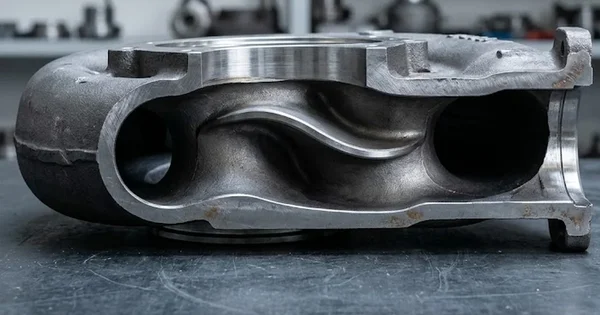 Turbocharger
What Is a Twin Scroll Turbo? How It Works & Benefits
Discover what is a twin scroll turbo, how divided exhaust scrolls eliminate lag, boost low-end torque, and optimize efficiency. Complete technical guide.