
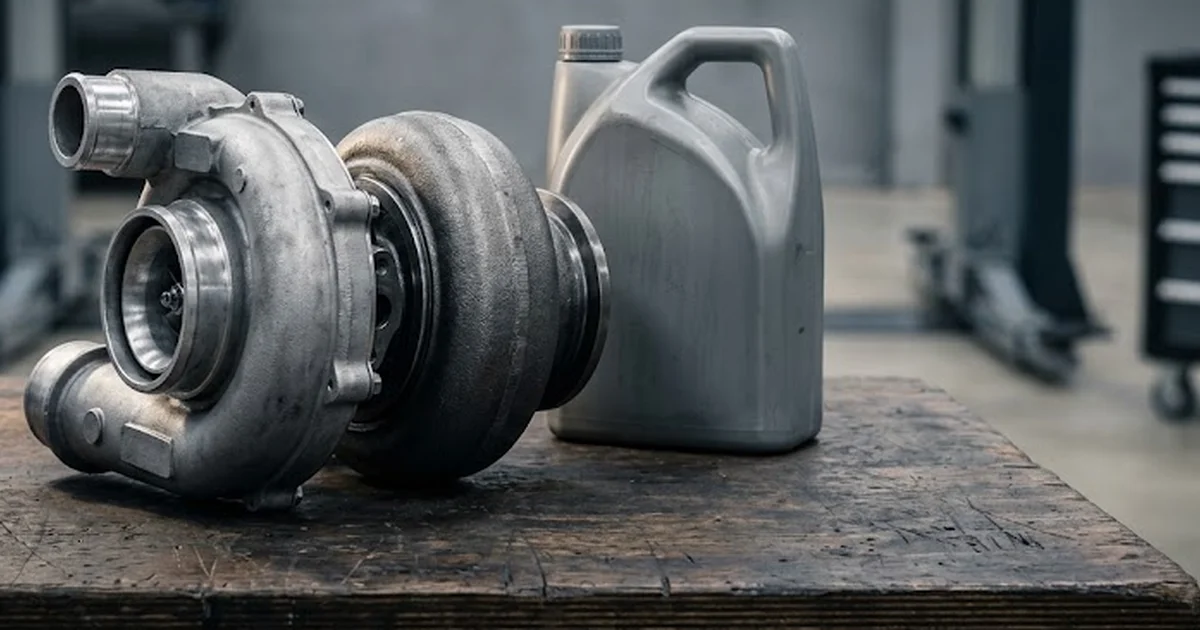
Labor cost for turbo replacement: price levels and what causes variations
How much does labor cost to replace a turbo? Discover hourly rates, installation time based on your engine, and our tips to reduce the bill.
What is the average labor cost for replacing a turbocharger?
Replacing a turbocharger is one of the most common and feared major mechanical operations among motorists. When a turbo starts whistling abnormally, emitting blue smoke from the exhaust, or causing an obvious loss of power, the first question always concerns the overall budget. While the cost of the part itself represents a significant investment, the labor cost often constitutes an equally substantial portion of the final bill. Generally, the hourly labor charge for this operation by a qualified mechanic ranges from 250 to over 800 euros excluding parts, depending on the type of establishment, the geographical area, and especially the vehicle's mechanical architecture.
The total amount billed for labor depends on the combination of two key factors: the hourly rate charged by the professional and the number of hours recommended by the manufacturer's standard for carrying out the operation properly. This standard is far from trivial, as replacing a turbo is not a simple bolt-on component swap: it involves removing numerous peripheral elements, draining the lubrication circuit, and performing thorough checks to ensure the longevity of the new part.
| Type of establishment | Average hourly rate observed | Average intervention time | Average labor cost range |
|---|---|---|---|
| Local independent garage | 55 € to 85 € incl. VAT | 3:30 to 6:00 | 200 € to 510 € incl. VAT |
| Specialized auto center | 65 € to 95 € incl. VAT | 4:00 to 6:30 | 260 € to 620 € incl. VAT |
| Official manufacturer dealership | 95 € to 160 € incl. VAT | 4:00 to 8:00 | 380 € to 1,280 € incl. VAT |
| Turbo and tuning specialist | 80 € to 120 € incl. VAT | 4:00 to 7:00 | 320 € to 840 € incl. VAT |
These disparities are primarily due to the structural costs of the workshops. A brand dealership applies T2 or T3 hourly rates (dedicated to high mechanical expertise), justified by the use of exclusive diagnostic tools and regular technical training within the network. Conversely, an independent multi-brand garage generally offers more moderate rates while applying the indicative times from professional technical databases.
Hourly rate and intervention time: why replacing a turbo takes time
For a lay motorist, removing a mechanical part bolted to the exhaust manifold may seem achievable in two hours. In practice, replacing a turbocharger typically requires between 4 and 7 hours of meticulous work. Automakers publish precise standard time estimates, but these theoretical durations correspond to a smooth disassembly on a new vehicle. On a car with 150,000 or 200,000 kilometers, the thermal stress endured by the exhaust system often extends the intervention time.
The time spent on replacing a turbo is divided into several strictly ordered technical steps that any conscientious mechanic must perform:
- Preliminary diagnosis and cause investigation: connect the electronic diagnostic tool, measure boost pressures, check the air circuit's tightness, and inspect the engine oil condition to accurately identify why the original turbo failed.
- Removal of peripheral components and accessibility: remove the front bumper, grille, underbody protection panels, windshield cowl, exhaust system, or diesel particulate filter (DPF) when these components obstruct access to the manifold.
- Complete oil drain and circuit flushing: drain the contaminated oil, remove the oil pan to clean the oil pump strainer, replace the oil filter, and flush the internal channels.
- Removal of the faulty turbocharger: disconnect the pneumatic control hoses or electric actuators, uncouple the exhaust downpipe, and unscrew the often seized nuts on the thermal studs.
- Cleaning or replacing heat exchangers: remove the intercooler (air-to-air heat exchanger) to extract residual oil accumulated during the failure of the previous turbo's bearings, to avoid causing engine runaway upon restart.
- Installation of the new part and priming: install the new turbo with new gaskets, fit a new oil supply pipe, manually fill the turbo's central housing with a syringe to ensure instant lubrication, then tighten to the specified torque.
- Road tests and parameter checks: crank the engine without ignition to pressurize the circuit, let it idle, then perform a full road test with real-time boost data monitoring.
Each of these steps is critical. Skipping any of these phases to save an hour of labor exposes the vehicle to premature failure of the new turbo within the first few kilometers.
Technical factors affecting labor costs
Two vehicles with similar engine displacements can have radically different labor bills for replacing their turbochargers. This variation is not due to arbitrary pricing but to mechanical, thermal, and geometric constraints specific to each car model.
Engine architecture and under-hood accessibility
The engine's placement in the compartment directly affects physical access to the turbocharger. On a longitudinally mounted engine (common in rear-wheel-drive sedans), the turbo is usually located on the side of the block, providing ample clearance for the operator's tools. The intervention is smoother and requires fewer additional disassemblies.
Conversely, on a compact city car or minivan with a transversely mounted engine, the turbocharger is often nestled at the back of the engine block, squeezed between the firewall and the cylinder head. In this configuration, the mechanic must work blindly, remove the cowl panel, windshield wipers, or even tilt the powertrain or remove the front subframe to create the necessary space. The intervention time then instantly increases by two to three additional hours.
Engine type: single-turbo, bi-turbo, and V-engines
The complexity of the forced induction system plays a major role in labor costs. While a standard 4-cylinder engine only requires the removal of a single component, V-engines (V6, V8) or those equipped with sequential turbocharging (bi-turbo or twin-turbo) increase the difficulty:
- Complete engine removal: on some high-end vehicles or modern SUVs, replacing rear or side turbochargers requires the complete removal of the engine and transmission assembly, driving labor time beyond 10 to 12 hours.
- Actuator synchronization: electronically controlled turbochargers with digital actuators require computer learning via the diagnostic tool, extending the final tuning phase.
- Multiplication of piping: a bi-turbo system includes twice as many oil supply pipes, oil return lines, liquid cooling hoses, and pressurized air ducts, increasing the risk of leaks and the time needed for leak testing.
Thermal seizure and corrosion of fasteners
A turbocharger operates at extreme temperatures, exceeding 850 degrees Celsius on a diesel engine and 1,000 degrees Celsius on a gasoline engine. Over the years and heat-cool cycles, the steel studs and nuts connecting the turbo to the exhaust manifold undergo severe oxidation. If a stud snaps flush with the cylinder head or manifold during loosening, the operator must perform a delicate phase of drilling, extraction with a screw extractor, and installing a threaded insert. This unforeseen technical setback can add one to two unplanned hours of labor to the initial quote.
The complete replacement procedure: why labor is not just a simple swap
The most common mistake among drivers looking to reduce their budget is asking a workshop to replace only the turbocharger body without touching the rest of the mechanics. In the world of professional automotive repair, such a request is synonymous with warranty refusal or an impending disaster. The labor charged by a reputable workshop includes a set of technical precautions without which no new part can function durably.
autoKUR workshop's opinion:
Replacing only the turbocharger without addressing the root cause of its failure is equivalent to dooming the new part to certain failure within a few hundred kilometers. In over 80% of cases examined in our workshops, the turbo is not the cause of the breakdown but the victim of a lubrication defect, a strainer clogged with carbon sludge, or a pinched supply hose. Paying for labor to perform a complete engine flush, remove the oil pan, and systematically replace lubrication ducts is not a luxury: it is the only way to protect your mechanical investment.
The professional replacement protocol requires the systematic disassembly and cleaning of the turbo's entire environment. If the previous turbo's turbine disintegrated, metal fragments and debris were inevitably propelled into the air-to-air heat exchanger and the oil circuit. If the mechanic does not take the time to remove the intercooler for thorough degreasing and flush the pipes with solvent, the first acceleration will suck these particles into the new rotor, destroying it instantly.
Similarly, the rigid oil supply pipe has a very narrow internal diameter. With the residual heat from the exhaust manifold, stagnant oil cokes over the years, forming a solid buildup that restricts oil flow. The labor time charged for removing and replacing this pipe, as well as checking the oil pump pressure with a manometer, is the only guarantee that the new turbocharger's bearings will constantly float on a protective oil film.
How to reduce labor costs without compromising mechanical reliability?
Faced with an unexpected expense that can weigh heavily on a household budget, several rational strategies can help optimize labor costs without compromising the rigor of the work.
Here are the practical levers available to vehicle owners:
- Compare detailed quotes: never rely on a lump sum given verbally. Request a written quote specifying the labor hourly rate, the number of hours based on the manufacturer's official standard, and the details of additional operations (flushing, oil change, replacement of piping).
- Choose a qualified independent garage: for a vehicle out of its contractual warranty period, entrusting the work to a skilled independent mechanic or a reputable local garage can provide hourly rates 30% to 50% lower than those of a brand dealership, often with exemplary expertise.
- Provide a certified turbocharger yourself: some garages agree to install customer-supplied parts, provided it is a new OEM turbo or a perfectly calibrated exchange unit with its dynamic balancing report. This allows for substantial savings on the part's markup while paying the fair price for labor.
- Plan grouped interventions: if your timing belt, clutch, or diesel particulate filter need replacing soon, take advantage of the turbo removal to group these operations. Much of the labor related to removing underbody protection and front-end components will thus be charged only once.
However, skipping the oil filter replacement, reusing old gaskets, or attempting to reinstall a turbo without priming equipment or a torque wrench is a false economy that almost always results in a double repair bill.
Summary and conclusion: budgeting for turbocharger replacement
The labor cost for replacing a turbocharger typically ranges from 250 to 700 euros for mainstream vehicles, potentially exceeding 1,000 euros for complex or hard-to-access engines. This cost reflects the undeniable technicality of the intervention, which goes far beyond a simple mechanical substitution to include circuit cleaning, fluid renewal, and pressure metrology checks.
To control this cost, the key lies in the transparency of the quote and the choice of an experienced professional who strictly follows mounting recommendations. Once labor is estimated, the choice of the main part becomes the determining factor in your bill. To find a part that strictly complies with your engine's specifications, you can consult the complete range available in the Turbocharger category of the catalog, where each new or exchange unit is rigorously tested on a bench before shipping.
Also read
A question?
Get in touch directly.

Discussion
Our advice related to Turbocharger
 Turbocharger
What Is a Twin Scroll Turbo? How It Works & Benefits
Discover what is a twin scroll turbo, how divided exhaust scrolls eliminate lag, boost low-end torque, and optimize efficiency. Complete technical guide.
 Turbocharger
Why Is My Turbo Whistling? Warning Signs and Causes
Is your turbo whistling under acceleration? Discover the differences between normal spooling and mechanical failure, from boost leaks to bearing play.
 Turbocharger
How Much HP Does a Turbo Add? Power Gains & Costs
Learn how much horsepower a turbo adds across engine sizes, what drives replacement costs, and how standard exchange delivers full factory performance.