
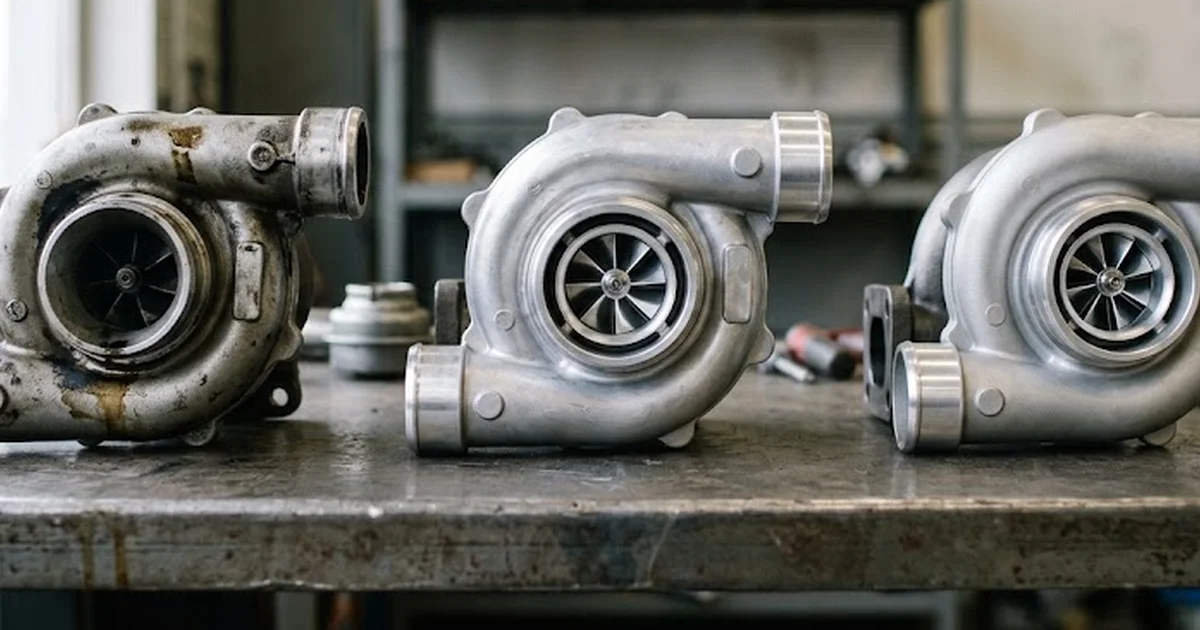
Turbo exchange: the choice between new part, exchange turbo, and used part
New part, standard exchange turbo, or used: a complete comparison of prices, warranties, and risks to help you choose the right turbo replacement.
The turbocharger is one of the most heavily stressed components in a modern engine. When it shows signs of weakness or fails, a question systematically arises in the minds of motorists and workshop professionals: should you opt for a new part, a standard exchange turbo, or a used solution? Each of these options has its own advantages, limitations, and value for money. This article reviews the technical and economic criteria that should guide your decision.
Understanding the three options available for replacing a faulty turbo
Before comparing prices or lead times, it is essential to understand what each of these three types of parts entails. They do not meet the same needs or budget constraints.
- The new part: manufactured identically to the original component, it has never been used and comes directly from the production line or a manufacturer's stock or equivalent.
- The standard exchange turbo: this is a used turbocharger that has been fully disassembled, inspected, and had its wear parts (central cartridge, bearings, seals, actuator) replaced according to precise specifications before reassembly and bench testing.
- The used turbo: this is a part recovered from a wrecked or end-of-life vehicle, generally resold without full reconditioning, sometimes tested but rarely thoroughly overhauled.
These three categories serve different purposes: performance and warranty for new parts, cost/reliability balance for standard exchange, and immediate savings for used parts, along with the risks involved.
Standard exchange turbo: the compromise preferred by professionals
The standard exchange turbo holds a special place in the automotive spare parts industry. It is an industrialized solution, governed by rigorous reconditioning processes, allowing performance close to new at a significantly lower price.
The principle of standard exchange is based on a deposit system: the old faulty turbo is returned to the reconditioner, who uses it as a base to rebuild a new batch of parts after inspection and replacement of worn components. This circular process helps control costs while ensuring a consistent quality level.
- Dimensional inspection of the turbine and compressor
- Systematic replacement of the central cartridge (CHRA)
- Replacement of bearings, seals, and wastegate valves
- Dynamic balancing of the rotating assembly
- Leak and pressure testing on a dedicated bench
This rigor explains why the standard exchange turbo is now the most recommended solution for the majority of replacements, whether for fleet vehicles, commercial vehicles, or city cars.
New part, standard exchange, or used: a comparison of price, warranty, and reliability
To make the comparison objective, it is useful to summarize the key criteria in a recap table. This allows for a quick overview of the trade-offs based on the available budget and vehicle use.
| Criteria | New part | Standard exchange turbo | Used turbo |
|---|---|---|---|
| Average price | High | Moderate | Low |
| Warranty offered | Long, often aligned with the manufacturer's part | Generally satisfactory, varies by reconditioner | Short or non-existent |
| Quality control | Factory-made, high standard | Systematic bench testing | Unpredictable, rarely documented |
| Availability lead time | Variable, sometimes made to order | Quick, stock usually available | Depends on the supplier, highly variable |
| Vehicle compatibility | Exact, original reference | Exact after inspection | To be carefully checked |
| Environmental impact | New production, higher footprint | Partial reuse, reduced footprint | Full reuse, minimal footprint but increased risk |
This comparison highlights why the standard exchange turbo often stands out as the best balance between controlled cost and mechanical reliability.
Risks to consider before choosing a used turbo
Buying a used turbocharger may seem appealing in terms of price, but this option comes with uncertainties that should be assessed before proceeding. A turbo is a precision component subjected to extreme thermal and mechanical stresses, and its actual condition is not always visible to the naked eye.
- Invisible wear on bearings or the turbine shaft, undetectable without disassembly
- Frequent lack of traceability regarding the turbo's actual mileage
- Risk of excessive axial or radial play leading to premature failure
- Internal fouling (carbon deposits, oil residue) that can affect efficiency
- Limited or no warranty depending on the seller
At autoKUR, we regularly see vehicles return to the workshop with a used turbo that was poorly inspected, resulting in failure after just a few thousand kilometers. Our recommendation is simple: if the budget does not allow for a new part, the standard exchange turbo remains, in the vast majority of cases, the safest choice to avoid a second intervention and additional labor costs.
However, used parts can make sense in very specific cases, such as for an older vehicle whose residual value no longer justifies a significant investment, provided the associated risk is accepted.
How to choose the right standard exchange turbo for your vehicle
Once the decision is made in favor of a standard exchange, the next step is to select the correct reference for your vehicle. A compatibility error can lead to engine malfunctions, overpressure, or even serious mechanical damage.
Here are the recommended steps to ensure the right part is chosen:
- Note the exact reference of the original turbo, usually engraved on the housing
- Verify the correspondence with the vehicle's chassis number (VIN)
- Confirm the precise engine specifications (displacement, power, emission standard)
- Ensure the actuator (electronic or pneumatic) matches the vehicle model
- Check if a specific gasket or installation kit is required in addition
Some standard exchange turbo references are offered with variations depending on the production years or export markets. Cross-checking between the manufacturer's reference and the reference provided by the reconditioner helps avoid any unpleasant surprises upon receipt of the part.
Installation and maintenance: best practices after a turbo replacement
The quality of the chosen part alone is not enough to guarantee the turbocharger's longevity: the installation method and maintenance habits play an equally crucial role. Poor installation or negligent start-up can drastically reduce the lifespan of a turbo, even if it is new or reconditioned.
- Systematically replace the oil filter and change the engine oil before installation
- Prime the oil circuit before the first start-up to avoid dry operation
- Check for leaks in the intake and exhaust hoses
- Let the engine idle for a few minutes before driving, especially when cold
- Avoid turning off the engine immediately after sustained driving to allow the turbo to cool down gradually
These simple precautions help preserve the investment made, whether for a new turbo or a standard exchange turbo, and prevent a recurrence of failure in the short term.
Standard exchange turbo: what budget to expect depending on the vehicle type
The cost of a standard exchange turbo varies significantly depending on the type of engine, the technical complexity of the part, and the vehicle in question. It is useful to have benchmarks to anticipate the overall budget for the intervention, including labor.
| Vehicle type | Turbo complexity | Indicative budget range |
|---|---|---|
| City car (petrol or diesel) | Standard, fixed geometry | Contained budget |
| Saloon or estate car (diesel) | Variable geometry, electronic actuator | Intermediate budget |
| Commercial vehicle or fleet vehicle | Intensive use, reinforced turbo | Intermediate to high budget |
| High-end vehicle or bi-turbo | Dual turbo, complex electronics | High budget |
In all cases, it is advisable to request a detailed quote including the part, any deposit, and labor to avoid surprises when the final bill is presented.
Summary: which option to choose for replacing your turbo
The choice between a new part, a standard exchange turbo, and a used part primarily depends on three factors: the available budget, the age and value of the vehicle, and the level of risk you are willing to accept. The new part remains the benchmark in terms of reliability, but its cost may be disproportionate for an older vehicle. While used parts may seem attractive on paper, they carry risks of rapid failure that are hard to anticipate. The standard exchange turbo, on the other hand, offers a solid compromise between controlled quality, reasonable warranty, and affordable price, which explains its growing popularity among both private individuals and professionals.
To find the right reference for your vehicle and compare the available offers, the Turbocharger category includes all the new and standard exchange solutions offered by autoKUR.
You may also like
A question?
Get in touch directly.

Discussion
Our advice related to Turbocharger
 Turbocharger
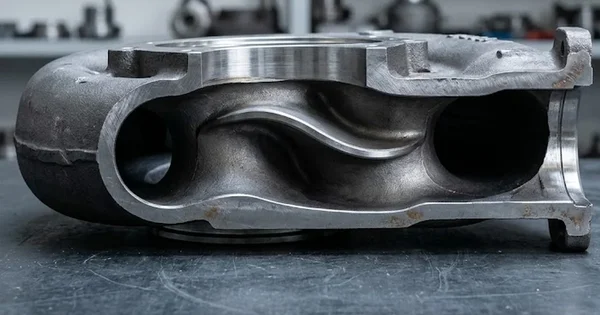
What Is a Twin Scroll Turbo? How It Works & Benefits
Discover what is a twin scroll turbo, how divided exhaust scrolls eliminate lag, boost low-end torque, and optimize efficiency. Complete technical guide.
 Turbocharger
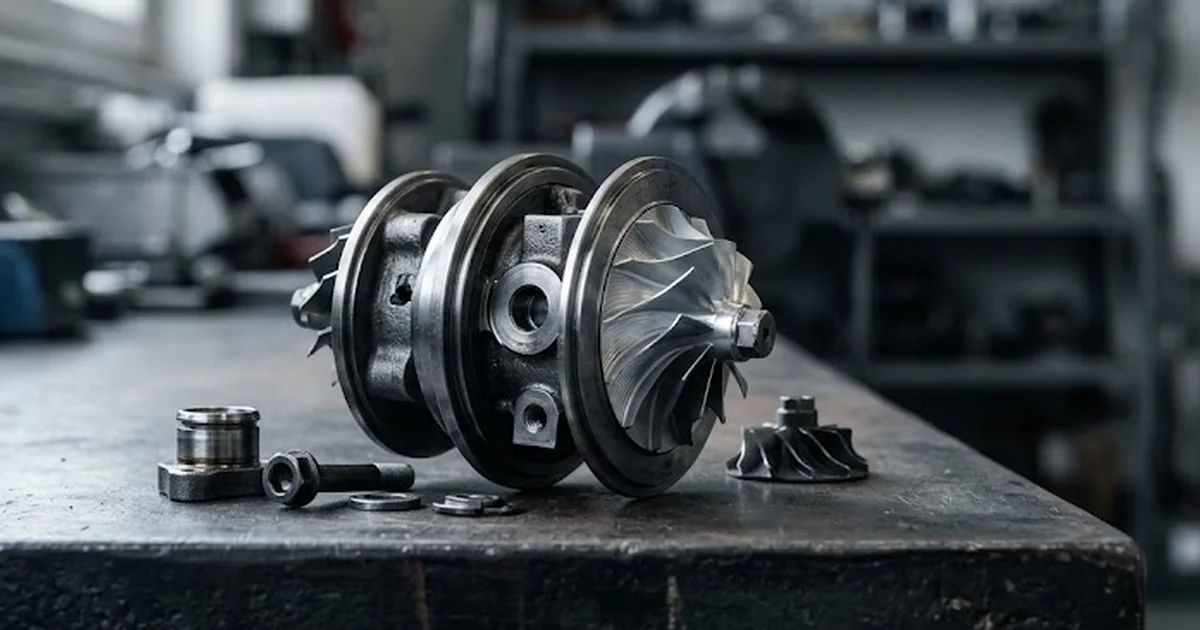
Why Is My Turbo Whistling? Warning Signs and Causes
Is your turbo whistling under acceleration? Discover the differences between normal spooling and mechanical failure, from boost leaks to bearing play.
 Turbocharger
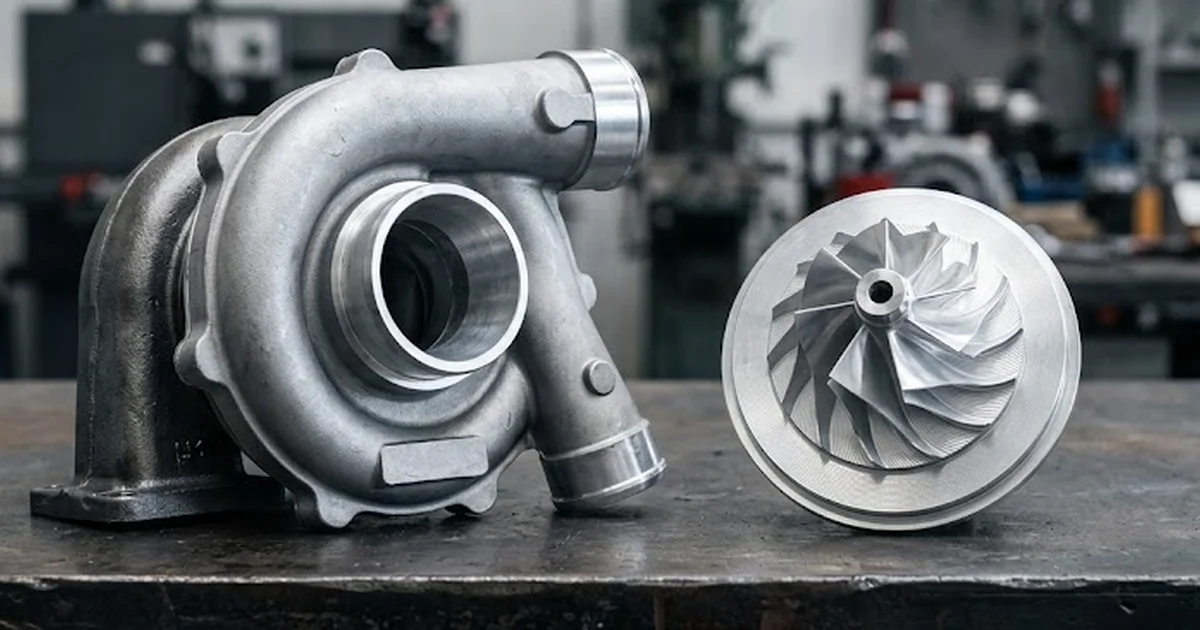
How Much HP Does a Turbo Add? Power Gains & Costs
Learn how much horsepower a turbo adds across engine sizes, what drives replacement costs, and how standard exchange delivers full factory performance.