
Turbo rebuild uk: what fitting or refitting the part really involves
Thinking about a turbo rebuild in the UK? Discover what fitting or refitting a turbocharger really involves, from diagnosis to the final road test.
A turbo rebuild in the UK isn't a job you tackle on a whim, and it certainly isn't just a case of bolting a shiny unit onto your manifold and driving off. Whether you're dealing with a whining noise from under the bonnet, a sudden loss of power, or a mechanic's diagnosis of turbo failure, understanding what fitting or refitting a turbocharger actually involves will save you money, time, and a good deal of frustration. This guide walks you through the realities of the process, from diagnosis through to the final road test, so you know exactly what you're signing up for.
What a Turbo Rebuild Actually Involves
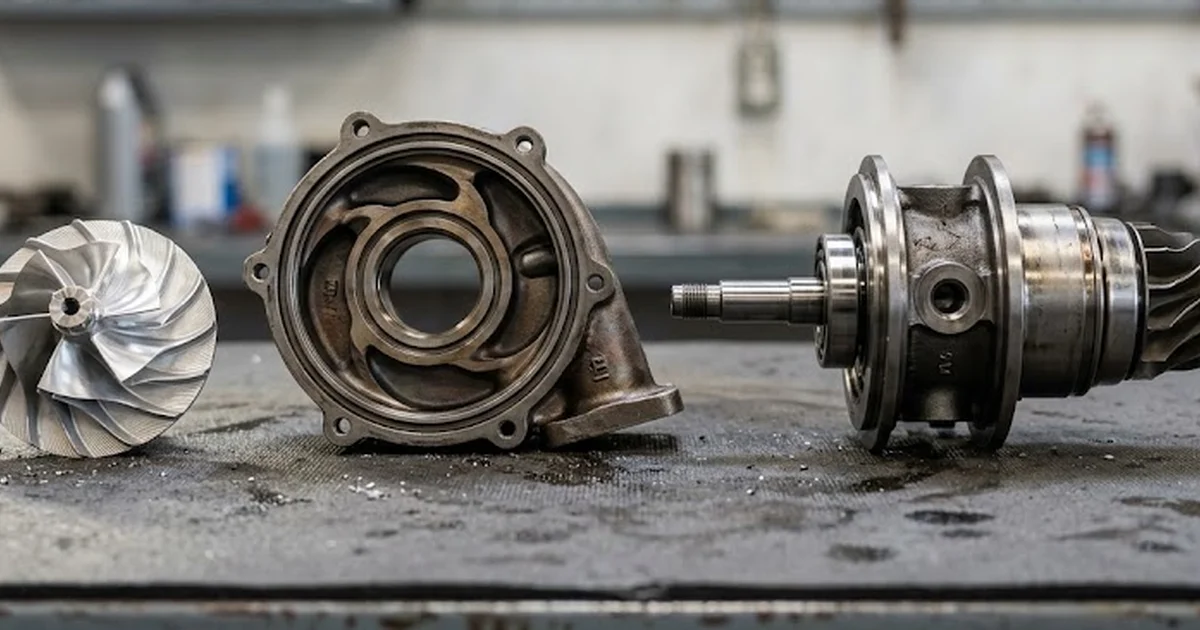
A turbo rebuild is far more involved than a simple swap. It means stripping the turbocharger down to its core components, inspecting every part for wear, and replacing anything that's damaged or worn beyond tolerance before reassembling the unit to factory specifications.
- Full disassembly of the compressor housing, turbine housing, and centre housing rotating assembly (CHRA).
- Bearing and shaft inspection, since worn bearings are the most common cause of turbo failure.
- Seal replacement to prevent oil leaking into the intake or exhaust system.
- Balancing of the shaft and wheel assembly, which is essential given the speeds a turbo spins at.
- Reassembly and pressure testing to confirm the unit holds boost correctly before it goes back on the vehicle.
Skipping any one of these steps risks a repeat failure within weeks, which is why a proper rebuild takes time and precision rather than being a rushed weekend job.
Turbo Rebuild vs Replacement: Which Route Makes Sense?
One of the first decisions you'll face is whether to rebuild your existing turbo or replace it outright with a new or reconditioned unit. Both routes have their place, and the right choice depends on the extent of the damage, your budget, and how long you plan to keep the vehicle.
| Option | Typical Scenario | Pros | Cons |
|---|---|---|---|
| Rebuild existing unit | Worn bearings, seals, or minor shaft play | Cost-effective, retains OEM housing | Not viable if housing is cracked or wheel is damaged |
| Reconditioned replacement | Housing damage or unavailable parts for rebuild | Faster turnaround, tested before sale | Quality varies between suppliers |
| Brand new unit | High-mileage vehicle kept long-term, or performance upgrade | Full warranty, latest tolerances | Highest upfront cost |
In many cases, a rebuild is the most sensible middle ground: it addresses the actual cause of failure without the expense of an entirely new turbocharger.
Signs Your Turbocharger Needs Rebuilding or Refitting
Catching turbo problems early makes the eventual rebuild simpler, cheaper, and less likely to have damaged other engine components. Ignoring the warning signs, on the other hand, often turns a straightforward bearing replacement into a full engine clean-out.
- A high-pitched whining or whistling noise that increases with engine speed.
- Visible blue or grey smoke from the exhaust, indicating oil is being burnt in the turbine or compressor housing.
- Noticeable loss of power or sluggish acceleration, especially under load.
- A warning light on the dashboard linked to boost pressure or engine management.
- Oil consumption increasing without an obvious external leak.
- Excessive play when you wiggle the compressor or turbine wheel by hand (with the unit removed).
If you spot more than one of these symptoms together, it's worth having the turbocharger assessed before continuing to drive, since a failing turbo can send debris into the engine's oil galleries and cause far more expensive damage.
The Turbo Refitting Process, Step by Step
Refitting a turbocharger correctly is just as important as the rebuild itself. A poorly refitted unit, even one that's been perfectly reconditioned, can fail within days if basic preparation steps are missed.
- Diagnose the root cause of failure before fitting anything new, since oil starvation or contamination will destroy a freshly rebuilt turbo just as quickly as the old one.
- Flush the oil feed and return lines thoroughly to remove any debris, sludge, or carbon deposits left behind by the failed unit.
- Replace the oil and filter, and check the oil pump if there's any suspicion it contributed to the original failure.
- Fit new gaskets and clamps rather than reusing old ones, as these are cheap compared to the labour involved in a repeat job.
- Pre-lubricate the turbo's bearings before starting the engine, either by priming the oil feed line or by cranking the engine with the fuel supply disconnected.
- Check boost pipework and intercooler connections for splits or loose clips, since a boost leak places unnecessary strain on a newly fitted turbo.
- Start the engine and let it idle for several minutes before any load is applied, allowing oil pressure to stabilise and the bearings to settle.
- Road test gradually, avoiding hard acceleration for the first few miles to let seals bed in properly.
Each of these steps matters. A turbo rebuild UK specialist will typically follow this sequence closely, because the fitting process is where most avoidable failures actually happen.
Common Mistakes That Ruin a Freshly Rebuilt Turbo
Even a perfectly rebuilt turbocharger can fail almost immediately if it's fitted carelessly. Understanding the most frequent mistakes helps you avoid repeating them, whether you're doing the work yourself or checking that a garage has done it properly.
In our experience at autoKUR, the single biggest cause of early turbo failure after a rebuild isn't the rebuild itself, it's what happens in the first thirty seconds after the engine starts. Skipping the pre-lubrication step or revving the engine before oil pressure has built up will wreck a freshly fitted bearing faster than anything else we see on the bench.
- Not flushing the oil system, allowing old contamination to reach the new bearings within minutes.
- Reusing worn or damaged clamps and gaskets to save a few pounds.
- Failing to check the actuator or wastegate calibration, leading to over-boost conditions.
- Overlooking a blocked or restricted oil drain, which causes oil to back up into the turbo housing and leak past the seals.
- Driving hard immediately after fitting, before the components have had time to settle at operating temperature.
Taking a little extra time during fitting, rather than rushing to get the vehicle back on the road, is consistently what separates a turbo that lasts years from one that fails within weeks.
Turbo Rebuild UK Costs and What Affects Them
Costs for a turbo rebuild vary considerably depending on the vehicle, the extent of damage, and whether additional repairs are needed to the oil system or exhaust. Understanding what drives the price helps you budget realistically and spot a quote that seems too good to be true.
| Factor | Effect on Cost |
|---|---|
| Extent of internal damage | Minor bearing wear is cheaper than a damaged wheel or cracked housing |
| Turbo type and complexity | Variable geometry turbos generally cost more to rebuild than fixed geometry units |
| Labour for removal and refitting | Depends heavily on engine layout and access to the turbocharger |
| Additional repairs needed | Oil line flushing, new gaskets, or actuator replacement all add to the total |
| Choice of rebuilder | Specialist rebuilders may charge more but typically offer better warranty terms |
As a rough guide, budget for the rebuild itself, plus the labour to remove and refit it, plus any consumables such as oil, filters, gaskets, and clamps. Getting a written breakdown from whoever carries out the work makes it far easier to compare quotes fairly.
Preparing Your Vehicle Before the Turbo Goes Back On
Preparation before refitting is often overlooked, yet it has a direct impact on how long the rebuilt turbo will last. A few extra checks at this stage can prevent a comeback repair a few weeks later.
- Inspect the exhaust manifold studs and gasket surface for warping or corrosion.
- Check the intercooler internally for oil residue, which indicates the old turbo was already leaking before failure.
- Confirm the correct oil specification is used, since the wrong viscosity can starve bearings of adequate lubrication.
- Test the boost control solenoid and vacuum lines if the vehicle uses an electronically controlled wastegate.
- Verify the coolant lines (on water-cooled turbos) are clear and free from blockages before reconnecting them.
Taking care of these details before the turbo is bolted back into place is what turns a rebuild into a lasting repair rather than a temporary fix.
Bringing It All Together
A turbo rebuild in the UK is a precise piece of mechanical work that goes well beyond swapping parts. It involves careful diagnosis, thorough cleaning of the oil system, meticulous reassembly, and a controlled refitting process that gives the new bearings and seals every chance of lasting. Rushing any stage, particularly the first few minutes after refitting, is where most avoidable failures happen. Take the time to flush the system properly, use fresh gaskets and clamps, and let the engine idle before demanding any power from it. If you're weighing up your options for a replacement or reconditioned unit rather than a full rebuild, take a look at our Turbocharger category, where you'll find units suited to a wide range of vehicles and driving needs.
Further reading
Frequently asked questions
Everything you need to know about this topic.
A question?
Get in touch directly.
Discussion
Our advice related to Turbo
 turbo
turboTurbo Actuator Replacement: What Fitting Really Involves
Thinking about turbo actuator replacement? Here's what fitting or refitting the part genuinely involves, from diagnosis to calibration and testing.
 turbo
turboHow Do You Know If a Turbo Is Bad? Key Signs
Learn the telltale signs of a failing turbocharger, what causes turbo failure, and how to check your turbo before it leaves you stranded on the road.
 turbo
turboHow to Tell If Your Turbo Is Bad: Warning Signs
Learn how to tell if your turbo is bad before you buy a replacement. Spot the noises, smoke and power loss that reveal a genuine turbo fault.