
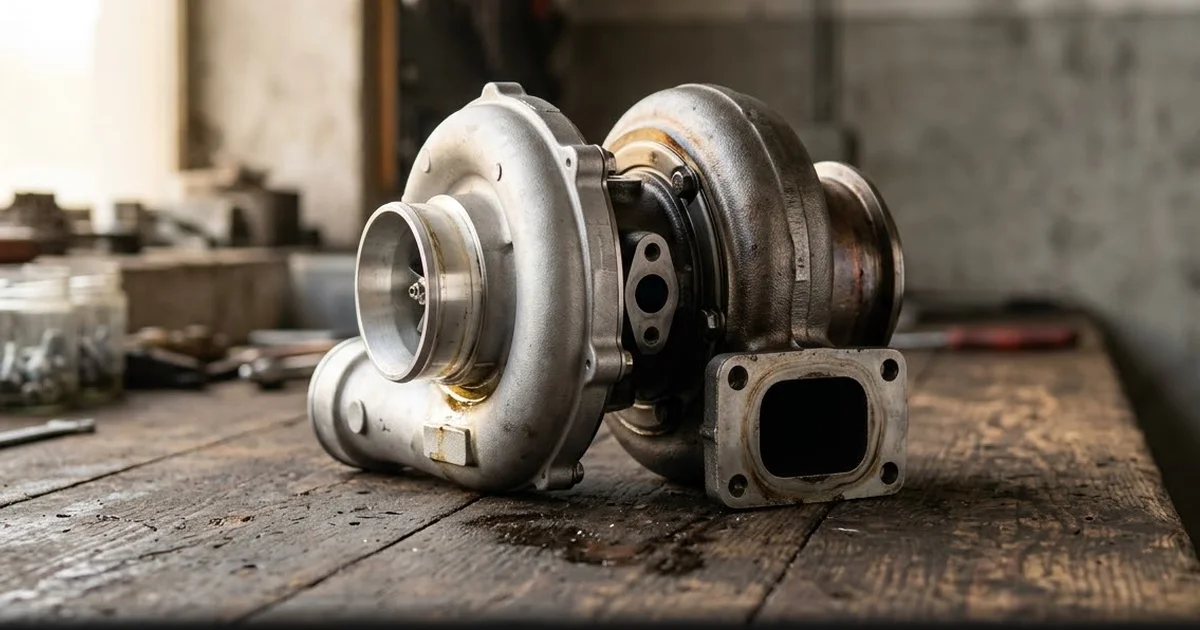
How to tell if turbo is bad
Learn how to tell if your turbo is bad before you buy a replacement. Spot the noises, smoke and power loss that reveal a genuine turbo fault.
A failing turbocharger rarely announces itself with a single, obvious symptom. Instead, it tends to whisper first through subtle changes in sound, smoke, and power delivery before it eventually shouts with a complete loss of boost or a seized shaft. Knowing how to read these early warning signs can save you from a much more expensive repair bill down the line, and it means you order the right replacement part the first time instead of guessing. This guide walks you through the practical checks you can carry out yourself, what each symptom actually means mechanically, and how to decide whether you are dealing with a genuinely bad turbo or something else entirely.
Common Symptoms That Signal a Failing Turbo
Turbochargers operate under extreme heat, spin at speeds well beyond 100,000rpm, and rely on a thin film of oil for lubrication and cooling. When any part of that system starts to degrade, the symptoms usually overlap in ways that make a confident diagnosis tricky without a structured approach. Below are the most reliable indicators that point towards turbo failure rather than an unrelated engine issue.
- Noticeable loss of power or sluggish acceleration, especially under load or when overtaking.
- A whining, whistling, or high-pitched siren-like noise that changes pitch with engine speed.
- Blue or grey exhaust smoke, particularly on start-up or during hard acceleration.
- Excessive oil consumption with no visible external leaks.
- Illuminated engine management light accompanied by a boost pressure or turbo-related fault code.
- Whistling or hissing sounds from the engine bay that suggest a boost leak rather than a mechanical failure.
None of these symptoms alone is conclusive proof of a bad turbo, but when two or more appear together, the likelihood increases significantly. The next sections break each of these down so you can narrow the diagnosis further before you commit to ordering any parts.
Listening for Warning Sounds: What a Bad Turbo Sounds Like
Sound is often the earliest and most useful diagnostic clue available to you, because bearing wear and shaft play tend to generate noise long before performance drops noticeably. Learning to distinguish a healthy turbo's spool-up whistle from a failing unit's distress signals is a skill worth developing.
A healthy turbocharger produces a smooth, rising whistle as boost builds, which fades once you lift off the throttle. A failing unit, by contrast, often produces one or more of the following:
- A continuous, high-pitched whine that persists even at idle, suggesting worn bearings or a damaged shaft.
- A grinding or rattling noise from the turbo housing, which usually points to a damaged compressor or turbine wheel, sometimes caused by foreign object ingestion.
- A hissing sound under boost, which more often indicates a leaking hose, split intercooler pipe, or loose clamp rather than the turbo itself.
- A metallic scraping sound, which can indicate the wheel is making contact with the housing due to excessive shaft play.
If you can safely access the engine bay with the vehicle running, listen carefully near the turbo unit itself, distinguishing between noises that come from the intake side, the exhaust side, and the surrounding pipework. This alone will often tell you whether you are chasing a boost leak or a genuine internal turbo fault.
Checking Exhaust Smoke Colour and Oil Consumption
Exhaust smoke colour is one of the most reliable visual diagnostic tools available to you, and it directly reflects what is happening inside the turbo and the engine's oil control system. Blue-grey smoke, in particular, is strongly associated with turbo seal failure.
When the internal oil seals on a turbocharger wear out, oil is drawn past the shaft and into the intake or exhaust tract, where it burns and produces a distinctive smoke colour. This is different from smoke caused by worn piston rings or valve stem seals, although distinguishing between them from smoke colour alone can be difficult, which is why oil consumption checks matter just as much.
| Smoke Colour | Likely Cause | Turbo-Related? |
|---|---|---|
| Blue-grey, constant | Oil burning due to worn turbo shaft seals | Yes, highly likely |
| Blue on cold start only | Oil pooling in the turbo or valve guides overnight | Possible |
| Black | Overfuelling, often linked to boost pressure faults | Possible |
| White, thick and persistent | Coolant entering the combustion chamber | No, unrelated to turbo |
Alongside smoke colour, keep an eye on your oil level between services. A turbo that is drawing oil past its seals will typically show a gradual but noticeable drop in oil level with no corresponding leak underneath the vehicle. If you are topping up oil more frequently than usual and seeing blue smoke, the combination is a strong indicator that the turbo's internal seals have failed.
Performance Loss, Boost Pressure and Warning Lights
A turbocharger's entire purpose is to force additional air into the engine, so any fault that affects its ability to build and hold boost pressure will be felt immediately in the way the car drives. This is often the symptom that prompts drivers to start investigating in the first place.
Watch out for the following performance-related signs:
- Reduced power that feels most noticeable at higher engine speeds or when climbing gradients.
- A flat spot or hesitation during acceleration, sometimes described as the car feeling like it has lost its turbo entirely.
- Inconsistent boost delivery, where power surges unpredictably rather than building smoothly.
- An illuminated engine management light, often accompanied by the vehicle entering a reduced-power "limp" mode.
Modern vehicles with electronic boost control will frequently log a fault code the moment boost pressure falls outside expected parameters. If you have access to a diagnostic reader, checking for codes related to turbocharger boost control, wastegate position, or underboost/overboost conditions can give you a much clearer picture before you even open the bonnet. That said, a fault code points you towards a system, not always a specific failed component, so mechanical inspection still matters.
In our experience handling turbo enquiries, the biggest mistake customers make is assuming a whining noise automatically means the turbo is finished. More often than not, we find a split intercooler hose or a loose boost pipe clamp behind that exact same symptom. Our advice is always the same: rule out the simple, cheap causes first, because a proper diagnosis saves you from replacing a perfectly good turbocharger. — autoKUR
DIY Diagnostic Checks You Can Do Before Ordering a Replacement
Before you assume the worst and start pricing up a replacement unit, there are several checks you can carry out yourself with basic tools, and they can save you significant time and money if the fault turns out to be something simpler.
- Visual inspection of the turbo inlet: remove the intake pipe at the compressor housing and check for oil residue or shaft play. Try gently rocking the compressor wheel side to side and front to back; excessive movement suggests worn bearings.
- Check for oil in the intercooler piping: a small amount of oil mist is normal on higher-mileage engines, but pooled oil or heavy coating is a red flag.
- Inspect all boost hoses and clamps: look for cracks, perishing rubber, or clamps that have loosened over time, as these are common and inexpensive causes of boost leaks.
- Check the air filter and intake for restrictions: a heavily blocked filter can starve the turbo of airflow and mimic the symptoms of a failing unit.
- Examine the wastegate and actuator linkage: a seized or maladjusted wastegate can cause both underboost and overboost conditions without any internal turbo damage.
- Scan for fault codes: use an OBD reader to check for boost-related codes, which can point you towards sensors, actuators, or control solenoids rather than the turbo itself.
Carrying out these checks methodically, rather than jumping straight to a conclusion, means that when you do decide a replacement is necessary, you can be confident it is genuinely required rather than an assumption based on a single symptom.
When to Repair vs Replace: Making the Right Call
Once you have confirmed that the turbocharger itself is at fault, the next decision is whether a repair, a reconditioned unit, or a full replacement is the most sensible route. This depends heavily on the nature and extent of the damage found during inspection.
| Finding | Typical Recommendation |
|---|---|
| Minor shaft play, no metal debris, seals intact | Monitor closely, consider a service check |
| Oil seal failure with blue smoke, bearings otherwise sound | Rebuild kit or reconditioned unit may suffice |
| Metal debris found in intake or exhaust housing | Full replacement recommended, as debris can damage a new turbo again |
| Cracked housing or damaged turbine wheel | Full replacement required |
| Boost leak only, turbo mechanically sound | Repair hoses, clamps, or actuator; no turbo replacement needed |
If you do find metal shavings or debris anywhere in the intake or exhaust tract leading to the turbo, it is worth investigating the root cause before fitting any replacement, whether that is an oil supply issue, a failing bearing elsewhere in the engine, or contamination from a previous failure. Fitting a new turbo onto a system that still has the original fault present is one of the most common reasons for repeat failures.
Conclusion: Confirming the Fault Before You Order
Diagnosing a bad turbo properly means working through the symptoms methodically rather than reacting to the first sign of trouble. Start by listening for unusual noises, checking exhaust smoke colour, monitoring oil consumption, and noting any changes in power delivery or warning lights. Follow that with a hands-on inspection of the compressor wheel, hoses, and wastegate before drawing your final conclusion. This structured approach means that when you do decide a replacement is genuinely necessary, you can order with confidence rather than guesswork. If your checks confirm the turbo is at fault, our Turbocharger category is the place to find the right replacement or reconditioned unit for your vehicle.
Further reading
Frequently asked questions
Everything you need to know about this topic.
A question?
Get in touch directly.
Discussion
Our advice related to Turbo
 turbo
turboTurbo Actuator Replacement: What Fitting Really Involves
Thinking about turbo actuator replacement? Here's what fitting or refitting the part genuinely involves, from diagnosis to calibration and testing.
 turbo
turboHow Do You Know If a Turbo Is Bad? Key Signs
Learn the telltale signs of a failing turbocharger, what causes turbo failure, and how to check your turbo before it leaves you stranded on the road.
 turbo
turboWhat Is a Turbo in a Car? Full Guide Explained
Discover what a turbo is, how it works, and why it boosts engine power. Clear, expert explanations for UK drivers, plus maintenance tips inside.