
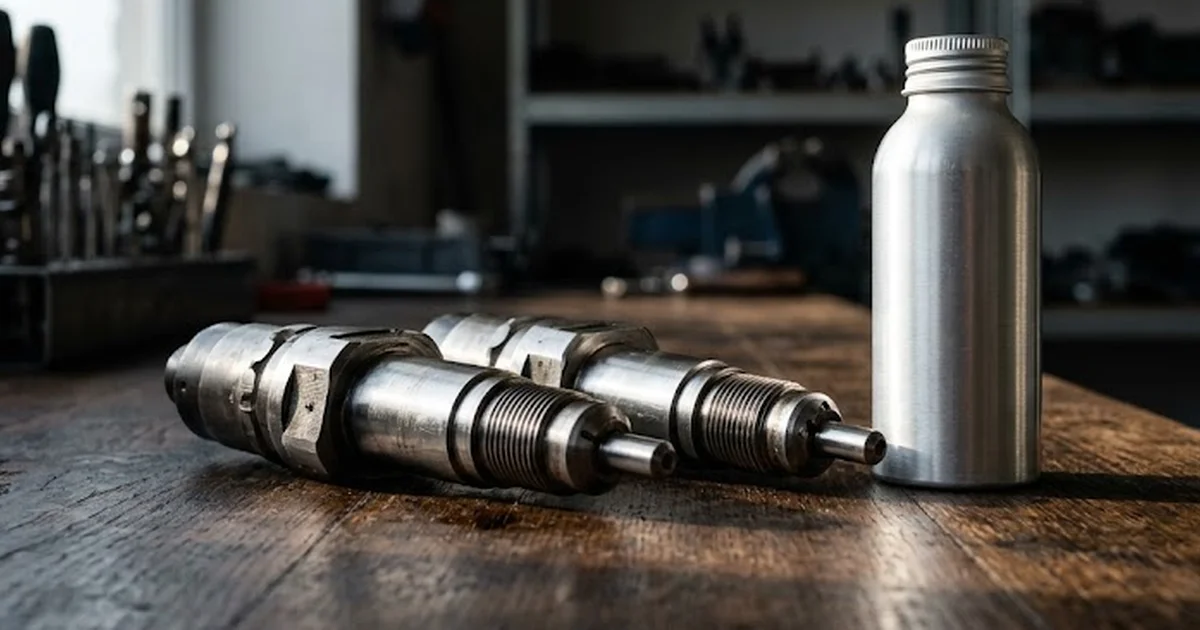
Does a fuel injector cleaner work?
Does a fuel injector cleaner really work? Learn what chemical additives can dissolve, their technical limits, and when replacement injectors are required.
Understanding Fuel Injection and Why Injector Deposits Form
Modern internal combustion engines rely on precise fuel metering to maintain optimal performance, low exhaust emissions, and steady fuel efficiency. In both petrol and diesel powertrains, fuel injectors act as electronically controlled precision valves that spray pressurized fuel directly into the intake tract or directly into the combustion chamber. The injector nozzle features microscopic holes engineered to atomize liquid fuel into a fine mist. Over thousands of miles of operation, this delicate spray mechanism is exposed to intense thermal cycles, varying fuel quality, and combustion byproducts, leading to gradual contamination.
Deposit formation is an inevitable chemical reality of internal combustion. When an engine shuts off, the temperature under the bonnet rises temporarily, an effect known as heat soak. Residual fuel trapped at the injector nozzle tips evaporates, leaving behind heavier hydrocarbon residues, gums, and chemical additives. Over time, these residues bake onto the metal surfaces, forming stubborn varnish and carbon crusts that disrupt the designed spray pattern. Understanding why this happens helps motorists and technicians determine whether a chemical cleaning solution can solve their engine hesitation or if deeper mechanical issues are present.
- Thermal fuel degradation: High operating temperatures cause light fuel molecules to vaporize after engine shutdown, leaving behind heavy hydrocarbons that oxidize into sticky varnish.
- Carbon blow-by and oil vapor: Crankcase ventilation systems and exhaust gas recirculation route microscopic oil droplets and soot back into the intake charge, coating injector tips.
- Combustion chamber exposure: Direct injection nozzles reside directly inside the cylinder, where burning air-fuel mixtures continuously expose the tip to soot and combustion temperatures.
- Fuel quality inconsistencies: Low-detergent fuels or fuels with high olefin content create accelerated lacquering across internal pintle needles and micro-orifices.
What Chemicals Are Inside a Fuel Injector Cleaner?
A commercial fuel injector cleaner is not merely concentrated petrol or thin solvent. It is an engineered blend of chemical detergents, carrier fluids, and corrosion inhibitors formulated to dissolve fuel oxidation byproducts at elevated engine temperatures. The primary objective of an in-tank additive is to wash through the fuel delivery system, soften stubborn varnish, and allow the normal combustion process to burn away liberated carbon particles without fouling spark plugs or catalytic converters.
The effectiveness of any bottled additive relies entirely on its active chemical compound. Decades of chemical engineering in fuel injection systems have proven that basic mineral spirits or kerosene-based additives offer very little cleaning capability against baked-on carbon. In contrast, advanced detergents contain nitrogen-based polar molecules that bond to carbonaceous deposits and carry them into the combustion flame.
- Polyetheramine (PEA): The most resilient and potent detergent available in consumer additives. PEA remains stable through extreme combustion chamber heat, allowing it to clean both low-pressure intake valves and high-temperature injector tips.
- Polyisobutene (PIB) and Polyisobutylene amine (PIBA): Highly effective detergents for port fuel injection systems that break down soft fuel lacquers and prevent intake tract gumming, though less effective in extreme combustion temperatures.
- Carrier oils and solvents: Aromatic hydrocarbon solvents that keep active detergents in uniform liquid suspension, prevent fuel phase separation, and lubricate the moving needle inside the injector body.
- Corrosion inhibitors: Protective chemical agents that coat internal steel passages against moisture contamination often carried by ethanol-blended fuels.
Does a Fuel Injector Cleaner Work? Real Capabilities vs Marketing Claims
The direct answer to whether a fuel injector cleaner works is yes, but only within strict physical and chemical limits. Chemical cleaners excel at dissolving soft hydrocarbon gums, freshly formed lacquer, and light varnish on the exterior nozzle holes. When an engine suffers from sluggish throttle response, slight idle roughness, or elevated fuel consumption caused by partial orifice restriction, a concentrated additive with high PEA content can restore the original conical spray pattern. By returning the atomized mist to its factory droplet size, combustion efficiency improves noticeably.
However, bottled fuel additives cannot reverse physical degradation, electrical breakdowns, or severe thermal coking. An additive flows through the injector with the fuel; if an injector is completely blocked, fuel cannot flow, meaning the chemical cleaner never reaches the restriction. Furthermore, additives cannot repair worn internal needles, fatigued return springs, leaking O-rings, or shorted solenoids. The table below outlines how chemical additives compare to professional mechanical remediation across various diagnostic scenarios.
| Remediation Method | Mechanism of Action | Deposit Removal Depth | Corrects Mechanical Wear? | Appropriate Application |
|---|---|---|---|---|
| In-Tank Chemical Additive | Detergent dissolved in fuel tank dissolves light varnish during driving | Surface lacquer and light nozzle orifice deposits only | No, cannot repair internal wear or damaged seals | Preventive maintenance and early-stage mild spray restriction |
| Pressurized Rail Cleaning | Dedicated chemical canister connected directly to the fuel rail | Moderate carbon softening on pintle tips and intake valves | No, cannot restore eroded seats or electrical failures | Noticeable idle shudder without stored electrical trouble codes |
| Ultrasonic Bench Cleaning | Removed injectors pulsed in heated solvent bath with ultrasonic waves | Deep internal and external carbon removal, full basket filter replacement | No, though bench testing reveals spray volume and balance disparities | Dismantled injectors during major servicing or cylinder head overhaul |
| Standard Exchange Replacement | Complete factory reconditioning with calibrated replacement wear parts | Total component renewal with fresh nozzles, seals, and calibrated springs | Yes, restores full dimensional tolerances and pressure balance | Permanent spray distortion, internal leakage, mechanical seizure, or electrical fault |
Port Injection vs Direct Injection: Why Engine Architecture Dictates the Outcome
The success of any fuel injector cleaning procedure depends heavily on whether your vehicle uses traditional Port Fuel Injection (PFI) or modern Direct Injection (Gasoline Direct Injection - GDI, or Common Rail Diesel). In a PFI setup, the injector sits in the intake runner and sprays fuel onto the back of the intake valve at relatively low pressures (typically 3 to 5 bar). The fuel continuously washes over the valve and nozzle face, giving detergent additives abundant dwell time and fuel flow to dissolve surface gums before they turn into hard carbon.
Direct injection engines present a far harsher environment. In GDI and common rail diesel systems, the injector tip protrudes directly into the combustion chamber, operating under pressures ranging from 150 bar to well over 2,000 bar. At these blistering temperatures, fuel droplets on the nozzle tip bake instantly into dense, crystalline carbon. Furthermore, because fuel is injected directly into the cylinder, in-tank additives never wash over the intake valves, allowing intake tract carbon to accumulate untouched. For motorists dealing with modern high-pressure systems, chemical expectations must be tempered with technical reality.
At autoKUR, our test bench inspections regularly reveal injectors condemned by drivers after pouring bottle after bottle of additive into the tank. While a quality detergent can dissolve light soft varnish in low-pressure systems, no chemical in a fuel tank can repair an eroded needle valve, a seized piezo actuator, or severe cavitation erosion. When nozzle geometry or coil resistance is out of calibration, replacement is the only engineering solution.
When high-pressure diesel or petrol direct injection nozzles suffer from internal erosion, chemical cleaners often do more harm than good by stripping away protective lubricity without clearing the hardened mechanical seat. In such circumstances, pouring additional bottles into the fuel tank merely delays an essential mechanical intervention, risking unmetered fuel washing cylinder walls or burning piston crowns.
Diagnostic Checklist: Is Your Injector Dirty or Mechanically Failed?
Before spending money on chemical treatments or ordering replacement parts, motorists and technicians should perform a structured diagnosis. An engine that exhibits misfires, hesitation under load, or dark exhaust smoke could be suffering from a simple spray obstruction, or it could have a severe mechanical defect such as a stuck-open pintle needle or cracked nozzle body. Analyzing engine management parameters and live sensor data helps separate light contamination from internal component failure.
To pinpoint whether an injector can be salvaged with cleaner or requires removal and replacement, follow this systematic diagnostic evaluation:
- Examine short-term and long-term fuel trims: Connect an OBD2 scanner and inspect Fuel Trim (STFT and LTFT) values. If fuel trims show a positive deviation (+10% to +20%) across all operating loads, the engine control unit is compensating for restricted fuel flow, which may respond favorably to detergent cleaning.
- Check for cylinder-specific misfire codes: A diagnostic code isolated to a single cylinder (such as P0301 or P0304) that does not migrate when spark plugs or ignition coils are swapped points toward an injector problem. If moving the suspect injector moves the misfire, the component is confirmed faulty.
- Perform a leak-down and residual pressure test: When the fuel system fails to hold residual pressure after engine shutdown, an injector needle is stuck open or failing to seal against its seat. Pouring fuel cleaner into the tank will not seal a mechanically worn valve seat and can lead to severe hydraulic lock.
- Measure electrical resistance across coil terminals: Use a digital multimeter to measure the resistance of the internal solenoid or piezoelectric stack. If the measured ohms deviate from factory specifications, the actuator has suffered an electrical breakdown that no chemical can resolve.
- Inspect physical back-leak flow rates: On common rail diesel engines, excessive fuel returning through the injector spill line indicates internal wear in the control valve, which causes difficult warm starting and limp-mode activation under heavy acceleration.
When Cleaning Fails: Reconditioned Units and the Standard Exchange Solution
When diagnostic testing reveals that an injector has suffered internal needle wear, electrical actuator breakdown, or irreversible nozzle tip erosion, continuing to use chemical additives is futile. At this stage, restoring smooth engine operation, proper fuel atomization, and factory power output requires installing a calibrated replacement unit. Removing the old component requires following strict mechanical protocols, as outlined in our step-by-step tutorial on how to remove a fuel injector safely without damaging the cylinder head or fuel rail.
Sourcing brand-new injection equipment can place an exorbitant financial burden on vehicle owners and fleet operators. This is where professional remanufacturing provides an optimal balance between mechanical precision and economic sanity. In our workshop, injectors are fully disassembled, decontaminated through industrial ultrasonic cycles, fitted with precision-machined internal valves, and calibrated against exact volumetric flow maps. For example, a specialized unit like a reconditioned Bosch injector 0414720028 undergoes micro-metric inspection to ensure that injection duration, spray dispersion, and pressure containment match original engineering standards.
This process operates within a circular economy framework through our dedicated core deposit system. Under this exchange standard model, motorists and workshops return their old, rebuildable units when installing a reconditioned replacement. The recovered cores undergo rigorous industrial renewal rather than being discarded in scrap heaps. To ensure exact vehicle matching, mechanics can look up their specific engine specifications and original part numbers by searching all injector references before ordering.
Whether you are maintaining a daily runabout, an commercial delivery van, or a high-mileage highway cruiser, maintaining clean and precise injection equipment is vital for engine longevity. While chemical additives provide an affordable maintenance tool for preventing minor gumming, mechanical wear calls for dependable reconditioned hardware. Explore our comprehensive fuel injector catalog to find precision-calibrated exchange units tailored to your vehicle make, engine displacement, and power rating.
Frequently asked questions
Everything you need to know about this topic.
A question?
Get in touch directly.

Discussion
Our advice related to Injector
 Injector
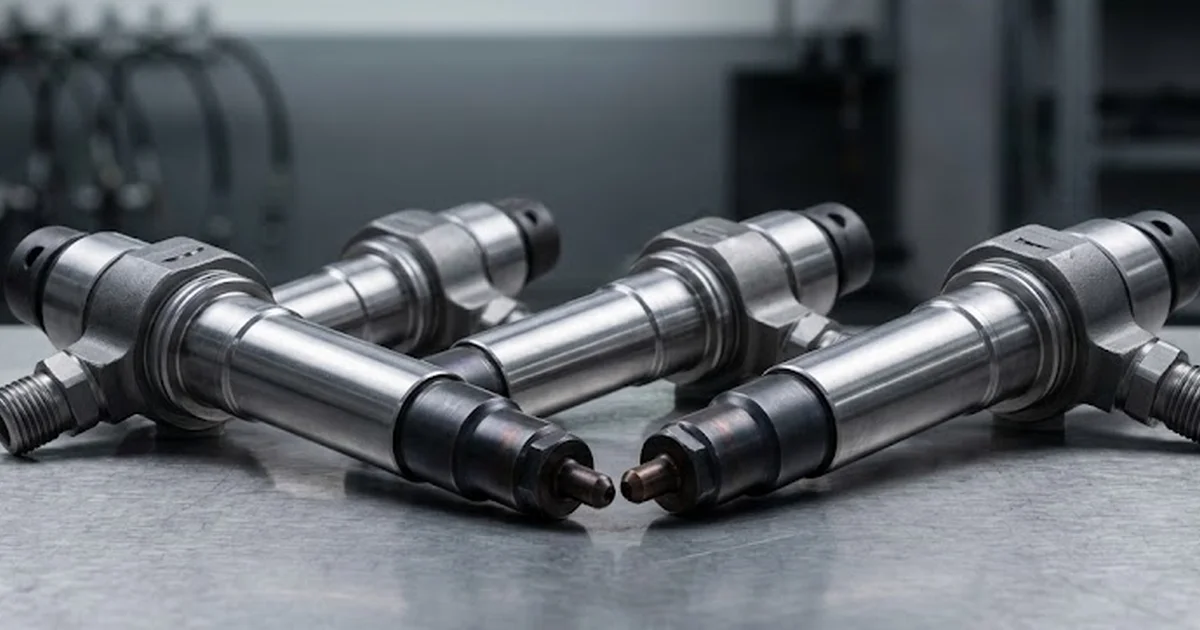
Reconditioned Injectors: New vs Exchange vs Used
Compare new, reconditioned, and used fuel injectors. Discover technical differences, core deposit savings, and calibration standards for reliable engine repair.
 Injector
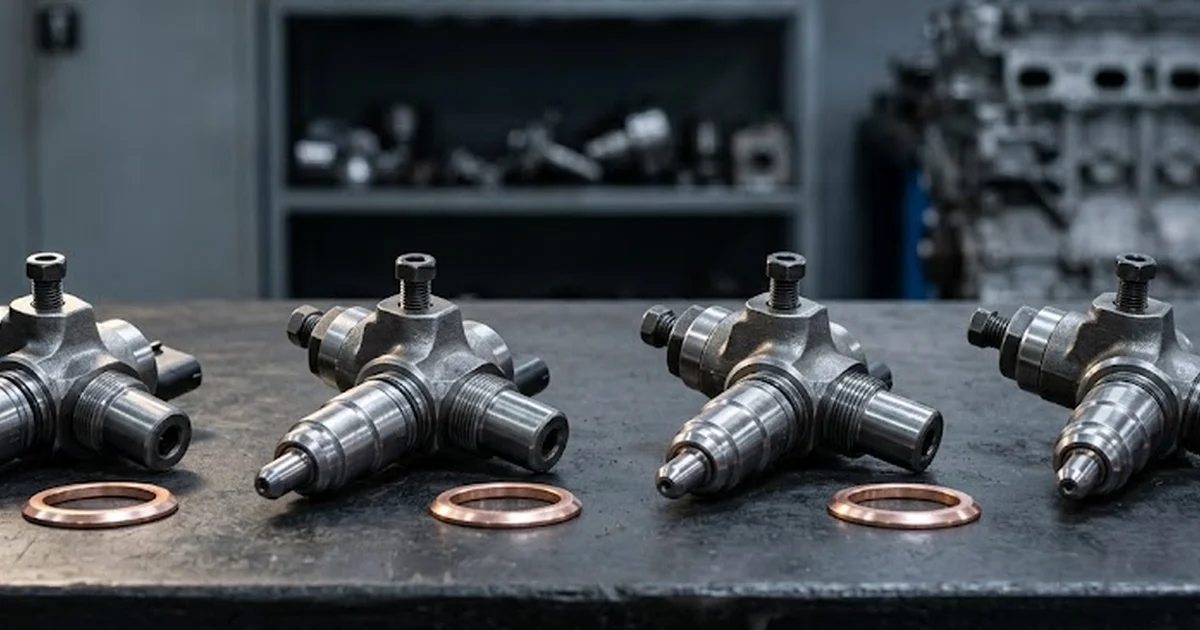
Car Injector Replacement: Fitting & Refitting Guide
Discover what car injector replacement really involves: mechanical seating, copper washer renewal, clamp torquing, ECU coding, and high-pressure fuel priming.
 Injector
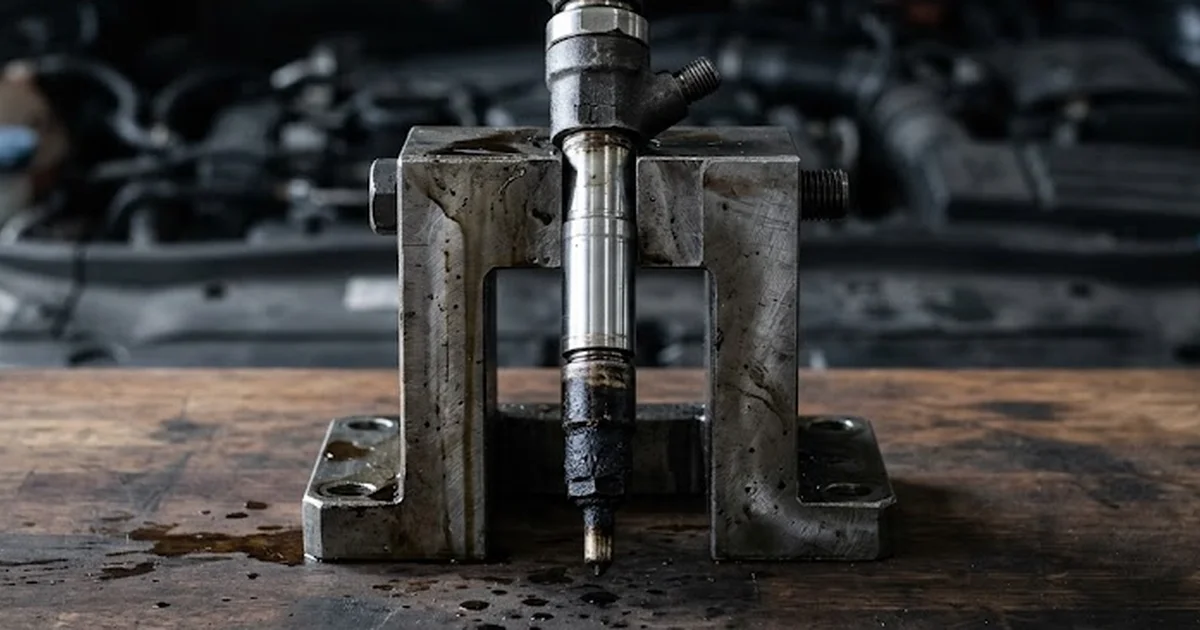
How to Remove a Stuck Injector: Safe Extraction Guide
Learn how to remove a stuck injector safely without damaging the cylinder head. Discover proven chemical, mechanical, and hydraulic extraction techniques.