
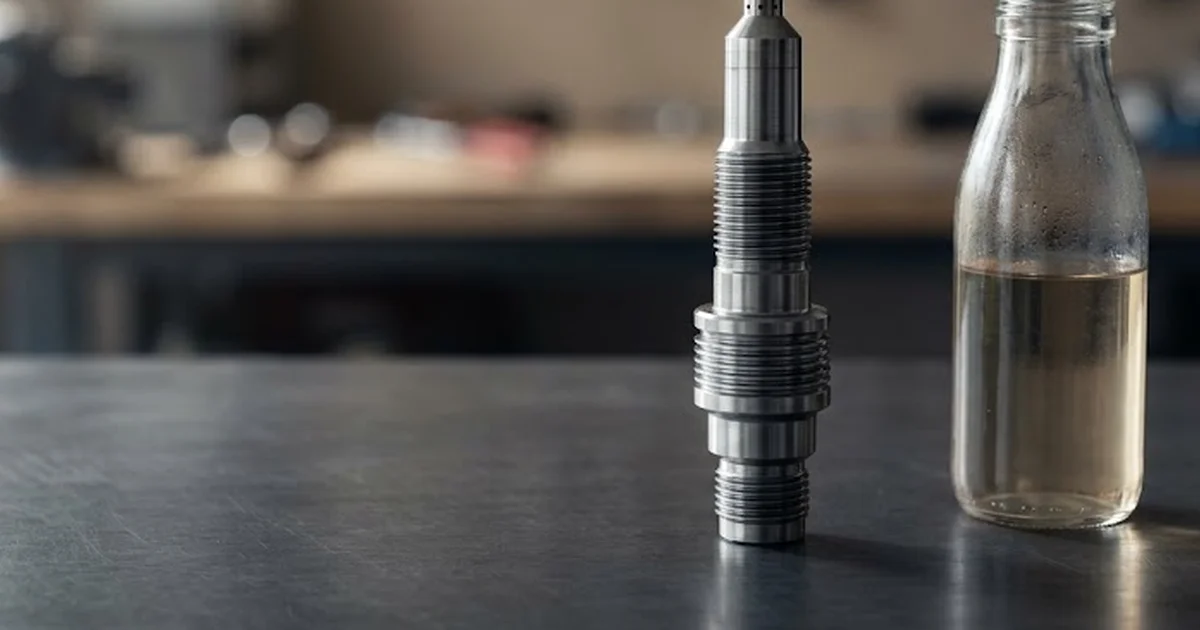
Do diesel injector cleaners work?
Do diesel injector cleaners really work? Learn how they work, when they help, their limits, and how to use them correctly for a smoother-running engine.
If you have noticed rougher idling, a slight loss of power, or a puff of black smoke on acceleration, you have probably come across diesel injector cleaner as a possible fix. It sits on garage shelves and forecourt counters promising smoother running and better fuel economy for the price of a bottle. But do diesel injector cleaners work, or are you simply pouring money into the tank? This article explains what these products actually do, how diesel fuel injectors work in the first place, and when a bottle of additive is genuinely useful rather than a temporary mask for a deeper mechanical problem.
Do diesel injector cleaners work? The honest answer
Diesel injector cleaners can work, but only within a specific set of circumstances. They are formulated to dissolve and disperse the soft carbon deposits, varnish, and gum that build up around the injector tip and inside the nozzle over time. When those deposits are still light to moderate, a good quality cleaner can genuinely restore some spray pattern accuracy and reduce misfiring, rough idle, and minor smoke.
What they cannot do is repair worn components, fix a failed solenoid, unstick a mechanically seized needle, or reverse damage caused by injector wear or contaminated fuel. Understanding this distinction is the key to knowing whether a cleaner is the right tool for your situation.
- Effective for: light carbon build-up, minor performance dips, occasional rough idle, reduced fuel economy linked to poor atomisation.
- Not effective for: worn injector components, internal fuel leaks, electrical or solenoid faults, physically blocked or seized injectors.
- Best used: as part of a regular maintenance routine, not as an emergency fix once symptoms are severe.
How a diesel fuel injector actually works
To understand why cleaners help in some cases and fail in others, it helps to know what a diesel injector is doing every time your engine runs. Diesel injectors are precision components that deliver a finely atomised spray of fuel directly into the combustion chamber, timed to the millisecond and controlled by pressures that can reach thousands of bar in modern common rail systems.
Each injector contains a nozzle with tiny spray holes, a needle valve that opens and closes to control fuel flow, and either a solenoid or piezoelectric actuator that responds to signals from the engine control unit. Because the tolerances inside an injector are measured in microns, even a small amount of carbon deposit or fuel residue around the nozzle tip can distort the spray pattern, disrupt combustion timing, and reduce efficiency.
- The nozzle tip sprays fuel in a precise pattern designed for optimal air-fuel mixing.
- The needle valve lifts and seats thousands of times per minute under high pressure.
- The actuator converts an electronic signal into mechanical movement with near-instant response.
- Return lines carry excess fuel back to the tank, helping to cool and lubricate the system.
Signs your diesel injectors may need attention
Recognising early symptoms is what makes an injector cleaner effective rather than pointless. Deposits build gradually, so the earlier you address them, the more likely a cleaning treatment is to help. Waiting until symptoms are severe usually means the problem has progressed beyond what an additive can fix.
- Rough or uneven idling that was not present before
- A noticeable drop in fuel economy over recent weeks
- Hesitation or slight lag under acceleration
- Increased exhaust smoke, particularly black smoke under load
- A subtle change in engine noise, sometimes described as knocking or ticking
- Difficulty starting, especially in colder weather
If several of these symptoms appear together and have developed gradually, contamination or carbon build-up is a reasonable first suspicion. If symptoms appeared suddenly or are severe, a cleaner is unlikely to be the whole solution and a proper diagnostic check is the safer next step.
Comparing types of diesel injector cleaner
Not all injector cleaners are formulated the same way, and the differences matter for how effective they are and how they should be used. Some are designed for regular preventative use with every tank, while others are concentrated treatments meant for occasional deep cleaning.
| Cleaner type | Typical use case | Strength | Best suited for |
|---|---|---|---|
| Preventative additive | Added every tank or every few tanks | Mild, low concentration | Maintaining a clean system over time |
| Concentrated deep cleaner | Occasional treatment, single tank dose | Higher concentration solvents | Moderate carbon or varnish build-up |
| Intake and injector combined cleaner | Targets both intake system and injectors | Moderate to strong | Vehicles with reduced power and smoke symptoms |
| Professional-grade flush treatment | Applied through specialist workshop equipment | Strongest available | More advanced deposit build-up beyond bottle-additive scope |
As a general rule, the milder preventative products are the safest choice for regular use, while stronger concentrated treatments should be reserved for occasional use when symptoms suggest heavier build-up.
How to use a diesel injector cleaner correctly
Even a well-formulated cleaner will underperform if it is used incorrectly. Getting the dosage, fuel level, and driving conditions right afterwards makes a genuine difference to the outcome.
- Check the recommended dose against your fuel tank size, not just a generic guess.
- Add the cleaner before filling up, so it mixes thoroughly as fuel enters the tank.
- Use a reasonably full tank rather than a nearly empty one, to achieve proper dilution.
- Drive normally afterwards, including some motorway or higher-load driving if possible, since sustained higher engine speeds help circulate the treated fuel through the system.
- Avoid combining multiple different additive products at once unless the manufacturer confirms compatibility.
- Repeat according to the product's guidance rather than applying it excessively in a short period.
Consistency tends to matter more than intensity. A moderate cleaner used regularly as part of routine maintenance is often more effective long-term than an aggressive one-off treatment applied only when problems have already appeared.
When a cleaner is not enough: recognising the limits
It is important to be realistic about what an additive poured into a fuel tank can achieve. Injectors are precision-engineered parts, and once wear, internal leaks, or electrical faults are involved, no cleaning product will resolve the issue.
In our experience dealing with diesel fuel systems day to day, injector cleaners genuinely help when they are used early and regularly, on light to moderate deposits. Where we see people get disappointed is when a cleaner is used as a last resort on an injector that is already mechanically worn or electrically faulty. At that point, no additive is going to bring a failing injector back to specification, and continuing to run the vehicle in that state often accelerates wear on neighbouring components too.
Some warning signs indicate that you have moved past the point where a cleaner can help:
- Symptoms persist or worsen after two or more treatment cycles
- Warning lights related to fuel system or emissions appear
- Fuel economy continues declining despite treatment
- Visible fuel leaks or wet residue around the injector housing
- A misfire that is isolated to one cylinder consistently
In these situations, the sensible next step is a proper inspection rather than repeated dosing with cleaner, and in some cases replacement of the affected injector becomes the only reliable fix.
Getting the most value from injector cleaning as part of routine care
Diesel injector cleaners work best as one part of a broader maintenance approach rather than a standalone cure. Combined with good fuel quality, timely filter changes, and attention to early warning signs, they can meaningfully extend the life and performance of your injectors.
- Use quality fuel from reputable sources to reduce contamination reaching the injectors in the first place
- Replace fuel filters on schedule, since a clogged filter puts more strain on the injection system
- Treat injector cleaning as preventative maintenance, not just a reactive fix
- Keep an eye on the symptoms outlined earlier so you can act before deposits become severe
Where deposits are genuinely the cause of your symptoms, a suitable cleaner used correctly is a cost-effective first step. Where the injector itself has reached the end of its service life, treating the underlying part becomes the only long-term solution.
Conclusion: cleaners help, but they are not a cure-all
So, do diesel injector cleaners work? Yes, within reason. They are genuinely effective at dissolving light to moderate carbon and varnish deposits, restoring smoother running, and supporting fuel economy when used correctly and consistently. They are not a substitute for a worn or faulty injector, and pushing a failing part with repeated doses of cleaner rarely ends well. Use cleaning products as preventative maintenance, watch for the warning signs that suggest a mechanical or electrical fault rather than simple contamination, and when replacement genuinely is the answer, take a look through our Fuel injector category to find the right part for your vehicle.
Further reading
Frequently asked questions
Everything you need to know about this topic.
A question?
Get in touch directly.

Discussion
Our advice related to Injector
 Injector
Reconditioned Injectors: New vs Exchange vs Used
Compare new, reconditioned, and used fuel injectors. Discover technical differences, core deposit savings, and calibration standards for reliable engine repair.
 Injector
Car Injector Replacement: Fitting & Refitting Guide
Discover what car injector replacement really involves: mechanical seating, copper washer renewal, clamp torquing, ECU coding, and high-pressure fuel priming.
 Injector
How to Remove a Stuck Injector: Safe Extraction Guide
Learn how to remove a stuck injector safely without damaging the cylinder head. Discover proven chemical, mechanical, and hydraulic extraction techniques.