

Available products
2 references

Frequently asked questions
About this category
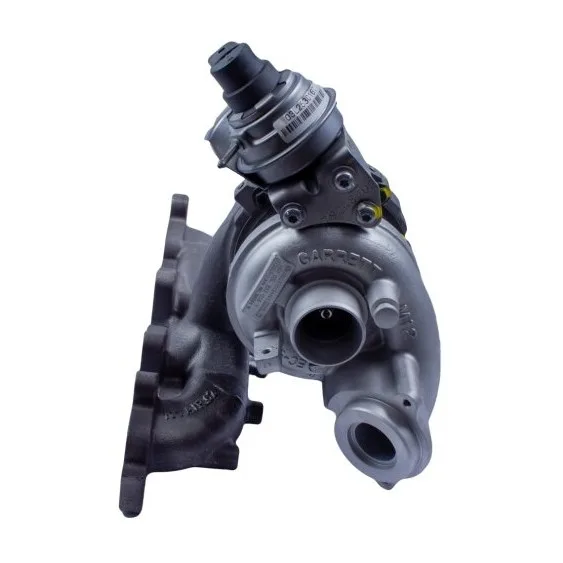
The 1.6 TDI 110 hp turbo category serves a diverse audience: independent mechanics seeking reliable exchange parts, stranded motorists requiring immediate solutions, DIY enthusiasts restoring classic TDI platforms, and German-speaking buyers navigating the DACH market for high-quality remanufactured components. This segment focuses exclusively on turbocompressors designed for Volkswagen, Audi, Seat, and Škoda models powered by the 1.6-liter diesel engine producing 110 horsepower, covering production years from 2009 to present.
Our range is curated through a wholesale partnership model where each turbo is sourced from specialized remanufacturers who disassemble, inspect, and rebuild units to original equipment specifications using OEM-grade components. The grossist role ensures consistent supply chains, competitive pricing tiers, and technical documentation that simplifies procurement for workshops while maintaining strict compatibility matrices across vehicle variants.
Professional uses by trade
Different user profiles approach this category with distinct priorities: garages prioritize bulk availability and fast turnaround, stranded drivers seek immediate fitment, DIYers value technical clarity, and German buyers expect precision in documentation and packaging standards.
- Independent garage: Replace a failing turbo on a 2012 Volkswagen Golf 1.6 TDI 110 hp with a remanufactured unit that matches OEM flow characteristics and wastegate calibration.
- Stranded motorist: Source a direct-fit turbo for a 2015 Audi A3 1.6 TDI 110 hp after a sudden loss of boost pressure during highway driving.
- DIY enthusiast: Install a generalüberholt turbo on a 2010 Seat Leon 1.6 TDI 110 hp while documenting the process for future reference and sharing technical insights online.
- German workshop: Order a bulk shipment of turbos for the 1.6 TDI 110 hp platform to maintain stock levels for VW Caddy and Škoda Octavia variants across multiple customer vehicles.
- Passionate collector: Restore a classic 2009 Volkswagen Passat 1.6 TDI 110 hp by sourcing a remanufactured turbo that preserves the engine’s original performance envelope without compromising emissions compliance.
- Fleet manager: Procure exchange turbos for a mixed VW Group fleet where 1.6 TDI 110 hp models represent 30% of daily service requirements, ensuring minimal downtime through pre-approved part numbers.
- Aftermarket specialist: Develop a technical guide for customers replacing turbos on 1.6 TDI 110 hp engines, emphasizing compatibility checks and common failure modes to reduce repeat service calls.
Range comparison
Below, we present the two core remanufactured turbo references available for the 1.6 TDI 110 hp category, each validated for direct replacement across compatible vehicle models and production years.
| Range | Use | Format |
|---|---|---|
| SL Turbo 775517-5002S | Direct fit for VW Group 1.6 TDI 110 hp | |
| SL Turbo 847671-5002S | Cross-platform compatibility for Audi/Seat/Skoda |
How to choose
Selecting the right turbo for a 1.6 TDI 110 hp application requires evaluating several technical and logistical factors to ensure seamless integration and long-term reliability in your workshop or vehicle.
- Verify the turbo’s compatibility with your vehicle’s exact model year and engine code, as minor variations exist between generations of the 1.6 TDI platform.
- Assess the packaging format—bulk boxes for small workshops or palletized shipments for high-volume operations—to align with your storage and handling capabilities.
- Confirm the remanufacturing process includes CHRA inspection, cartridge replacement, and wastegate calibration to OEM specifications for consistent performance.
- Evaluate the supplier’s return policy for core deposits, ensuring you can efficiently process the used turbo while minimizing administrative overhead.
- Prioritize turbos with documented rotation history and batch traceability to deliver uniform quality across multiple units in your inventory.
- Check for technical documentation that includes OEM reference cross-referencing and installation torque specifications to streamline the replacement process.
- Consider the supplier’s lead times and minimum order quantities, as these directly impact your workshop’s ability to meet customer demands without delays.
Storage & logistics
For workshops handling multiple 1.6 TDI 110 hp turbos, proper storage is essential to maintain part integrity and prevent contamination. Store remanufactured units in their original packaging until installation, ensuring seals remain intact to protect internal components from moisture and debris. Keep turbos in a climate-controlled environment away from direct sunlight and temperature extremes, as prolonged exposure can degrade seals and affect performance. Organize inventory by vehicle model and production year to simplify picking and reduce the risk of misplacement, using clear labeling that includes OEM reference numbers and compatibility notes. Implement a first-in-first-out system to ensure older stock is used before newer arrivals, maintaining consistent quality across all replacements. Train staff to handle turbos with care, avoiding drops or impacts that could damage the housing or internal mechanisms, and always store them in an upright position to prevent oil drainage from the CHRA.
With over a decade of experience in the 1.6 TDI turbo segment, our team has processed thousands of units and developed a deep understanding of the nuances between VW, Audi, Seat, and Škoda applications, ensuring each exchange meets the rigorous standards our customers expect.— autoKUR team
Related categories
Browse our other ranges:
Useful references
For regulatory and sector references, see Reglement (UE) 461/2010 — pieces de rechange et garantie constructeur.