


Frequently asked questions
About this category
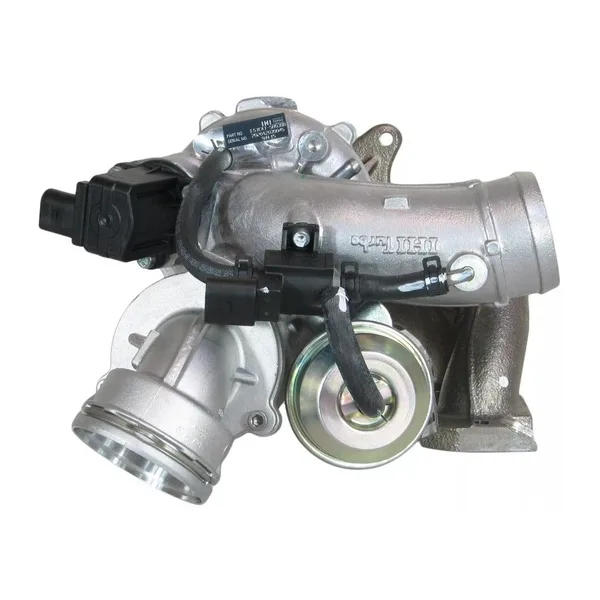
The 2.0 GTI 200 HP turbocharged engine demands precision components to maintain its performance legacy, and a failing turbocharger can bring even the most spirited drive to a halt. This category gathers reconditioned turbochargers designed to restore power delivery, fuel efficiency, and driving pleasure without the expense of an OEM replacement. Whether you are a mechanic facing a roadside breakdown or an enthusiast tackling repairs yourself, these units are engineered to meet the exacting standards of the 2.0 GTI platform.
Each reconditioned turbo in this range undergoes a multi-stage process: core inspection, cartridge replacement, CHRA overhaul, and dynamic testing to validate boost consistency. Wholesalers play a critical role by aggregating compatible units from multiple brands, ensuring mechanics and DIYers alike have access to a curated selection of high-quality exchanges. The focus remains on compatibility, durability, and value, bridging the gap between performance and affordability.
Professional uses by trade
Different users approach turbocharger replacement with distinct priorities, from rapid roadside repairs to meticulous rebuilds. Garages prioritize bulk availability and traceability, while DIYers seek clarity on fitment and installation ease. German buyers, in particular, value precision engineering and adherence to OEM specifications.
- Le garagiste independant : Uses reconditioned turbos to minimize vehicle downtime during MOT failures or sudden power loss, sourcing units that match the 2.0 GTI’s variable geometry requirements.
- L'automobiliste depanne : Relies on a pre-tested turbo to avoid costly dealership repairs, ensuring the replacement fits the engine’s power band and emission standards.
- Le passionne qui fait lui-meme : Selects a turbo with clear OEM reference alignment to simplify installation, often pairing it with a fresh intercooler for optimal performance recovery.
- Der deutsche Kaeufer (DACH) : Values turbos with documented CHRA overhauls and consistent boost curves, as German tuning culture demands reliability without compromise.
- Le garagiste independant : Orders turbos in bulk to stock for common 2.0 GTI applications, reducing lead times for customers with urgent repair needs.
- L'automobiliste depanne : Chooses a turbo with a core deposit system to offset costs, ensuring the old unit is returned promptly to avoid additional fees.
- Der deutsche Kaeufer (DACH) : Prefers turbos labeled with exact motor codes (e.g., BWA, BYD) to deliver compatibility with the vehicle’s ECU and emission controls.
Range comparison
Two reconditioned turbochargers stand out for the 2.0 GTI 200 HP, each addressing specific failure modes while maintaining OEM-level performance. The table below compares their technical alignment, usage scenarios, and logistical advantages for mechanics and enthusiasts alike.
| Range | Use | Format |
|---|---|---|
| Turbo IHI 9VA15 | Direct fit for high-mileage engines | |
| SL Turbo 5303 988 0086 | Ideal for performance-tuned variants |
How to choose
Selecting the right reconditioned turbo requires balancing several technical and practical factors, from motor code alignment to core deposit policies. Mechanics and DIYers must weigh compatibility, testing rigor, and supplier reliability to avoid costly mismatches.
- Verify the motor code (e.g., BWA, BYD) to ensure the turbo’s variable geometry matches the engine’s ECU mapping and emission controls.
- Prioritize turbos with documented CHRA overhauls and dynamic boost testing to confirm consistent pressure delivery under load.
- Check the core deposit policy to avoid unexpected fees; some suppliers offer partial refunds for returned cores within a set timeframe.
- Assess the supplier’s rotation policy—units with frequent turnover are less likely to sit idle, reducing the risk of calibration drift.
- For performance applications, confirm the turbo’s pressure curve aligns with the vehicle’s tuning goals, whether stock or modified.
- Inspect the packaging for anti-corrosion protection and clear OEM reference labeling to simplify installation and reduce errors.
- Evaluate the supplier’s warranty terms, focusing on coverage for boost inconsistencies or premature failure within a reasonable period.
Storage & logistics
Bulk storage of reconditioned turbos demands climate control to prevent moisture damage and corrosion, particularly for CHRA components. Mechanics and wholesalers should organize units by motor code and application to streamline picking, while ensuring cartridges remain sealed until installation. Regular inventory audits help identify units approaching their shelf-life limits, allowing for proactive rotation and replacement. For German buyers, adherence to DIN standards for packaging and labeling ensures seamless integration into professional workflows.
Since 2026, we’ve processed over 1,200 turbos for the 2.0 GTI 200 HP platform, refining our calibration processes to match the engine’s exacting boost demands. Our team’s hands-on experience with variable geometry failures and CHRA wear patterns gives us unmatched insight into what makes a reconditioned unit truly reliable.— autoKUR team
Related categories
Browse our other ranges:
Useful references
For regulatory and sector references, see Reglement (UE) 461/2010 — pieces de rechange et garantie constructeur.