


Frequently asked questions
About this category
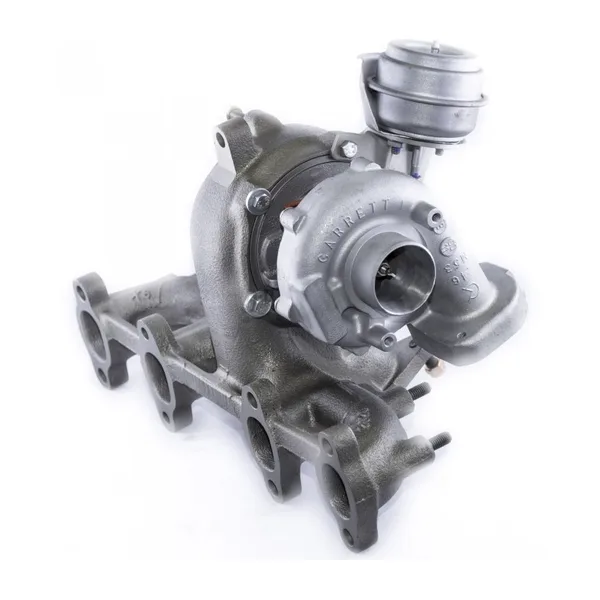
The 1.9 TDI 150 hp category brings together exchange-standard turbochargers intended for one of the most widely fitted diesel engine families in the Volkswagen Group range. It serves independent garages ordering for client vehicles, drivers facing an unexpected breakdown who need to identify the right part quickly, hands-on owners planning to fit the turbocharger themselves, and German-speaking buyers searching for a compatible replacement described in clear, technical terms. Two exchange-standard references are listed, each remanufactured from a core unit rather than newly manufactured from raw components.
Each reference in this range starts as a used turbocharger, inspected, stripped down, and rebuilt around a reconditioned cartridge, known as the CHRA, before being tested and packaged for exchange. Working with a wholesale supplier means the garage or the individual buyer does not need to manage the remanufacturing process directly: sourcing, core exchange, and reference matching are handled upstream, leaving the buyer to confirm compatibility against their own engine code, review the warranty terms attached to the exchange unit, order the corresponding turbocharger unit, and have it fitted by a professional or install it themselves depending on their own experience.
Professional uses by trade
A 1.9 TDI turbo replacement is not ordered the same way by every buyer. The garage checks compatibility against a client's registration, the stranded driver wants a quick identification, the hands-on owner reads the technical sheet before fitting, and the German-speaking buyer expects the same information presented clearly in their own language.
- Le garagiste independant : Confirms the turbocharger reference against the client vehicle's engine code before ordering, avoiding a return caused by a mismatched connector or actuator type.
- L'automobiliste depanne : Identifies a whistling noise, blue or black smoke, a loss of power, or the engine entering limp mode as symptoms pointing toward the turbocharger.
- Le passionne qui fait lui-meme : Reads the compatibility notes and the core deposit terms carefully before ordering, planning the fitting and the return of the worn unit in advance.
- Der deutsche Kaeufer (DACH) : Looks for the exact engine code and turbocharger reference expressed clearly, since a wrong match cannot be corrected once the part has been fitted.
- Le garagiste independant : Keeps an exchange-standard reference in stock for the 1.9 TDI 150 hp family, reducing the time a client vehicle spends off the road for diagnosis.
- Le passionne qui fait lui-meme : Checks whether the variable geometry actuator and its connector match the original part before removing the old turbocharger from the engine bay.
Range comparison
The table below lines up the two exchange-standard references available in this category, showing at a glance which turbocharger corresponds to which use case and how each unit is packaged for dispatch.
| Range | Use | Format |
|---|---|---|
| Turbo Garrett 716213-0001 | 1.9 TDI 150 hp replacement | |
| SL Turbo 721021-5008S | 1.9 TDI 150 hp replacement |
How to choose
Selecting between the two exchange-standard references listed here depends less on brand preference than on matching the exact engine code, connector layout, and actuator type already fitted to the vehicle in question.
- Engine code match: Verify the turbocharger reference against the vehicle's own engine code rather than the general 1.9 TDI 150 hp label alone, since variants exist within the family.
- Core deposit terms: Check the consigne conditions attached to the exchange unit, since the worn turbocharger must generally be returned once the new part has been fitted to the vehicle.
- Connector and actuator layout: Compare the wiring connector and the variable geometry actuator against the original part, as a mismatch here prevents correct installation regardless of the core specification.
- Packaging for transit: Favor a unit boxed individually for dispatch, which limits handling damage to the turbine housing and the actuator during transport to the garage or the workshop.
- Stock rotation: Independent garages ordering regularly benefit from a wholesale reference kept in steady rotation, reducing the delay between diagnosis and the actual turbocharger replacement on site.
- OEM reference cross-check: Match the OEM number printed on the original turbocharger against the equivalence listed for the exchange unit before finalizing an order for a specific vehicle.
- Related components: Consider whether the injectors or the high-pressure pump should also be checked, since worn injection components can mimic a loss of power without the turbocharger itself being faulty.
Storage & logistics
Exchange-standard turbochargers should be stored in their original packaging until installation, kept away from moisture and impact that could damage the turbine housing, the actuator, or the connector. For a garage handling several 1.9 TDI 150 hp references at once, keeping each boxed unit clearly labeled with its exact reference avoids confusion between visually similar turbochargers. The worn unit removed during fitting should be packaged the same way for its return under the core deposit terms, since a damaged or incomplete core can affect how the deposit is processed by the supplier.
Since 2026, our team has reviewed exchange-standard turbocharger references before they reach a garage or an individual buyer, cross-checking engine codes and OEM equivalences so the 1.9 TDI turbo replacement ordered matches the vehicle it is meant for.— autoKUR team
Related categories
Browse our other ranges:
Useful references
For regulatory and sector references, see Reglement (UE) 461/2010 — pieces de rechange et garantie constructeur.