

Available products
4 references


Frequently asked questions
About this category
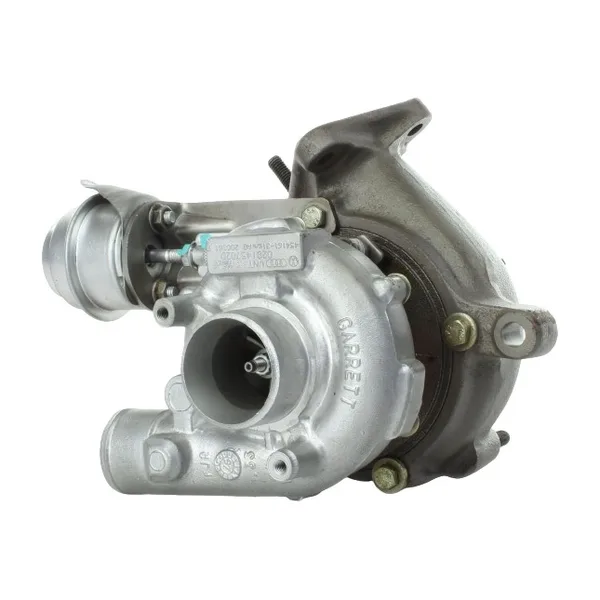
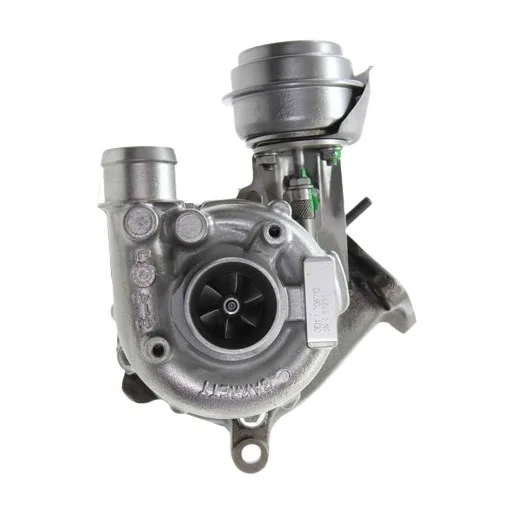
This category gathers exchange turbochargers built for the 1.9 TDI engine rated at 110 hp, a unit found across a wide span of model years and badges among the vehicles it powers. It is written for anyone facing a genuine mechanical decision rather than a catalogue browse: the independent garage quoting a repair, the driver stranded by a sudden loss of power or a rising whistle, and the do-it-yourself owner comparing an engine code and an OEM reference before ordering a replacement cartridge or CHRA, and ruling out an injector or high-pressure pump fault that can mimic the same symptoms.
The range is built around exchange standard logic: each reference corresponds to a specific engine code and actuator geometry, cross-checked against OEM numbers so that a SL, BorgWarner KKK, or Garrett unit lines up with the turbocharger it replaces rather than a generic approximation. A wholesale distributor's role here is to keep that correspondence current, hold the core-deposit cycle running smoothly, and make sure a returned worn unit is processed without disrupting the next order.
Professional uses by trade
A 1.9 TDI turbocharger rarely gets replaced out of curiosity: it responds to a symptom, a quote, or a planned repair. The following overview reflects how different buyers approach the same reference, from a workshop juggling several repair orders to a driver who simply needs the vehicle running again.
- Independent garage: cross-references the engine code and OEM number before ordering, so the exchange turbocharger matches the actuator geometry already on the vehicle.
- Independent garage: keeps a rotating core-deposit cycle with the wholesaler, returning the worn cartridge the same week a replacement unit is fitted by its own technician.
- Stranded driver: identifies a sudden loss of power, dense exhaust smoke, or a rising whistle as the signal to have the turbocharger checked rather than ignored.
- DIY enthusiast: compares the CHRA and variable-geometry actuator against the vehicle's service history before deciding whether a repair or a full exchange unit makes sense.
- DIY enthusiast: reads the warranty duration attached to a reference before ordering, since an exchange turbocharger is fitted once and expected to perform without repeated removal.
- German DACH buyer: relies on the engine code and OEM equivalence table to confirm a reference fits a vehicle bought or serviced across the German market.
Range comparison
The table below lines up the four exchange references carried for this engine, each tied to its own engine code and actuator design, so a garage or a driver can match a reference to a vehicle without opening a separate catalogue page.
| Range | Use | Format |
|---|---|---|
| SL Turbo 713672-5006S | exchange fit for 1.9 TDI | |
| Turbo BorgWarner - KKK 5439 988 0017 | OEM cross-reference replacement | |
| Turbo Garrett 454161-5003S | variable-geometry actuator replacement | |
| Turbo Garrett 706712-0001 | CHRA and cartridge replacement |
How to choose
Choosing among four references for the same engine comes down to a handful of professional criteria rather than preference: how the unit is packaged, how the core deposit is handled, and how consistently the same reference performs order after order.
- Packaging integrity on arrival, since a dented box or a loose actuator arm signals rough handling long before the turbocharger reaches the vehicle.
- Clarity of the core-deposit terms, so a garage knows exactly when and how the worn cartridge must be returned to close the exchange.
- Consistent quality between one order and the next, which matters more to a busy workshop than any single unit's specification sheet.
- Availability of the exact engine code and OEM cross-reference, avoiding a near-match that fits the housing but not the actuator linkage.
- Stated warranty duration attached to the reference, read before ordering rather than after a comeback repair reopens the same vehicle.
- Rotation speed of the reference within the wholesaler's own stock, which affects how quickly a replacement reaches a workshop after ordering.
Storage & logistics
Exchange turbochargers move through a workshop's stock rather than sitting on a shelf indefinitely: each boxed unit should stay sealed until the vehicle is on the ramp, protecting the actuator arm and compressor housing from impact during handling. The core-deposit cycle depends on the worn cartridge being kept dry and reasonably intact after removal, since a corroded or seized return can complicate the exchange. For a distributor or a garage carrying several references at once, grouping units by engine code rather than by brand keeps picking fast and reduces the risk of sending out a near-match instead of the correct fit. Final fitting and torque of the actuator linkage remain a task for the workshop's own technician once the exchange unit is on hand.
Since 2026, our team has treated every 1.9 TDI turbocharger reference the same way: verify the engine code first, confirm the actuator geometry second, and only then call the exchange ready to leave for a workshop.— autoKUR team
Related categories
Browse our other ranges:
Useful references
For regulatory and sector references, see Reglement (UE) 461/2010 — pieces de rechange et garantie constructeur.