

Available products
4 references


Frequently asked questions
About this category
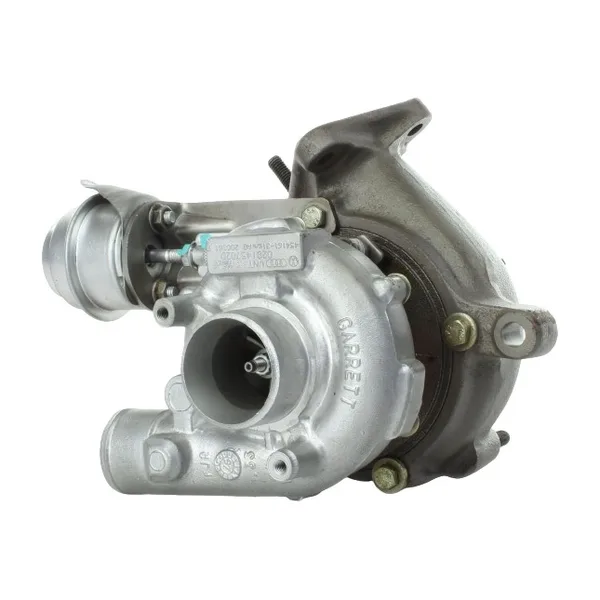
This category groups the exchange turbochargers matched to the 1.9 TDI 115 hp engine, a diesel unit fitted across a range of passenger cars and light commercial vehicles across Europe. It is built for three overlapping audiences: an independent garage replacing a failed unit for a customer, a driver who prefers to diagnose and swap the part directly, and a workshop serving buyers who read specifications in German before ordering. Each listing states the reference, the engine code it serves, and the equivalences a buyer needs to confirm fitment before checkout.
The range is built around exchange-standard units: a core deposit is charged at purchase and refunded once the worn turbocharger is returned, a process sometimes called Pfand in German-speaking markets. As a wholesale distributor, autoKUR sources remanufactured units from established turbo specialists and organises them by engine application rather than by brand, so a buyer searching by motorisation finds every compatible reference in one place instead of scanning multiple catalogues.
Professional uses by trade
A 1.9 TDI 115 hp turbocharger rarely gets ordered without a clear reason: a garage schedules a replacement, a driver notices reduced power, or a hobbyist plans a weekend repair. The uses below reflect how each audience typically approaches this range, from a professional's stock decision to an individual's first diagnosis.
- Independent garage: An independent garage confirms the 1.9 TDI 115 turbocharger reference against the customer's engine code before ordering the exchange unit for a scheduled job.
- Independent garage: A workshop keeps a short list of references on the shelf to cover the most frequent 1.9 TDI 115 hp replacement requests without a special order delay.
- Stranded motorist: A driver noticing reduced power and a whistling sound under load looks up the 1.9 TDI 115 turbocharger reference matching the vehicle's registration documents.
- Stranded motorist: A motorist facing a limp-home warning light forwards the engine code from the logbook to a garage, which then orders the matching exchange turbocharger.
- DIY enthusiast: A hobbyist planning a weekend repair cross-checks the OEM number stamped on the old unit against the equivalences listed for each 1.9 TDI 115 reference.
- German-speaking buyer (DACH): A buyer ordering from a German-speaking market checks the core deposit terms for the returned unit before confirming a 1.9 TDI 115 turbocharger order.
Range comparison
The table below lines up the three references available for this engine family, so a buyer can weigh the manufacturer, the intended use, and the wholesale packaging before choosing which 1.9 TDI 115 turbocharger to add to an order.
| Range | Use | Format |
|---|---|---|
| SL Turbo 751851-5004S | standard exchange replacement | |
| SL Turbo 5439 988 0022 | workshop stock replacement | |
| Turbo BorgWarner - KKK 5439 988 0017 | specialist garage order |
How to choose
Choosing between these references comes down to a few practical points a professional checks before ordering: the exact engine code, how the unit is packaged for transport, and how it fits into a workshop's existing stock rotation.
- Packaging: Each turbocharger ships in packaging designed to protect the compressor and turbine housings from impact during transport and while it waits on a shelf.
- Engine code match: A buyer confirms the engine code and OEM equivalence listed for each reference before adding it to a repair order, avoiding a mismatched part.
- Core deposit terms: A workshop reviews the deposit and return process for the worn unit, since the exchange model depends on that unit coming back.
- Stock rotation: A parts buyer tracks how often each 1.9 TDI 115 reference moves off the shelf, keeping the slower-turning ones in smaller quantities.
- Supply consistency: A garage that orders the same reference repeatedly values a source that lists the same part number and equivalence each time.
- Documentation: A buyer checks that the listed equivalences and engine code references are consistent with the vehicle's own documentation before confirming an order.
Storage & logistics
Before fitting, an exchange turbocharger should stay in its original packaging, kept upright and away from direct moisture, since internal bearings and seals can be affected by prolonged damp storage. A workshop holding several 1.9 TDI 115 hp references benefits from labelling each box with its part number and date of receipt, so older stock is issued first. Once the core unit is removed from a vehicle, it should be drained of residual oil and packaged similarly before it is sent back under the deposit terms, protecting both the return shipment and the workshop handling it.
We have organised this 1.9 TDI 115 turbocharger range since 2026 around the engine code rather than the badge on the bonnet, because that is the detail a workshop actually needs when a customer's car is off the road.— autoKUR team
Related categories
Browse our other ranges:
Useful references
For regulatory and sector references, see Reglement (UE) 461/2010 — pieces de rechange et garantie constructeur.