


Frequently asked questions
About this category
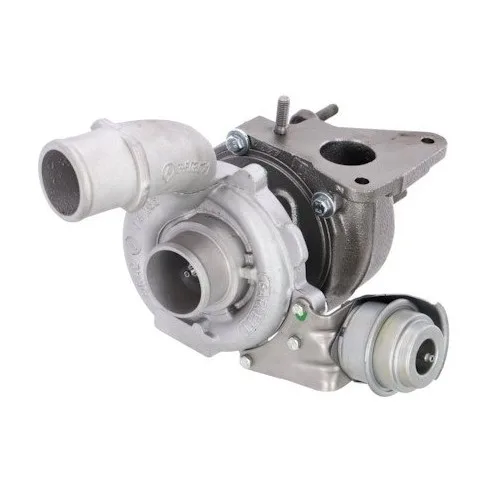
This category brings together the 1.9 dCi turbocharger replacement units built for the 120 hp version of the engine, presented for anyone who arrives with a motorisation in mind rather than a part number already written down. It serves the independent garage ordering an exchange unit for a customer's vehicle, the driver stranded with a loss of power, and the enthusiast planning to fit the part on their own project car. What is listed here covers the turbocharger itself, its housing variants and the reference data needed to confirm compatibility with a given chassis and engine code.
The range is organised around the exchange standard model: each unit corresponds to a specific factory reference and is offered against the return of the worn core, a system commonly known as a core deposit or Pfand. Rather than listing every possible label a supplier might use, the selection is built around the engine code, the power rating and the known OEM equivalences, so the distributor's role is to narrow a wide catalogue down to the units that actually fit a 1.9 dCi 120.
Professional uses by trade
A 1.9 dCi turbocharger replacement is not sought for the same reason by everyone who lands on this category. The garage, the stranded driver, the home mechanic and the German-speaking buyer comparing references each read the same technical data with a different question in mind, summarised below.
- Independent garage: Orders the correct exchange unit against a confirmed engine code before a customer's vehicle is booked in, avoiding a second visit for the wrong part.
- Stranded driver: Searches by engine code and power rating after a loss of power or a warning light, trying to identify the part before calling a garage for a quote.
- DIY enthusiast: Cross-checks the OEM reference and turbine housing variant against a personal project car before ordering, planning to have the unit fitted by a professional afterwards.
- German-speaking buyer (DACH): Compares the factory part number and core deposit terms in a market where the exchanged part must be returned under a Pfand arrangement.
- Independent garage: Reviews the CHRA and actuator type listed for a given reference to decide whether a full exchange unit fits the customer's repair plan.
- DIY enthusiast: Reads the listed failure symptoms, such as a whistling noise or a loss of boost, to confirm the diagnosis before ordering an exchange turbocharger.
Range comparison
The two references below cover the 1.9 dCi 120 application referenced in this category, each tied to a specific factory part number. The table lists the intended use case and the general exchange format under which the unit is supplied.
| Range | Use | Format |
|---|---|---|
| Turbo Garrett 738123-5004S | confirmed 1.9 dCi 120 fit | |
| SL Turbo 708639-5011S | 1.9 dCi 120 exchange unit |
How to choose
Choosing between two references for the same 1.9 dCi 120 application comes down to a handful of checks that apply whether the buyer is a garage placing a stock order or a driver ordering a single unit.
- Confirm the exact engine code and power rating stamped on the original part before ordering, since a shared engine family can still carry more than one factory reference.
- Check the turbine housing and actuator type against the listed reference, because a mismatched actuator can trigger a warning light even on an otherwise compatible unit.
- Verify the core deposit terms attached to the exchange unit, including the condition expected of the worn part returned as part of the transaction.
- Cross-reference the OEM part number against the vehicle's own documentation rather than relying on the engine code alone, particularly across older or facelifted versions of the 1.9 dCi 120.
- Ask about the warranty terms attached to the specific reference before ordering, since these are set at the point of sale rather than assumed from the category listing.
- Plan for the unit to be fitted by a qualified professional, since correct mounting and calibration of the actuator affect how the replacement performs once installed.
Storage & logistics
Handling a 1.9 dCi turbocharger replacement correctly starts before it is fitted: the unit should stay in its original packaging until the vehicle is ready to receive it, protecting the turbine and actuator from dust and impact during transport or storage at a garage. Where a core deposit applies, the worn part being returned should be kept in a condition that allows it to be assessed and reintroduced into a remanufacturing process, rather than left exposed to the elements. A garage holding several references in stock benefits from keeping each unit matched to its documentation, so the correct exchange part reaches the correct vehicle.
Since 2026, our team has organised this catalogue around the engine code rather than a single supplier's numbering, so a garage or a driver can confirm a 1.9 dCi turbocharger replacement against the vehicle in front of them, not against a generic listing.— autoKUR team
Related categories
Browse our other ranges:
Useful references
For regulatory and sector references, see Reglement (UE) 461/2010 — pieces de rechange et garantie constructeur.