


Frequently asked questions
About this category
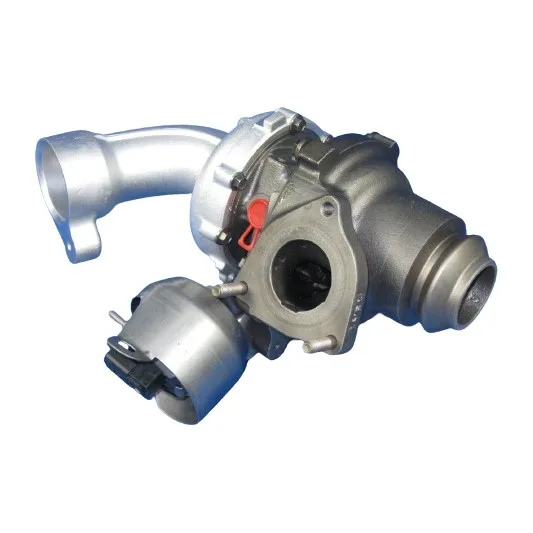
The 2.0 HDi 163 hp category holds the turbocharger references built for this specific engine and power output, presented for anyone who already knows their motorisation rather than a vague vehicle model. Independent garages restocking for a job, drivers whose car has gone into limp mode, hands-on owners planning their own replacement, and buyers reading in German all land on the same page: parts sorted by engine code, OEM reference and known equivalences, not by marketing claims about the brand fitted originally.
Each reference entered this category only after its engine code, power rating and known OEM equivalences were checked against the 2.0 HDi 163 hp block, so a garage comparing two turbochargers side by side is comparing parts that already passed the same filter. Standard-exchange units and remanufactured builds sit together here, distinguished by manufacturer and part number rather than by any claim about which one performs better.
Professional uses by trade
The same turbocharger reference is read differently depending on who opens this page: a stock item for a garage, an emergency fix for a stranded driver, a project part for someone working on their own car, or a technical specification sheet for a buyer reading in German. The uses below reflect that range.
- Independent garage: Orders an HDi 163 turbocharger by engine code and OEM reference ahead of a scheduled job, checking the core exchange terms before the part arrives.
- Independent garage: Compares two references from different manufacturers on this page before deciding which core exchange unit fits the workshop's usual supplier arrangement.
- Stranded driver: Searches for an HDi 163 turbo replacement after noticing limp mode, smoke or a whistling noise, and matches the engine code before ordering.
- Hands-on enthusiast: Reads through the compatibility details, engine code and OEM reference before ordering a turbocharger to fit during a weekend replacement.
- Hands-on enthusiast: Checks the variable-geometry mechanism and cartridge details against the removed part before choosing between the standard-exchange references listed here.
- German buyer (DACH): Reads the reference, engine code and core deposit terms in German before deciding between the two turbochargers listed for this engine.
Range comparison
The table below lines up the two turbocharger references currently listed for the 2.0 HDi 163 hp engine, so the engine code and OEM equivalence can be confirmed before choosing between manufacturers or comparing core exchange terms.
| Range | Use | Format |
|---|---|---|
| SL Turbo 806497-5001S | standard-exchange turbo replacement | |
| Turbo Garrett 806500-5001S | OEM-equivalent turbo replacement |
How to choose
Choosing between the two references below comes down to a short list of checks rather than a preference for one manufacturer over another, since both are already matched to the same 2.0 HDi 163 hp engine code and power rating.
- Confirm the engine code and power rating printed on the old turbocharger match the reference listed here before placing an order.
- Check the OEM reference and any listed equivalences so the variable-geometry mechanism and connectors match the part being replaced.
- Read the core exchange terms carefully, since the worn turbocharger must be returned in a condition that allows it to be rebuilt.
- Compare the cartridge and CHRA specifications if the failure symptom points to a worn bearing rather than a full unit replacement.
- Keep the packaging the replacement arrives in, since it is also what the returned core is expected to travel back in.
- Note whether the failure symptoms, power loss, smoke, or limp mode, match a known issue for this engine code before ordering.
- Keep the warranty documentation that comes with each reference, since it records the exchange terms attached to that specific part.
Storage & logistics
A turbocharger waits in its original packaging until the moment it is fitted, since the variable-geometry mechanism and connectors are sensitive to knocks during handling. The same packaging becomes the return package for the worn core once the replacement is out, which keeps the exchange process straightforward on both ends. Independent garages holding stock for several engine codes tend to keep references separated and labelled by engine code and OEM reference, since two turbochargers built for close engine variants can otherwise be hard to tell apart once unboxed, and a mismatch found at the point of installation costs more time than checking twice beforehand.
Our team has read a lot of engine codes since autoKUR's 2026 launch, and the lesson holds: a turbocharger reference is only as good as the OEM equivalence check that came before it left the shelf.— autoKUR team
Related categories
Browse our other ranges:
Useful references
For regulatory and sector references, see Reglement (UE) 461/2010 — pieces de rechange et garantie constructeur.