

Available products
2 references
Frequently asked questions
About this category
The 220 CDI 170 hp category presents the exchange-standard turbochargers available for this specific Mercedes-Benz diesel engine and power output. It is built for anyone who already knows their motorization rather than a part number: an independent garage diagnosing a loss of power, a motorist facing turbo whine or a limp mode warning, a DIY mechanic ready to fit the part themselves, and German buyers researching a 220 CDI turbocharger replacement before ordering. Inside, each reference is presented against the engine code and power rating it was built to match.
The range is built around the engine code first, power rating second: every reference listed here was selected because it corresponds to the 220 CDI 170 hp motorization, not because it fits a general vehicle family. As a wholesaler of reconditioned turbochargers, autoKUR groups the OEM equivalences and core-deposit terms for each unit so that a buyer comparing references can see, at a glance, which one matches their exact engine.
Professional uses by trade
Each profession reads this category differently. A garage owner is comparing OEM references against a diagnostic code, a stranded motorist is trying to understand a dashboard warning before deciding whether to order, a DIY enthusiast is checking whether the part suits a driveway repair, and a German buyer is verifying engine-code compatibility before ordering.
- Independent garage owner: Cross-references the OEM number stamped on the failed unit against the 220 CDI engine code before ordering an exchange-standard replacement for a customer's vehicle.
- Stranded motorist: Recognizes a loss of power, exhaust smoke, or a persistent limp mode warning as signs pointing toward this turbocharger rather than another component.
- Passionate DIY mechanic: Compares the cartridge and CHRA specifications listed here against the failed part removed from the engine bay before placing an order.
- German buyer (DACH): Checks the engine code and power rating against the vehicle registration document before confirming a 220 CDI turbocharger replacement order.
- Independent garage owner: Plans the core deposit return alongside the new unit so the exchange-standard transaction closes cleanly once the old turbocharger is removed.
- Passionate DIY mechanic: Reviews the variable geometry mechanism description to confirm it matches the actuator type already fitted on the vehicle.
- Stranded motorist: Asks a professional workshop to confirm the diagnosis before ordering, since the symptoms of a failing turbocharger can resemble other faults.
Range comparison
The table below lines up the two exchange-standard references available in this category, so a buyer already holding an OEM number or a removed part can confirm which one corresponds to their 220 CDI 170 hp engine before ordering.
| Range | Use | Format |
|---|---|---|
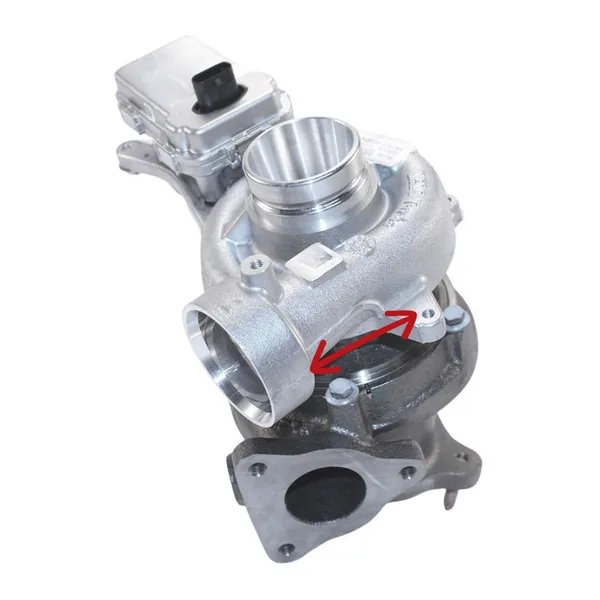
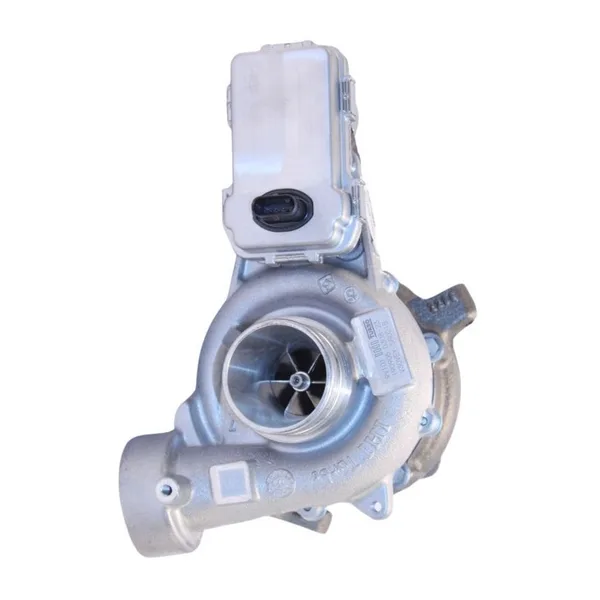
| Turbo IHI AL0058 | 220 CDI turbocharger replacement | |
| Turbo IHI AL0059 | 220 CDI turbocharger replacement |
How to choose
Comparing exchange-standard turbochargers is not a matter of price alone: the criteria below help a buyer confirm that a reference matches the vehicle in front of them before the exchange-standard order and core return begin.
- OEM reference matching: Confirm the reference number stamped on the failed turbocharger against the numbers listed here before ordering, since a single engine code can carry several variants.
- Engine code verification: Check the exact engine code on the vehicle documentation rather than relying on the power rating alone, as two engines can share a horsepower figure.
- Core deposit condition: Assess the state of the removed turbocharger before returning it, since the core deposit process depends on the old unit being complete and undamaged.
- Variable geometry compatibility: Verify that the actuator and geometry mechanism described for the reference match the type already fitted on the vehicle being repaired.
- Consistent quality across units: Look for a reconditioning process that treats the cartridge and CHRA with the same attention on every unit, rather than a one-off exchange.
- Warranty duration: Ask what period of coverage applies to the exchange-standard unit before ordering, so the terms are clear if a further issue appears after fitting.
- Professional installation: Plan for a qualified workshop to carry out the fitting and diagnosis, since correct installation affects how the turbocharger performs once in service.
Storage & logistics
Because these are exchange-standard mechanical units rather than perishable goods, the logistics that matter are traceability and the core-deposit cycle rather than temperature or shelf life. Each removed turbocharger travels back through the same reference it replaced, so a garage or reseller keeping the packaging and paperwork together avoids delays when the deposit is settled. For anyone stocking several references side by side, keeping the OEM number and engine code visible on the outer packaging prevents mismatched units from being fitted to the wrong vehicle further down the line.
Since we began supplying exchange-standard turbochargers, our team has kept the reference-matching step at the center of the process: a 220 CDI turbocharger replacement only leaves the warehouse once its engine code has been checked against the vehicle it is meant for.— autoKUR team
Related categories
Browse our other ranges:
Useful references
For regulatory and sector references, see Reglement (UE) 461/2010 — pieces de rechange et garantie constructeur.