

Available products
4 references

Frequently asked questions
About this category
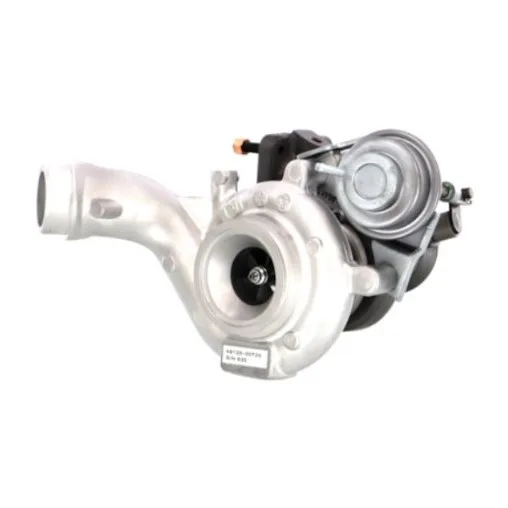
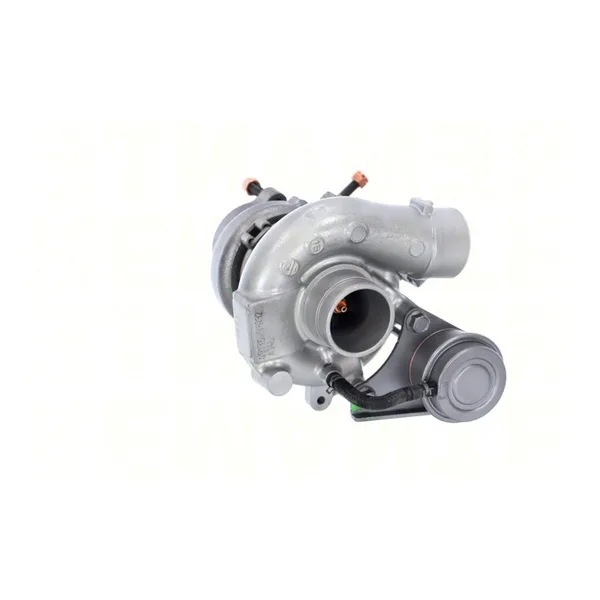
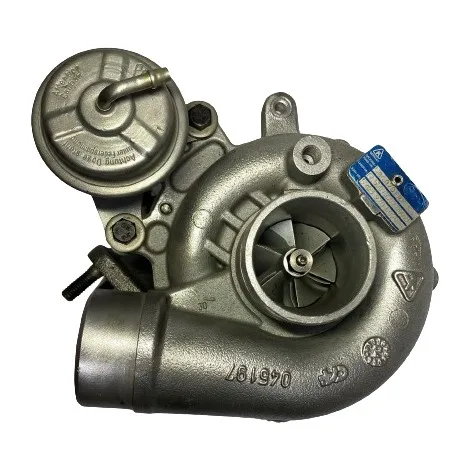
This category brings together the turbocharger references associated with the 2.3 multijet engine family, sold on an exchange standard basis rather than as new manufacture. It serves independent garages ordering for a client vehicle, drivers whose van has gone into limp mode on a job site, and owners who intend to fit the part themselves. What is found here is the reconditioned cartridge and housing assembly, identified by manufacturer reference, rather than a generic universal part.
The range is organized around the actual references circulating for this engine, drawn from the manufacturers that originally supplied the platform: Garrett, and the joint BorgWarner-KKK lineage that preceded current geometry designs. As a wholesale intermediary, the role here is to hold stock of the exchange unit and to accept the worn core back under the deposit arrangement, so a buyer is not left holding two turbochargers while a defective one is inspected.
Professional uses by trade
A 2.3 multijet turbocharger reaches very different hands depending on who is ordering it: a workshop billing a repair, a driver stranded with a smoking exhaust, an owner working from a home bay, or a German-speaking buyer comparing listings across borders. The uses below reflect how each of them actually approaches the same part.
- The independent garage owner: orders the exchange turbocharger against a confirmed engine code before booking the client's vehicle in, avoiding a wasted bay slot while waiting on parts.
- The independent garage owner: keeps a wholesale account open across several references so a 2.3 multijet job can be quoted and closed within the same working day.
- The stranded motorist: searches the engine code and power rating printed on the old unit after the vehicle drops into limp mode with a dashboard warning lit.
- The stranded motorist: compares the OEM reference on a failed part against the equivalences listed here before arranging for a professional to carry out the fitting.
- The DIY enthusiast: cross-checks the CHRA and variable geometry actuator against the vehicle's production year before ordering, since housings changed across the model's run.
- The DIY enthusiast: returns the worn core under the deposit arrangement once the replacement is fitted, following the standard exchange procedure described with the order.
- The German buyer (DACH): checks the manufacturer reference and engine code against the vehicle documents before ordering a remanufactured exchange unit for delivery across the border.
Range comparison
The table below lists the manufacturer references currently associated with this engine family, alongside the practical use each one covers and the general format in which it ships to a wholesale account.
| Range | Use | Format |
|---|---|---|
| Turbo Garrett 839765-5001S | direct exchange replacement unit | |
| SL Turbo 49135-00720 | cartridge and housing replacement | |
| SL Turbo 49135-05132 | later production variant replacement | |
| Turbo BorgWarner - KKK 5303 988 0090 | earlier generation core replacement |
How to choose
Selecting the right reference for a repeat professional order comes down to a handful of practical checks rather than brand preference alone. The points below cover what a buyer sourcing this turbocharger for resale or workshop use typically verifies before confirming an order.
- Conditioning: confirming the unit ships boxed and sealed against transit damage, since a turbocharger's actuator and vanes are sensitive to impact during handling.
- Conservation: checking that a unit held in wholesale stock has not sat uninstalled long enough for seals to dry out before it reaches a workshop.
- Regularity of supply: favoring a reference with a steady restocking pattern so a repeat professional order does not stall a vehicle already booked into the bay.
- Rotation: tracking which reference among several equivalent options moves fastest through a given wholesale account, which usually signals it fits the more common production run.
- Reference accuracy: matching the manufacturer number precisely against the engine code rather than relying on the vehicle model alone, since one model can span several turbo variants.
- Deposit terms: understanding the core return conditions attached to the exchange unit before the order is placed, since the worn part must go back under the standard procedure.
- Documentation: keeping the OEM equivalence reference on file so a professional installer, distinct from the seller, can confirm fitment before starting the work.
Storage & logistics
A turbocharger held in wholesale stock benefits from staying in its original packaging until the moment it is issued, since the actuator linkage and turbine housing are more exposed once unboxed. Storage away from damp conditions limits the risk of corrosion on the housing flanges before a unit reaches the workshop. For an account managing several references at once, keeping the manufacturer number visible on the outer packaging speeds up picking against an order, and separating exchange units awaiting core return from unissued stock avoids the two being confused during a routine inventory count.
Since 2026 we have handled the exchange standard process for this engine family often enough to know that matching the exact reference, not just the model, is what keeps a workshop's turnaround time predictable.— autoKUR team
Related categories
Browse our other ranges:
- 2.3 MULTIJET 177 hp
- 3.0 MULTIJET 177 hp
- 2.3 MULTIJET 173 hp
- 2.3 MULTIJET 160 hp
- 3.0 MULTIJET 158 hp
- 3.0 MULTIJET 156 hp
Useful references
For regulatory and sector references, see Reglement (UE) 461/2010 — pieces de rechange et garantie constructeur.