
Available products
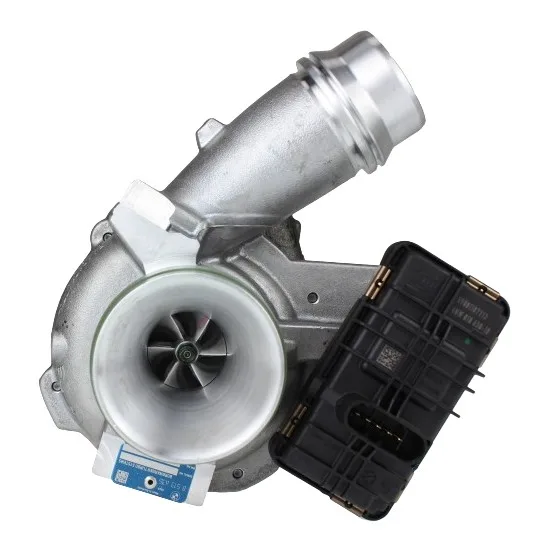
In stock
1 exchange-standard reference(s) match the BMW X1 (F48) 18d 136 hp (100 kW diesel). Output is the deciding criterion: a part meant for another output of the same displacement will not fit.
Engine specification: 1995 cm³, diesel, built since 07/2014. Matching part number: 5440 988 0024 (BorgWarner - KKK). Compare with the code stamped on your part.
Other engines of the BMW X1 (F48): 25d XDrive 231 hp, 20i 192 hp, 20d 190 hp. If the code stamped on your part is legible, search by reference remains the safest route. 24-month warranty.
Related categories
Frequently asked questions
About this category
This category serves owners and professionals dealing with the Renault Scenic 3 equipped with the 1.5 dCi 110 diesel engine, a powertrain known for its efficiency but also its sensitivity to turbo wear. Here, you will find exchange-standard turbocompressors designed to restore lost power, reduce smoke emissions, and eliminate the characteristic whining noise of a failing turbo. These units are not generic replacements; they are engineered to match the exact geometry and performance of the original equipment, ensuring seamless integration into your vehicle’s system.
The turbos in this range are sourced from leading manufacturers and undergo a rigorous remanufacturing process that includes cleaning, inspection, and replacement of critical components like the CHRA (Center Housing Rotating Assembly) and variable geometry mechanisms. This approach delivers a product that performs as closely as possible to a new unit, but at a fraction of the cost. The role of the wholesaler is pivotal here, as they ensure consistent supply, competitive pricing, and adherence to automotive industry standards, making these turbos accessible to both independent garages and DIY enthusiasts.
Professional uses by trade
Different users approach turbo replacement with distinct priorities, whether it’s minimizing downtime for a workshop, ensuring affordability for a private owner, or verifying compatibility for a DIY mechanic. This section outlines how each group can leverage these turbos to address their specific needs efficiently and reliably.
- Le garagiste independant : Replace a failing turbo on a Scenic 3 1.5 dCi 110 with a remanufactured unit that fits without modifications, reducing labor time and customer wait times.
- L'automobiliste depanne : Restore your vehicle’s performance by swapping out a worn turbo with an exchange-standard unit, avoiding the high cost of a new OEM part while ensuring immediate roadworthiness.
- Le passionne qui fait lui-meme : Source a turbo that matches your engine’s specifications and install it yourself, leveraging clear compatibility data and straightforward return policies for core deposits.
- Der deutsche Kaeufer (DACH) : Purchase a turbo that adheres to European automotive standards, with documentation in German and a focus on long-term reliability for the 1.5 dCi platform.
- Le garagiste independant : Use turbos that come pre-calibrated for the 1.5 dCi 110, eliminating the need for on-site adjustments and ensuring consistent performance across multiple vehicles.
- L'automobiliste depanne : Benefit from a core deposit system that reduces upfront costs, allowing you to return your old turbo and receive a refund upon installation of the remanufactured unit.
- Le passionne qui fait lui-meme : Access detailed compatibility charts and OEM reference data to confirm the turbo’s suitability for your exact Scenic 3 model year and engine code.
Range comparison
Below, you will find the turbos available for the Renault Scenic 3 1.5 dCi 110, each listed with its exact reference and designed to meet the demands of both professional and private users. These units are selected for their compatibility and remanufacturing quality, ensuring they meet the performance expectations of the original equipment.
| Range | Use | Format |
|---|---|---|
| Turbo BorgWarner - KKK 5440 988 0024 | Variable geometry turbo for 110 hp models |
How to choose
Selecting the right turbo for your Renault Scenic 3 1.5 dCi 110 requires attention to several key factors, from compatibility to after-sales support. This section highlights the criteria that matter most to professionals and private owners alike, ensuring you make an informed decision.
- Verify the turbo’s compatibility with your vehicle’s engine code and model year to avoid mismatches that could lead to performance issues or installation complications.
- Prioritize turbos that include a core deposit system, as this reduces upfront costs and simplifies the return of your old unit for recycling or remanufacturing.
- Choose units that are remanufactured with genuine components, such as CHRA and variable geometry mechanisms, to ensure longevity and consistent performance.
- Opt for turbos packaged in professional-grade materials that protect against moisture and contaminants during storage or transit to your workshop.
- Select suppliers that offer clear documentation, including OEM references and compatibility charts, to streamline the ordering and installation process.
- Focus on turbos that have a documented history of use in similar applications, as this indicates reliability and adherence to industry standards.
- Consider the availability of after-sales support, such as technical assistance or warranty policies, to address any issues that may arise post-installation.
Storage & logistics
For workshops and distributors, proper storage of exchange-standard turbos is critical to maintaining their condition and performance. These units should be kept in a climate-controlled environment, away from direct sunlight and humidity, to prevent corrosion or damage to sensitive components like the variable geometry mechanism. Regular inventory rotation ensures that older stock is used first, reducing the risk of obsolescence or performance degradation over time. Additionally, packaging should remain intact until installation to protect against dust, debris, or accidental impacts that could compromise the turbo’s integrity. For private owners storing a spare turbo, the same principles apply: a dry, temperature-stable location is ideal, and the unit should be handled with care to avoid bending or damaging the inlet and outlet connections.
With over a decade of experience in sourcing and remanufacturing turbos for European diesel engines, our team understands the critical role these components play in vehicle performance. We’ve seen firsthand how a well-chosen exchange-standard turbo can restore a Scenic 3 1.5 dCi 110 to its former efficiency, often at a fraction of the cost of a new OEM unit.— autoKUR team
Related categories
Browse our other ranges:
Useful references
For regulatory and sector references, see Reglement (UE) 461/2010 — pieces de rechange et garantie constructeur.