
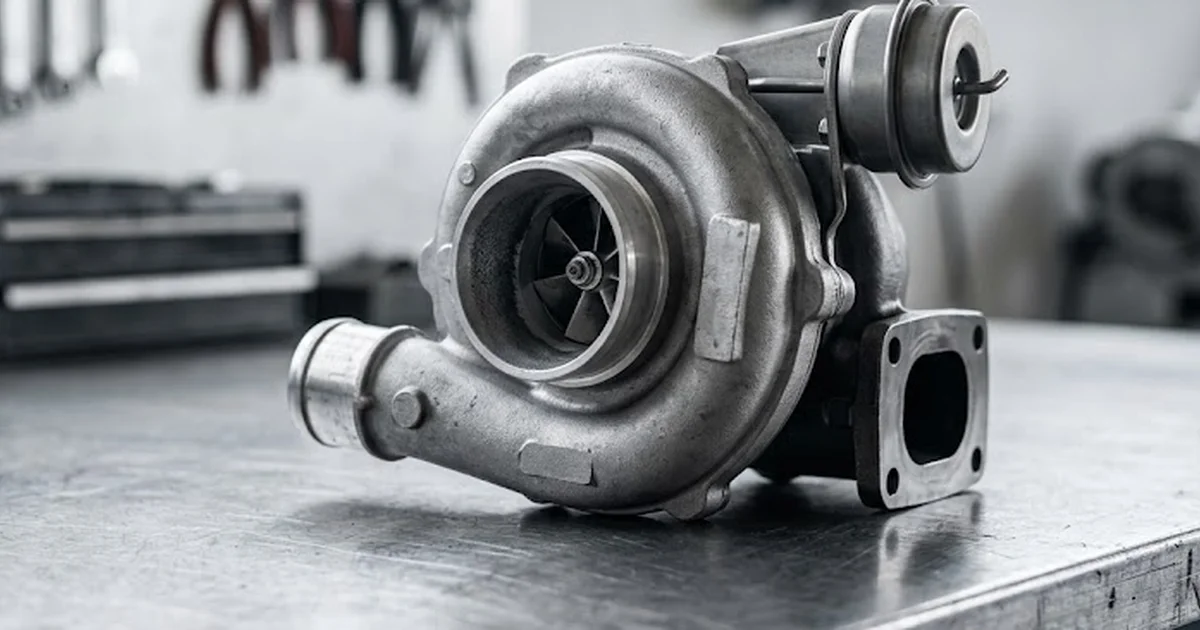
Whistling turbo: the symptoms that should alert you before complete failure
Turbo whistling: discover the symptoms preceding breakdown, common causes, and the right steps to take before the situation worsens.
A whistling sound coming from the turbocharger area is never a trivial noise. It is often the first audible sign of internal wear which, if not taken seriously, can lead to the complete destruction of the turbo in just a few thousand kilometers. Understanding what this whistling means, and recognizing the other symptoms that accompany it, allows you to act before the breakdown becomes costly and irreversible.
Why does a turbo start whistling: the mechanisms involved
The whistling of a turbo originates from a disruption in the flow of compressed air passing through the compressor. This high-pitched noise, sometimes compared to that of a kettle or a jet of pressurized air, typically appears when the circuit’s seal is no longer perfect or when internal components exhibit abnormal play.
Several physical mechanisms explain this phenomenon:
- Pressurized air leak: a cracked hose, a loose clamp, or a faulty seal allows compressed air to escape, creating a characteristic whistling sound.
- Excessive play on the turbine shaft: bearing wear causes abnormal friction and shaft displacement, generating audible vibrations.
- Fouling of the compressor blades: oil deposits or carbon buildup alter internal aerodynamics and disrupt airflow.
- Wastegate malfunction: a pressure regulation issue can create audible turbulence.
In all cases, this whistling indicates an ongoing mechanical issue, not yet a definitive breakdown. It is precisely this time window that should be used to intervene before the situation worsens.
Associated symptoms confirming turbo wear
Whistling alone is not always enough to establish a reliable diagnosis. It is most often accompanied by other signs that, when combined, reinforce the suspicion of turbocharger failure.
Here are the most frequently observed manifestations alongside whistling:
- A noticeable loss of power, particularly during acceleration or uphill driving.
- Bluish smoke from the exhaust, indicating abnormal engine oil consumption.
- Thick black smoke, revealing an unbalanced air-fuel mixture.
- An engine warning light, sometimes accompanied by a power loss message.
- Increased oil consumption observed between oil changes.
- Jerky acceleration, as if the engine "hesitates" before responding.
The presence of several of these symptoms should be an immediate warning, as it indicates that wear has likely already affected multiple internal turbo components.
The role of noise in early diagnosis
Whistling offers a significant diagnostic advantage: it is audible before mechanical consequences become visible or measurable. An attentive driver can thus detect a problem several weeks, or even months, before it results in complete failure.
Comparative table of symptoms by turbo wear stage
To better understand the progression of turbo failure, it is useful to place it in context over time. The following table presents typical symptoms across three stages of wear, from the most discreet to the most critical.
| Stage | Symptoms observed | Urgency level |
|---|---|---|
| Early stage | Mild and intermittent whistling, especially at high RPM | Monitoring recommended |
| Intermediate stage | Constant whistling, slight power loss, occasional bluish smoke | Intervention advised within a few weeks |
| Advanced stage | Loud whistling, continuous smoke, engine warning light, frequent jerks | Urgent intervention |
| Imminent breakdown | Metallic noises, severe power loss, massive oil overconsumption | Vehicle stop recommended |
This table illustrates a simple mechanical reality: the longer whistling is ignored, the more associated symptoms multiply and intensify, leading to complete system failure.
Common causes of turbo whistling
Identifying the precise cause of whistling helps guide the diagnosis and avoid unnecessary repairs. Several origins recur frequently in cases encountered on both gasoline and diesel vehicles.
Among the most common causes are:
- A cracked intake hose or pipe, causing a pressurized air leak that can be easily detected by touch when the engine is running.
- A loose hose clamp on the turbo air circuit, often after recent mechanical work.
- A clogged air filter, which alters intake pressure and forces the turbo to operate under abnormal conditions.
- Worn internal bearings, due to lack of lubrication or degraded engine oil.
- Fouling of the oil housing and passages, reducing lubricant flow to the turbo shaft.
- A misadjusted or seized wastegate, disrupting the circuit’s pressure balance.
Each of these causes presents a different level of severity. An air leak in a hose remains a simple and inexpensive repair, whereas worn internal bearings often require more extensive work on the turbocharger itself.
What to do when whistling first appears
When faced with suspicious whistling, the driver’s response directly influences the extent of potential damage. Some simple measures can limit risks while awaiting a full diagnosis.
At autoKUR, we regularly observe the same scenario: a faint whistling, dismissed as harmless for several weeks, eventually leading to complete turbo failure and a much higher bill than a simple hose replacement. Our advice is always the same: as soon as an unusual noise appears near the turbo, it is better to ease off the accelerator, have the vehicle checked quickly, and avoid intense engine stress until the cause is identified.
Here are the right steps to take as soon as suspicious whistling appears:
- Avoid sharp acceleration and high engine RPM until diagnosis.
- Visually inspect the condition of accessible intake hoses and clamps.
- Check the engine oil level and appearance, a frequently revealing indicator.
- Do not ignore an engine warning light that appears alongside the noise.
- Have an electronic diagnosis performed to cross-reference fault codes with observed symptoms.
These actions do not replace a full mechanical inspection, but they help buy valuable time and prevent rapid deterioration.
Consequences of leaving a turbo undiagnosed
Ignoring persistent whistling exposes the vehicle to far more serious mechanical consequences than simply replacing the turbocharger. Turbo failure can, in fact, damage other engine components upstream or downstream of the air circuit.
The most frequently observed risks in cases of prolonged neglect are as follows:
- Projection of metallic debris into the intake circuit, potentially damaging the engine itself.
- Accelerated fouling of the particulate filter or catalytic converter due to abnormal oil combustion.
- Increased fuel consumption linked to reduced supercharging system efficiency.
- Complete vehicle immobilization in the event of sudden turbine shaft breakage.
These scenarios illustrate why whistling, despite its apparent subtlety, deserves immediate attention rather than passive observation over time.
How to differentiate between benign and critical whistling
Not all whistling sounds are equal. Some noises, though annoying, do not necessarily indicate advanced turbo wear. Learning to distinguish between situations helps avoid excessive diagnoses as well as dangerous neglect.
Whistling can be considered relatively benign when:
- It appears only at very high RPM and disappears immediately when the accelerator is released.
- No other mechanical symptoms accompany it (no power loss, no smoke, no warning light).
- It remains stable over time without intensifying from one trip to the next.
Conversely, whistling should be considered critical when:
- It gradually intensifies over a few days or weeks.
- It is accompanied by a noticeable loss of power or abnormal smoke.
- It becomes audible even at low RPM or idle.
This guide does not replace a professional diagnosis, but it helps assess the urgency of the situation and avoid indefinitely postponing a check that is simple to perform.
Summary: act before whistling turns into a costly breakdown
A whistling turbo sends a clear signal: something is no longer functioning normally in the air intake circuit or within the turbocharger’s internal components. This noise, often downplayed, is in fact a valuable warning that allows intervention before the situation escalates into complete failure, with far more serious mechanical and financial consequences.
Remembering the key points covered in this article helps adopt the right approach when faced with this symptom:
- Whistling indicates an air leak, mechanical play, or internal fouling.
- It is frequently accompanied by other signs: power loss, smoke, engine warning light, increased oil consumption.
- The longer the noise is ignored, the more symptoms multiply until complete breakdown.
- A quick diagnosis often avoids complete turbocharger replacement.
For vehicles with confirmed turbo wear after diagnosis, the Turbocharger category on the site lists available references suited to each engine type.
Also read
A question?
Get in touch directly.

Discussion
Our advice related to Turbocharger
 Turbocharger
Why Is My Turbo Whistling? Warning Signs and Causes
Is your turbo whistling under acceleration? Discover the differences between normal spooling and mechanical failure, from boost leaks to bearing play.
 Turbocharger
How Much HP Does a Turbo Add? Power Gains & Costs
Learn how much horsepower a turbo adds across engine sizes, what drives replacement costs, and how standard exchange delivers full factory performance.
 Turbocharger
Is a Turbo Covered Under Warranty? Coverage & Exclusions
Wondering if a turbo is covered under warranty? Learn what parts guarantees protect, common failure exclusions, and essential claim requirements to know.