
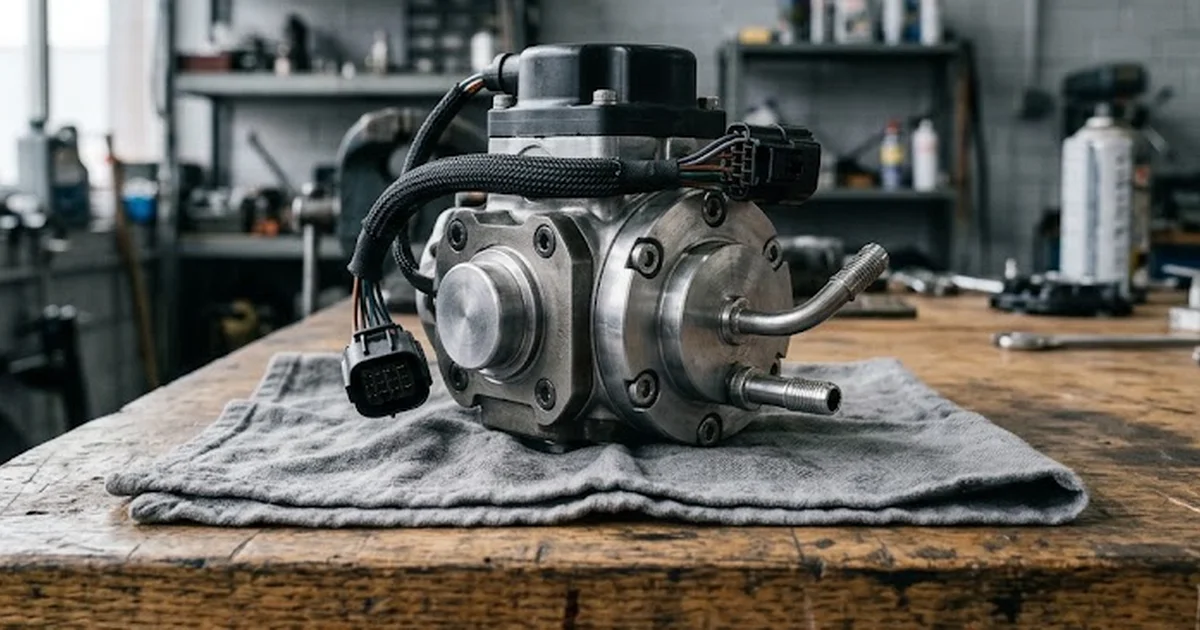
How much is a fuel pump replacement?
Wondering what a fuel pump replacement really costs? See what drives the price, typical ranges, and how to avoid overpaying on parts and labour.
If your fuel pump is failing, one question dominates every search you run: how much is a fuel pump replacement actually going to cost you? The honest answer is that it depends on your vehicle, the type of pump fitted, and whether you tackle the job yourself or book it in with a garage. This guide breaks down every variable that shapes the final bill, so you can budget accurately and avoid being caught out by hidden charges.
What Determines the Cost of a Fuel Pump Replacement
Before you can put a figure on the job, you need to understand what actually drives the price. A fuel pump replacement is rarely a single flat fee — it's a combination of parts, labour, and access complexity that varies enormously between makes and models.
- Vehicle make and model: premium and performance vehicles almost always carry a higher parts price due to more sophisticated fuel delivery systems.
- Pump type: a low-pressure in-tank pump is generally cheaper than a high-pressure pump feeding a direct-injection engine.
- Labour time: some fuel tanks are easy to drop; others require removing the rear seats, exhaust sections, or even the subframe.
- Fuel tank condition: if the tank is dropped and found to be corroded or contaminated with debris, extra cleaning or replacement may be needed.
- Diagnostic time: confirming that the pump — rather than the fuel filter, relay, or wiring — is genuinely at fault can add to the invoice.
Once you factor in these variables, it becomes clear why one driver might pay a modest sum while another, with a similar-looking fault, ends up with a bill several times higher.
Typical Price Ranges: Parts vs Labour
To give you a realistic starting point, it helps to separate the cost of the part itself from the cost of fitting it. Labour rates vary by region and by garage type, but the general pattern holds across the market.
| Cost component | Typical range | Notes |
|---|---|---|
| Standard in-tank fuel pump (part only) | Budget to mid-range | Covers most petrol runabouts and older diesel models |
| High-pressure fuel pump (part only) | Mid to premium range | Required on direct-injection petrol and modern common-rail diesel engines |
| Labour (easy access, tank drops without obstruction) | 1 to 2 hours | Applies to many hatchbacks and saloons |
| Labour (complex access, subframe or exhaust removal) | 3 to 5 hours | Common on 4x4s, some estates, and certain premium models |
| Additional diagnostics | Half an hour to an hour | Only needed if the fault has not already been confirmed |
As a rule of thumb, straightforward jobs on common vehicles sit at the lower end of the market, while anything involving a high-pressure pump on a direct-injection engine pushes the total towards the upper end.
Fuel Pump Type and How It Affects the Bill
Not all fuel pumps are built the same, and the type fitted to your car has a direct bearing on both the part price and the complexity of the fit. Understanding the difference helps you interpret any quote you receive.
- Mechanical fuel pumps: found on older, carburettor-fed engines, these are simple, low-cost components mounted externally on the engine block.
- Electric in-tank pumps: the standard on most petrol-injected vehicles from the 1990s onwards, submerged in the fuel tank and cooled by the fuel itself.
- High-pressure pumps: essential for direct-injection petrol and modern diesel engines, these generate the pressure needed to atomise fuel precisely inside the combustion chamber. They are engineered to tighter tolerances and cost significantly more than a standard low-pressure unit.
If your vehicle uses direct injection, expect the quote to lean towards a high-pressure pump specification rather than a generic in-tank unit. Fitting the wrong type is not just a false economy — it can cause immediate engine damage.
At autoKUR, we regularly see drivers try to save money by fitting a generic low-pressure pump on an engine that demands a high-pressure unit. It never ends well: within days, the engine either refuses to start reliably or throws fuel pressure fault codes. Our advice is simple — always match the pump specification to your exact engine code, not just the model name on the badge.
Signs You Need a Replacement (and Why Delaying Costs More)
Fuel pumps rarely fail without warning. Recognising the early symptoms not only protects you from a roadside breakdown but can also reduce the eventual repair cost, since a pump caught early is less likely to have damaged surrounding components.
- Difficulty starting the engine: repeated cranking before the engine catches is a classic early sign of a weakening pump.
- Power loss under load: hesitation or sputtering when accelerating or climbing a hill suggests the pump cannot maintain consistent pressure.
- Engine surging: unexplained fluctuations in speed at a constant throttle position point to inconsistent fuel delivery.
- Whining noise from the tank: a loud, high-pitched hum from the rear of the vehicle is often the pump's motor bearings wearing out.
- Stalling at speed: a pump that has completely failed will cut fuel supply suddenly, causing the engine to die without warning.
Ignoring these symptoms rarely makes the problem disappear. A struggling pump often overheats, and continued use can damage the fuel filter, injectors, or even the catalytic converter — turning a moderate repair into a far more expensive one.
How to Avoid Overpaying: Choosing the Right Pump and Getting a Fair Quote
Once you accept that a replacement is needed, the next step is making sure you don't pay more than necessary. A few practical habits can keep the final invoice within a reasonable range.
- Get more than one quote: labour rates can vary substantially between independent garages and franchised dealers for the same job.
- Ask whether the quote includes diagnostics: some garages bundle fault confirmation into the price; others charge separately.
- Check the part's compatibility: confirm the replacement pump matches your engine's pressure requirements, not just the vehicle model.
- Request the old part back: a reputable technician should have no issue showing you the failed component as proof of the work carried out.
- Consider the fuel filter at the same time: if it hasn't been changed recently, replacing it alongside the pump can prevent premature failure of the new unit.
Being an informed customer doesn't just protect your wallet — it also reduces the chance of comebacks caused by a mismatched or poorly sourced component.
DIY Replacement vs Professional Fitting: What It Really Costs You
Some confident home mechanics consider fitting a fuel pump themselves to save on labour costs. Whether this makes sense depends heavily on your vehicle and your comfort working around a pressurised fuel system.
- Tools required: fuel line disconnect tools, a means of safely depressurising the system, and often specialist torque wrenches for tank strap bolts.
- Safety considerations: fuel vapour is highly flammable, and working near an open tank demands a well-ventilated space away from any ignition source.
- Time investment: even an experienced DIYer should allow a full afternoon, particularly if the tank needs to be dropped or the rear seats removed.
- Risk of error: incorrect fitting of seals or connectors can lead to fuel leaks, which are far more costly and dangerous than the original fault.
For a simple in-tank pump on an accessible vehicle, a confident home mechanic can save the labour portion of the bill. For a high-pressure pump on a direct-injection engine, however, professional fitting is strongly recommended given the precision and specialist tools involved.
Summary: What You Should Expect to Pay
Bringing everything together, the honest answer to "how much is a fuel pump replacement" is that it sits on a spectrum shaped by your vehicle, the type of pump required, and how accessible the fuel tank is. A basic in-tank pump on an easy-access vehicle sits towards the lower end of the market, while a high-pressure pump replacement on a direct-injection engine with a complex fitting procedure will land at the upper end.
The best way to protect yourself financially is to act on early warning signs, insist on a pump that precisely matches your engine's specification, and compare quotes that clearly separate parts from labour. If your vehicle relies on a high-pressure system, browsing the dedicated high-pressure pump category is the sensible next step to understand the specific options available for your engine before you commit to a repair.
Further reading
Frequently asked questions
Everything you need to know about this topic.
A question?
Get in touch directly.

Discussion
Our advice related to High-pressure pump
 High-pressure pump
Diesel Fuel Pump Price: Cost Drivers and Buying Guide
Understand what drives the diesel fuel pump price, how engineering tolerances affect costs, and why standard exchange offers the smartest balance.
 High-pressure pump
 price: the price range and what affects it
Discover the price ranges for high-pressure pumps and the factors that influence them: power, motor, usage. Comprehensive guide and advice.