
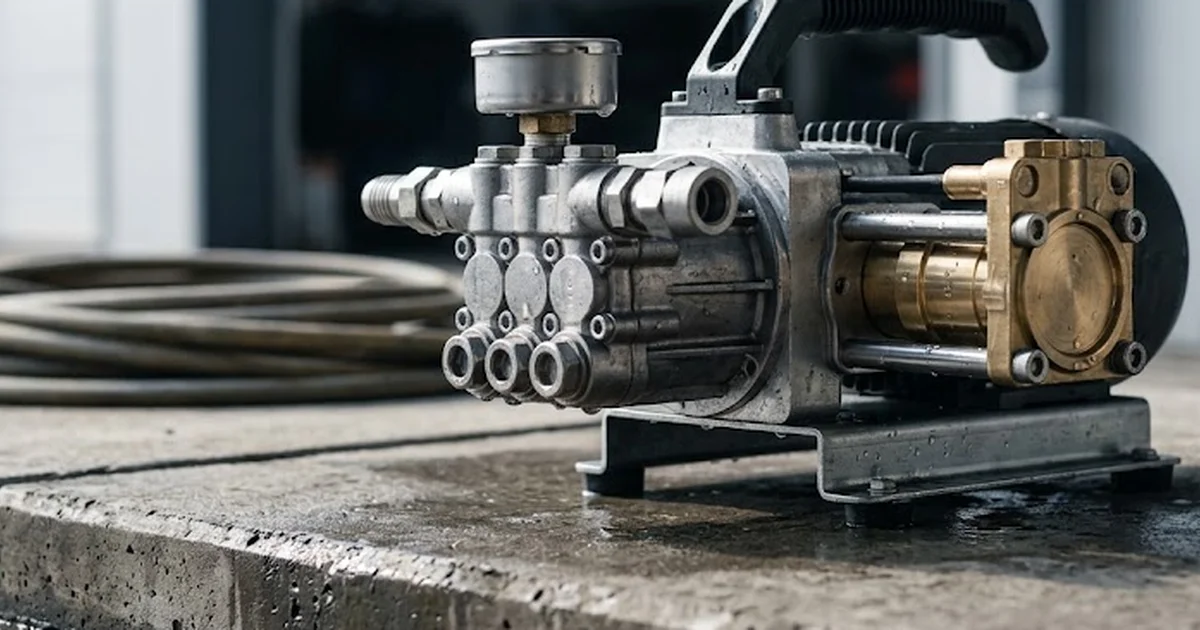
High-pressure pump price: the price range and what affects it
Discover the price ranges for high-pressure pumps and the factors that influence them: power, motor, usage. Comprehensive guide and advice.
The price of a high-pressure pump varies significantly depending on the intended use, the technology employed, and the desired performance level. Between an entry-level model for occasional domestic use and a professional pump designed for intensive use, the price difference can be tenfold. Understanding the factors that influence this range helps avoid two common pitfalls: overinvesting in oversized equipment or, conversely, purchasing underpowered equipment that wears out prematurely. This article details the price ranges observed on the market and the technical criteria that explain these differences.
What is the average price range for a high-pressure pump?
The high-pressure pump market covers a very broad spectrum, ranging from compact domestic models to robust professional equipment. The price positioning depends directly on the category of use and the quality of the internal components.
- Entry-level consumer: lightweight pumps, modest flow and pressure, suitable for occasional use (cleaning patios, bicycles, garden furniture).
- Mid-range semi-professional: more durable pumps, used regularly by tradespeople or demanding individuals.
- High-end professional: industrial pumps designed for near-continuous operation, with reinforced materials and a significantly longer lifespan.
This segmentation explains why it is difficult to speak of a "single price": the intended use must first be defined before comparing prices.
Which technical factors influence the price of a high-pressure pump?
Beyond the general range, several precise technical parameters directly affect the cost of a high-pressure pump. These criteria help explain why two seemingly similar models can have very different prices.
| Technical factor | Impact on price | Explanation |
|---|---|---|
| Maximum pressure (bars) | High | The higher the pressure, the more the components must be reinforced |
| Water flow rate (litres/hour) | Moderate to high | A high flow rate requires a more powerful motor |
| Type of motor (universal or induction) | High | Induction motors are more durable but more expensive |
| Piston and seal materials | Moderate | Ceramic and brass are more expensive than reinforced plastic |
| Brand and reputation | Variable | Well-known brands emphasize reliability and after-sales service |
| Included accessories | Low to moderate | Lances, interchangeable nozzles, hose reel, rotary brush |
These technical elements must be analyzed together, as a high price is only justified if it corresponds to a real need for intensive use or high performance.
High-pressure pump for domestic or professional use: what is the budget difference?
The intended use is the most decisive factor in choosing the price range. A private individual who washes their car once a month does not have the same needs as a cleaning company that uses its equipment every day.
Occasional use (domestic)
- Frequency of use: a few hours per month
- Generally sufficient pressure: moderate
- Expected lifespan: several years with light use
- Budget priority: value for money rather than maximum performance
Intensive use (professional)
- Frequency of use: several hours per day, sometimes continuously
- High pressure and flow rate sought for demanding jobs
- Expected lifespan: several thousand hours of operation
- Budget priority: robustness, availability of spare parts, responsive after-sales service
Investing in a professional pump when the use remains occasional is generally not cost-effective, while an entry-level model used intensively will wear out quickly and generate recurring replacement costs.
Electric or petrol pump: what is the impact on price?
The choice of motorization also significantly affects the budget. Electric and petrol pumps follow different pricing logics, linked to their design and typical use.
| Criteria | Electric pump | Petrol pump |
|---|---|---|
| General price range | More affordable | Higher |
| Autonomy | Dependent on an electrical outlet | Autonomous thanks to fuel |
| Available power | Generally moderate to high | Often higher, suitable for large jobs |
| Maintenance | Simple | More complex (oil changes, filters, spark plugs) |
| Typical use | Domestic, semi-professional | Professional, mobile, outdoor |
The higher cost of a petrol pump is explained by the mechanical complexity of the combustion engine and the generally higher power it delivers, making it more suitable for intensive professional use or jobs without access to electricity.
What hidden costs should be anticipated beyond the purchase price?
The price displayed at purchase only represents part of the real cost of using a high-pressure pump. Some additional expenses must be factored into the overall budget to avoid unpleasant surprises.
- Consumables: nozzles, seals, high-pressure hoses that wear out over time.
- Regular maintenance: oil changes for petrol models, checking seals.
- Spare parts: availability and prices vary by brand.
- Water and energy consumption: a high flow rate increases the water bill over the long term.
- Additional accessories: hose extensions, rotary brushes, specific cleaning kits.
At autoKUR, we regularly observe that the initial purchase price is not the only indicator to watch. A slightly more expensive pump with durable components often reduces maintenance costs over several years. Our advice: prioritize robustness as soon as the intended use exceeds a few hours per month, rather than repeatedly replacing low-end equipment.
How to choose the right price range based on your actual needs?
Determining the appropriate budget requires cross-referencing several concrete criteria rather than relying solely on the price displayed in-store or online. Here is a simple method to guide this choice.
- Assess the expected frequency of use over a typical year
- Identify the surfaces or vehicles to be cleaned (small patio, entire facade, fleet of vehicles)
- Check the pressure and flow rate actually needed for these uses
- Compare the warranties offered and the availability of after-sales service
- Take into account the available storage space, which may guide the choice toward a compact or larger model
This methodical approach helps avoid impulsive purchases based solely on a temporary promotion and encourages an investment that aligns with the actual long-term use of the equipment.
Summary: positioning your budget before purchase
The price of a high-pressure pump cannot be reduced to a single figure: it depends on the maximum pressure, flow rate, type of motor, materials used, and above all, the expected frequency of use. Occasional use justifies a moderate budget, while intensive professional use requires a larger investment, offset in the long term by better durability and controlled maintenance costs. Before any purchase, it is recommended to precisely assess your actual needs, compare technical features rather than just the displayed price, and anticipate additional costs related to consumables and maintenance. To explore all available models and compare technical features in detail, the High-pressure pump category on the site groups references corresponding to these different levels of use.
You may also like
A question?
Get in touch directly.

Discussion
Our advice related to High-pressure pump
 High-pressure pump
Diesel Fuel Pump Price: Cost Drivers and Buying Guide
Understand what drives the diesel fuel pump price, how engineering tolerances affect costs, and why standard exchange offers the smartest balance.
 High-pressure pump
How Much Is a Fuel Pump Replacement? Cost Guide
Wondering what a fuel pump replacement really costs? See what drives the price, typical ranges, and how to avoid overpaying on parts and labour.