
Diesel fuel pump price: what drives the price, and what you should expect to pay
Understand what drives the diesel fuel pump price, how engineering tolerances affect costs, and why standard exchange offers the smartest balance.
What is a diesel high-pressure fuel pump and why does it differ from a lift pump?
When evaluating the diesel fuel pump price, vehicle owners and professional technicians often face immediate confusion regarding which pump requires replacement. A modern diesel vehicle relies on two entirely distinct pumping assemblies within its fuel delivery architecture: a low-pressure lift pump located inside or adjacent to the fuel tank, and a mechanical high-pressure pump mounted directly to the engine block. Misdiagnosing which component has reached the end of its service life leads to inaccurate repair estimates and unnecessary expenditure. Understanding the operational chasm between these two units clarifies why their manufacturing costs, replacement procedures, and market valuations differ so dramatically.
- Tank lift pump delivery pressure: operates at 3 to 6 bar, serving exclusively to transfer diesel fuel from the reservoir tank through the primary filtration unit up to the engine bay compartment.
- Common rail operating pressure: reaches 1,350 to 2,500 bar, compressing the diesel fuel to extreme levels so that each modern common rail injector can atomize fuel directly into the combustion chamber.
- Mechanical construction and materials: low-pressure pumps utilize composite plastics, standard copper windings, and lightweight impellers, whereas high-pressure units are machined from forged high-tensile alloy steel to withstand continuous hydraulic stress without material fatigue.
- Precision internal fit: manufactured to sub-micron tolerances, where internal pumping plungers and barrels fit together so tightly that fuel leakage between moving surfaces is virtually eliminated without relying on soft rubber seals.
- Failure consequences and repair scope: an electric lift pump failure simply causes fuel starvation and stalls the engine, whereas internal mechanical seizure of a high-pressure unit can disintegrate internal cam surfaces, dispersing destructive metallic swarf throughout the entire fuel delivery circuit.
Key engineering factors that drive the diesel fuel pump price
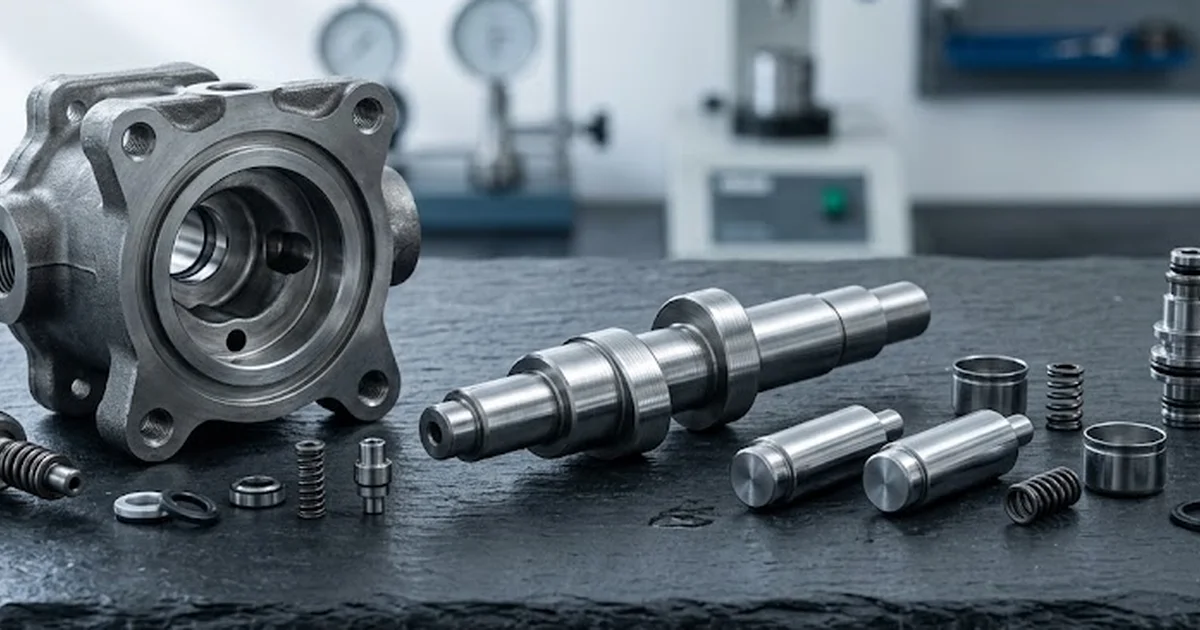
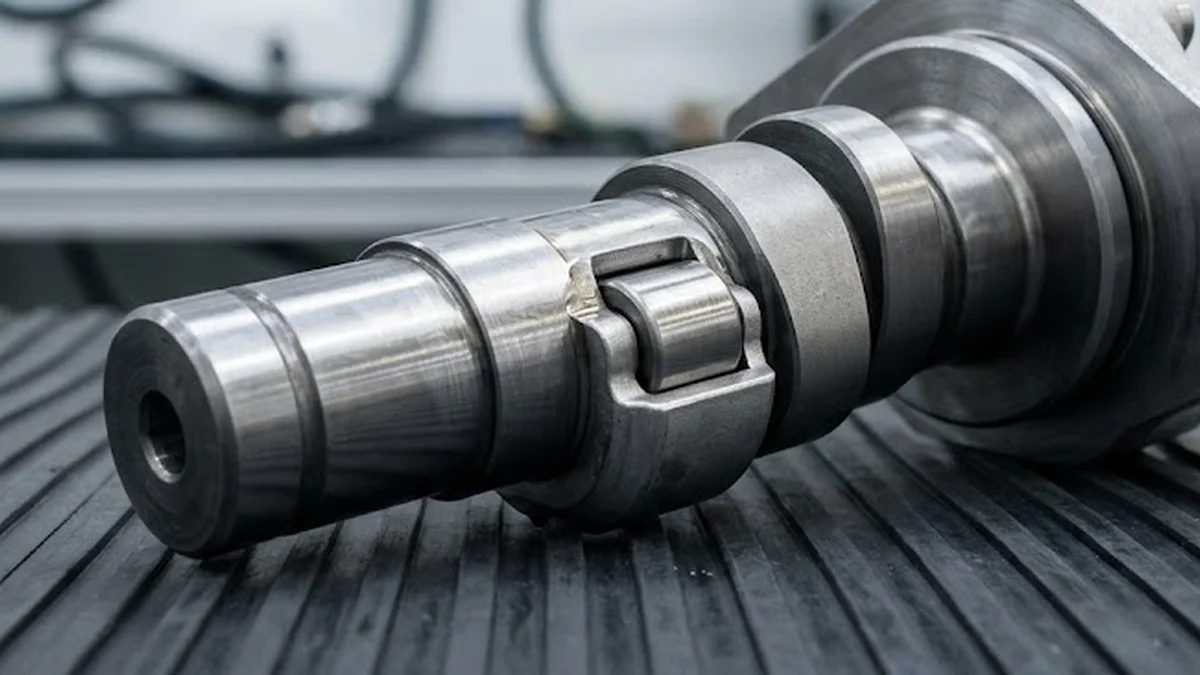
The manufacturing and remanufacturing of diesel high-pressure fuel pumps represent one of the most demanding disciplines in automotive precision engineering. Unlike standard engine ancillaries such as water pumps or alternators, a high-pressure pump operates under extreme mechanical friction, severe thermal gradients, and intense hydraulic resistance. Every internal component—from the eccentric drive shaft and ceramic-coated roller tappets to the integrated inlet metering valve (IMV) and fuel temperature sensors—must perform reliably across millions of engine revolutions. The technological transition from early rotary distributor pumps to modern common rail architectures has driven manufacturing tolerances down to levels comparable to aerospace equipment, which directly governs the retail and exchange valuation of the component.
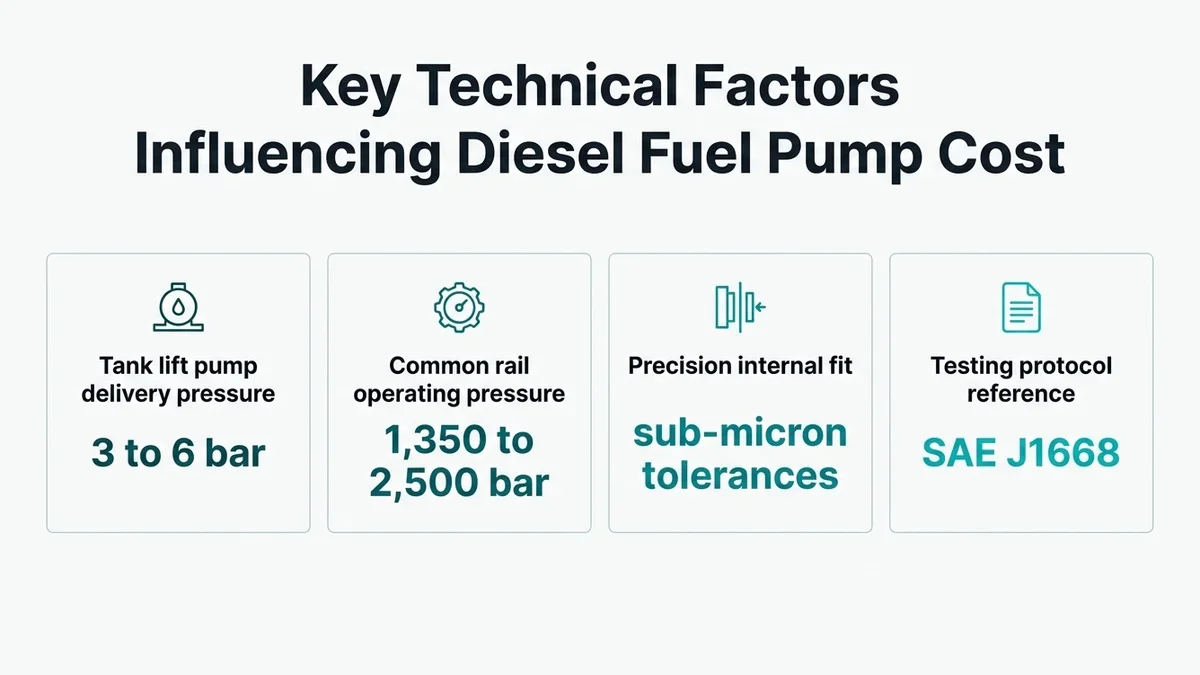
Beyond raw metallurgical specifications, calibration complexity constitutes a major portion of the final unit cost. A finished pump cannot simply be assembled and boxed; it must undergo rigorous dynamic benchmarking on dedicated computer-controlled test equipment capable of simulating real-world common rail rail pressures and injection cycles. Testing protocol reference: defined by SAE J1668. According to the fuel injection pump testing standard published by SAE International (J1668_202103), "The correct setting and adjustment of fuel injection pumps requires standardized testing conditions." Meeting these specialized parameters demands substantial capital investment in cleanroom assembly facilities, flow-rate measuring benches, and computerized electronic calibration tools, which directly underpins the replacement price tag.
Key takeaway: The price of a diesel high-pressure pump reflects aerospace-grade internal tolerances and mandatory computerized bench calibration required to deliver stable hydraulic pressure up to 2,500 bar without catastrophic pressure drops.
Comparing purchasing options: new OEM, standard exchange, and used pumps
When faced with a failed high-pressure pump, buyers must choose between four distinct sourcing pathways: purchasing a brand-new factory unit, selecting a professional standard exchange remanufactured unit, acquiring a used component from an automotive dismantler, or attempting a localized repair with an external seal overhaul kit. Each solution represents a distinct balance between immediate financial outlay, long-term mechanical reliability, and installation risk. Selecting the correct procurement route requires analyzing not only the component ticket price, but also the warranty protection and the probability of premature secondary failure.
| Procurement Option | Relative Price Profile | Testing & Calibration | Core Deposit Required | Reliability & Risk Assessment |
|---|---|---|---|---|
| Brand-New Factory OEM | Highest initial investment level (dealer baseline benchmark) | Factory tested to original production standards | No core exchange required | Maximum theoretical lifespan; zero previous wear; substantial premium cost for brand packaging. |
| Remanufactured Standard Exchange | Balanced middle tier (significant savings vs. new OEM) | Fully calibrated on automated high-pressure test benches | Requires refundable core deposit returned upon old pump handover | Equal reliability to new units; all worn friction components replaced; verified flow and pressure output. |
| Used / Salvage Yard Pump | Lowest upfront ticket price | None; unknown operational history and internal state | No core exchange required | Extreme financial risk; internal dried fuel residue or existing metallic wear can contaminate fuel system immediately. |
| DIY Reseal / Gasket Kit | Minimal component cost (hardware only) | Uncalibrated; manual external seal replacement only | No core exchange required | Applicable exclusively to minor external body leaks via a gasket kit; cannot resolve internal pressure loss or mechanical piston wear. |
For the vast majority of motorists and professional workshops, the standard exchange model provides the optimal intersection of cost efficiency and mechanical integrity. In this process, a worn original core is completely stripped down, ultrasonically decontaminated, and rebuilt with brand-new precision wear items before undergoing complete recalibration on a certified test bench. By recycling the durable forged external housing and replacing only the active wear assemblies, remanufacturers eliminate substantial raw material overhead while guaranteeing operating parameters identical to factory-delivered hardware.
The hidden expenses behind diesel fuel pump replacement
A frequent error when establishing a repair budget is focusing solely on the diesel fuel pump price while overlooking the mandatory ancillary procedures demanded by common rail injection technology. In automotive mechanics, high-pressure pumps rarely operate in total isolation; their health is directly coupled to the fuel filtration system, the common distribution rail, and each downstream fuel injector. When a pump experiences internal mechanical breakdown, metal-on-metal friction generates microscopic shavings that travel through the fuel return lines and distribution rails, contaminating the entire fuel circuit. For a broader perspective on total workshop costs and installation labor hours, consult our comprehensive fuel pump replacement cost guide.
- Fuel tank decontamination and line flushing: installing a replacement pump onto a contaminated vehicle without completely draining the tank and back-flushing the fuel lines will recirculate residual metal swarf directly into the new pump, causing premature seizure within minutes of the initial engine start.
- Mandatory replacement of fuel filtration units: the primary fuel filter cartridge and water separator must be renewed with high-efficiency micron-rated units to prevent abrasive airborne particulates or dissolved water droplets from attacking the polished pump plungers.
- High-pressure common rail and sensor inspection: the common distribution rail, pressure relief limiting valve, and rail pressure sensor must be dismounted, inspected for metallic sediment, and ultrasonically cleaned or renewed if internal pitting is present.
- High-pressure injector flow testing: microscopic metal filings carried by the pressurized diesel fuel frequently jam the precision control valves of the fuel injectors, requiring each injector unit to undergo bench testing, cleaning, or complete replacement alongside the pump.
- Engine timing belt or chain drive service: because high-pressure pumps are synchronized with engine rotation via the timing belt or dedicated gear train, technician labor must account for timing alignment, tensioner replacement, and gasket renewals during reassembly.
How engine codes and vehicle specifications dictate pump pricing
Vehicle owners frequently wonder why two diesel high-pressure pumps that appear visually identical from the exterior carry noticeably different price tags. The answer lies in the precise hydraulic displacement, shaft taper, electrical connector configuration, and internal pressure mapping dictated by individual automotive manufacturers. A pump engineered for a compact four-cylinder commercial van requires different flow characteristics, internal cam profiles, and drive ratios than a unit designated for a high-output six-cylinder luxury saloon. Cross-referencing manufacturer part numbers against established engine codes and verifiable OEM references is therefore crucial to avoid purchasing an incompatible specification.
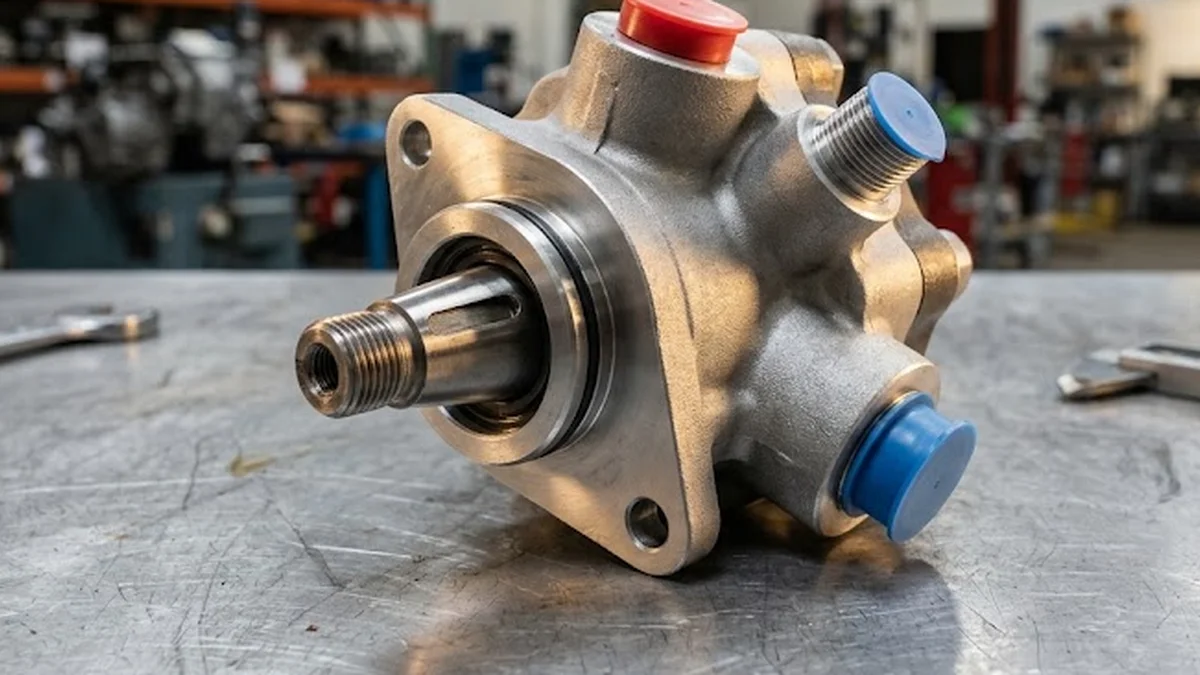
A prominent example in modern diesel fleets is the high-pressure pump Bosch 0445010006, engineered specifically to satisfy strict common rail delivery curves across designated European passenger applications. Even within the same vehicle model generation, minor mid-cycle engine modifications or emissions standard upgrades (such as shifting from Euro 4 to Euro 5 regulations) often introduced redesigned fuel metering solenoids, higher delivery pressures, or revised mechanical drive splines. These technical variations influence production volumes, tooling requirements, and remanufacturing parts availability, creating noticeable price differentials across catalog references.
- Internal hydraulic displacement: single-piston, two-piston, and three-radial-piston configurations require distinct casting molds and machining cycles, directly altering component production costs.
- Integrated pre-supply stages: some common rail pumps incorporate an internal mechanical gear-type lift pump on the rear cover, increasing mechanical complexity and price compared to systems that rely strictly on external electric feed units.
- Operating pressure rating tiers: units designed for 1,600 bar generation common rail systems utilize different internal alloy metallurgy and surface hardening than cutting-edge 2,200 to 2,500 bar systems.
- Catalog reference specificity: high-volume engine platforms benefit from economies of scale during remanufacturing, resulting in more accessible replacement pricing compared to rare or niche motorizations.
Summary and budgeting advice for your high-pressure pump replacement
Navigating the diesel fuel pump price landscape requires a strategic approach grounded in technical facts rather than shortcuts. A diesel high-pressure fuel pump is a precision hydraulic heart that operates under pressures exceeding two thousand times atmospheric pressure. Attempting to resolve an injection failure by purchasing an unverified used pump from a salvage yard or relying solely on external seal replacement exposes vehicle owners to severe secondary breakdown risks, including catastrophic injector failure and total fuel system contamination. Conversely, standard exchange units provide a rigorously tested, cost-effective alternative that restores original engine performance and fuel efficiency without the prohibitive price tag of brand-new dealership components.
- Extract the exact manufacturer part number: retrieve the alphanumeric code stamped directly onto the metallic casing of your existing pump rather than relying solely on vehicle registration databases.
- Identify the root cause of pump breakdown: verify whether the original pump failed due to normal mechanical fatigue, fuel contamination (such as petrol misfueling or water in fuel), or lack of lubrication before fitting a replacement.
- Account for full fuel system preparation: budget for thorough tank flushing, new fuel filters, and rail inspection to ensure the replacement pump operates in a pristine environment.
- Manage core deposit returns promptly: when ordering a standard exchange unit, retain the original packaging and return your old pump core complete and undamaged to reclaim your core deposit funds.
To identify the exact reference matching your vehicle and compare options across our extensive inventory, browse the dedicated high-pressure pump catalog.
Frequently asked questions
Everything you need to know about this topic.
A question?
Get in touch directly.

Discussion
Our advice related to High-pressure pump
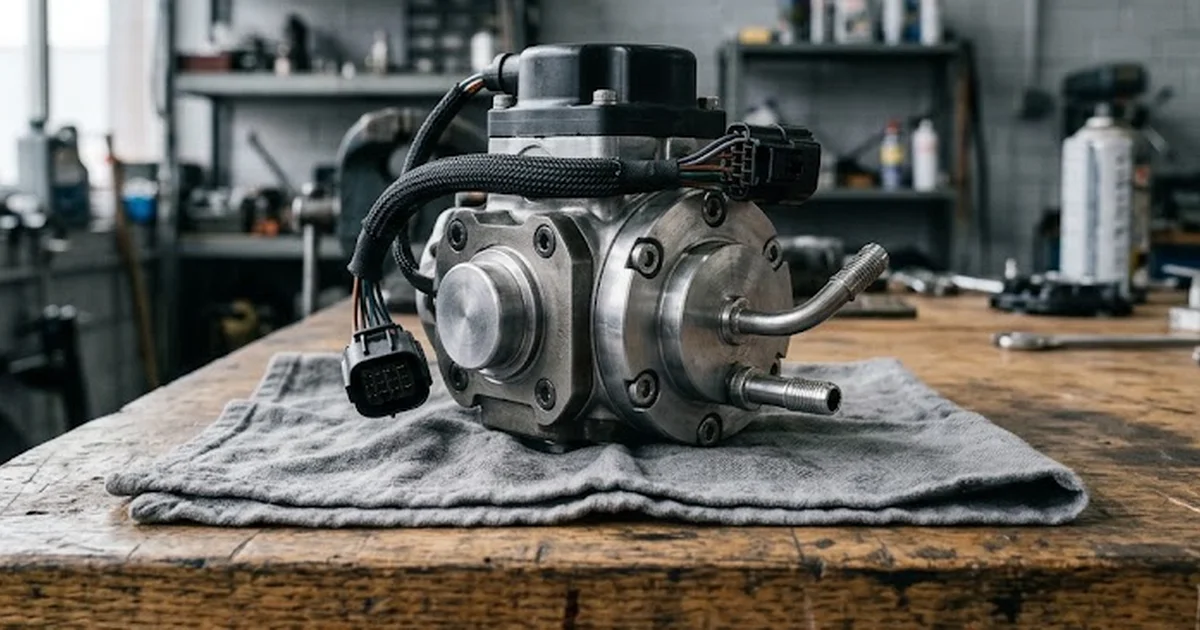 High-pressure pump
How Much Is a Fuel Pump Replacement? Cost Guide
Wondering what a fuel pump replacement really costs? See what drives the price, typical ranges, and how to avoid overpaying on parts and labour.
 High-pressure pump
 price: the price range and what affects it
Discover the price ranges for high-pressure pumps and the factors that influence them: power, motor, usage. Comprehensive guide and advice.