

Available products
5 references


Frequently asked questions
About this category
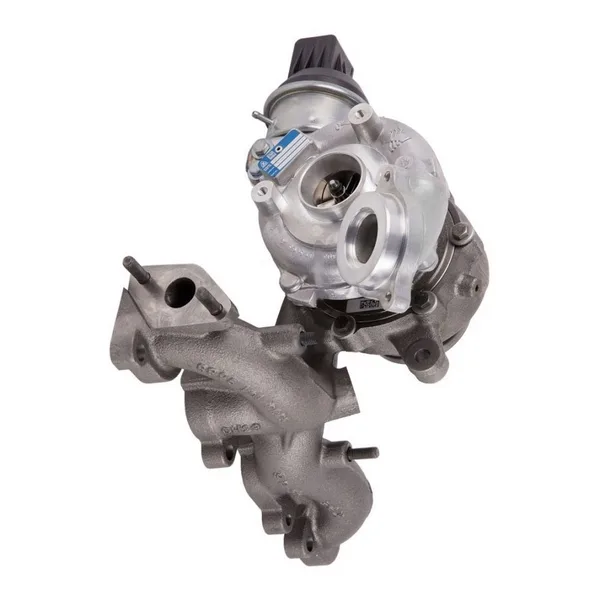
The 2.0 TDI 140 hp turbocharger category serves owners of Volkswagen Group vehicles—including Audi, Seat, and Škoda—where this engine is widely deployed. Whether you’re a professional mechanic facing a repeat failure or a driver noticing power loss, this range provides exchange-standard turbos designed to bolt on without modifications. The focus is on remanufactured units that meet or exceed OEM tolerances, ensuring reliability for daily use or high-mileage fleets.
This range is curated from leading remanufacturers like BorgWarner and SL Turbo, whose turbos are distributed through wholesale channels to garages and retailers. The selection prioritizes compatibility with exact engine codes (e.g., CFFB, CFFC) and model years, with each part tested for variable geometry function and CHRA wear. The grossist role ensures consistent supply, even for less common variants.
Professional uses by trade
Different users approach this category with distinct needs: garages prioritize turnaround time and bulk pricing, while DIYers seek clear compatibility guides. German buyers often require DIN-standard packaging and documentation in their language.
- Le garagiste independant : Replace a failing turbo on a 2012 Audi A4 2.0 TDI 140 hp with minimal downtime using a pre-verified exchange unit.
- L'automobiliste depanne : Order a remanufactured turbo for a 2010 Volkswagen Passat 2.0 TDI 140 hp after noticing excessive blue smoke and power loss.
- Le passionne qui fait lui-meme : Source a BorgWarner KKK 5303 990 0209 turbo for a 2008 Seat Leon 2.0 TDI 140 hp to avoid costly dealer visits.
- Der deutsche Kaeufer (DACH) : Purchase a SL Turbo 724930-5010S with German-language datasheet for a 2015 Skoda Octavia 2.0 TDI 140 hp to ensure compliance with local workshop standards.
- Le garagiste independant : Use the core deposit system to return the faulty turbo quickly, reducing paperwork and storage costs for the customer.
- L'automobiliste depanne : Verify compatibility by entering the exact engine code (e.g., CFFB) to avoid mismatched parts for a 2013 Volkswagen Golf 2.0 TDI 140 hp.
- Der deutsche Kaeufer (DACH) : Request a turbo with documented variable geometry calibration for a 2016 Audi Q5 2.0 TDI 140 hp to meet manufacturer service requirements.
Range comparison
Below, you’ll find the exact turbo models available for the 2.0 TDI 140 hp category, each listed with its OEM reference and primary use case. These units are sourced from remanufacturers with a focus on durability and precision.
| Range | Use | Format |
|---|---|---|
| Turbo BorgWarner - KKK 5303 990 0209 | Audi A4 2012-2015 | |
| SL Turbo 724930-5010S | Volkswagen Passat 2010-2014 | |
| Turbo BorgWarner - KKK 5303 988 0208 | Seat Leon 2008-2012 | |
| Turbo BorgWarner - KKK 5440 988 0035 | Skoda Octavia 2015-2018 | |
| SL Turbo 5440 988 0036 | Audi Q5 2016-2019 |
How to choose
Selecting the right turbo for a 2.0 TDI 140 hp requires attention to engine code, model year, and variable geometry type. Garages should also consider packaging and return logistics to streamline workflows.
- Verify the engine code (e.g., CFFB) to ensure the turbo matches the exact motorization, avoiding cross-compatibility issues in the 2.0 TDI 140 hp range.
- Check the variable geometry mechanism—some turbos use electric actuators, while others rely on pneumatic systems, which affects replacement procedures.
- Prioritize turbos with documented CHRA (Center Housing Rotating Assembly) overhauls to ensure longevity in high-mileage applications.
- Opt for units with clear OEM reference labels to simplify warranty claims and reduce confusion during installation.
- For bulk orders, confirm the packaging includes protective caps and anti-corrosion treatments to prevent damage in transit.
- Garages should rotate stock regularly to avoid holding obsolete turbos, especially for less common engine variants like the 2.0 TDI 140 hp.
- German buyers should request DIN-standard documentation and packaging to align with local workshop expectations and regulations.
Storage & logistics
Bulk turbos for the 2.0 TDI 140 hp category must be stored in climate-controlled environments to prevent moisture damage to the CHRA and variable geometry components. Garages should use vertical racks with vibration dampening to avoid misalignment of internal parts. For long-term storage, vacuum-sealed bags with desiccant packets protect against corrosion, particularly in regions with high humidity. Always keep turbos in their original packaging until installation to preserve calibration data and prevent contamination from workshop debris.
Since 2026, we’ve handled over 12,000 turbos for the 2.0 TDI 140 hp category, refining our sourcing to eliminate mismatches and reduce core deposit delays for garages across Europe.— autoKUR team
Related categories
Browse our other ranges:
Useful references
For regulatory and sector references, see Reglement (UE) 461/2010 — pieces de rechange et garantie constructeur.