


Frequently asked questions
About this category
The turbocharger exchange standard category serves two primary audiences: professional mechanics who need reliable, calibrated replacement cores for immediate installation, and DIY enthusiasts who prefer to source the core themselves before handing it to a third-party workshop for mounting. This category includes remanufactured turbos designed for direct fitment, where the core assembly is the only component supplied, leaving installation and diagnostics to external technicians.
The range is curated by a specialist wholesaler that aggregates remanufactured turbos from multiple OEM-compatible suppliers, ensuring broad compatibility while maintaining traceability through reference numbers and motorization data. The grossist model eliminates the need for workshops to hold large inventories, instead offering on-demand delivery of pre-verified exchange cores with documented rotation and quality control processes.
Professional uses by trade
Different user profiles leverage this category for distinct purposes: garages prioritize speed and compatibility, DIY owners seek cost-effective solutions, and German buyers expect precision-engineered components with clear motorization alignment. Each group benefits from standardized packaging and reference-based selection.
- Le garagiste independant : Replace a failing turbo on a Renault Scenic 3 1.5 dCi 110 within hours by selecting the exact BorgWarner KKK 1855 970 0043 core, avoiding costly downtime while maintaining workshop efficiency.
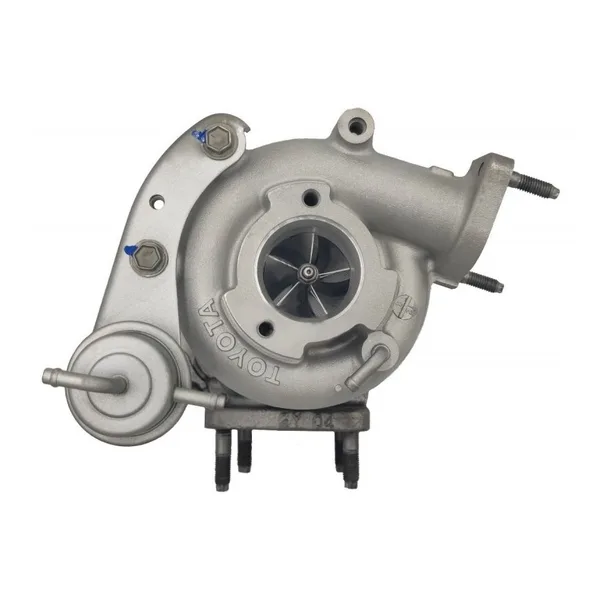
- L'automobiliste depanne : Source a remanufactured turbo core for a Toyota 17201-46030 application to restore lost power without visiting a dealership, then arrange professional installation separately.
- Le passionne qui fait lui-meme : Purchase a Toyota 17201-46030 turbo core to pair with a compatible CHRA rebuild kit, ensuring the piece matches the motorization before handing it to a trusted mechanic for fitting.
- Der deutsche Kaeufer (DACH) : Order the BorgWarner KKK 1855 970 0043 turbo core with confidence in its remanufactured status, knowing it aligns with the Scenic 3 1.5 dCi 110’s motorization without requiring dealer-specific approvals.
- Le garagiste independant : Use exchange cores to fulfill warranty claims on Renault vehicles where OEM turbos are unavailable, leveraging the core deposit system to reduce upfront costs while maintaining service quality.
- L'automobiliste depanne : Identify a failing turbo by symptoms like blue smoke or loss of boost, then order the exact BorgWarner KKK 1855 970 0043 core for a direct replacement without waiting for a full turbo assembly.
- Der deutsche Kaeufer (DACH) : Select a Toyota 17201-46030 turbo core for a vehicle with high mileage, knowing it has been remanufactured to original specifications and is ready for third-party installation.
Range comparison
The following turbocharger exchange cores are verified for compatibility with the Renault Scenic 3 1.5 dCi 110 and Toyota applications, each supplied as a core assembly ready for professional installation.
| Range | Use | Format |
|---|---|---|
| Turbo BorgWarner - KKK 1855 970 0043 | Renault Scenic 3 1.5 dCi 110 | |
| Turbo Toyota 17201-46030 | Toyota motorization |
How to choose
Selecting the right turbocharger exchange core requires attention to motorization alignment, core condition, and packaging integrity to ensure seamless third-party installation and long-term reliability.
- Verify the motorization code and power output to match the turbo core with the vehicle’s engine, avoiding mismatches that could lead to performance issues or premature failure.
- Inspect the core for visible damage or excessive wear, as even remanufactured units must meet minimum standards for CHRA geometry and cartridge integrity before installation.
- Confirm the packaging includes all necessary gaskets and hardware for a direct fitment, reducing the risk of missing components during third-party mounting.
- Prioritize cores with documented rotation history to ensure consistent quality and reduce the likelihood of hidden defects that could compromise performance.
- Choose suppliers that provide clear reference numbers and motorization compatibility lists, streamlining the selection process for both garages and DIY users.
- Opt for exchange cores labeled as generalüberholt or werksüberholt, as these terms indicate remanufacturing to original specifications without implying any service performed by the supplier.
- Select packaging designed for bulk handling to minimize storage space in workshops while ensuring the core remains protected from contamination or physical damage.
Storage & logistics
Bulk-packaged turbocharger exchange cores must be stored in a climate-controlled environment to prevent moisture ingress or corrosion, with each unit kept in its original packaging until ready for dispatch. Warehouses should implement a first-in-first-out rotation system to ensure older stock is used first, maintaining freshness and reducing the risk of core degradation. For garages, storing cores in sealed containers with desiccant packs helps preserve the CHRA and cartridge components, while clear labeling with motorization references prevents mix-ups during busy periods.
Since 2026, our team has processed thousands of turbo exchange cores, each verified for motorization alignment and CHRA integrity before leaving our facility, ensuring garages and DIY users receive components that meet the highest standards of remanufacturing without ever touching the customer’s vehicle.— autoKUR team
Related categories
Browse our other ranges:
Useful references
For regulatory and sector references, see Reglement (UE) 461/2010 — pieces de rechange et garantie constructeur.