


Frequently asked questions
About this category
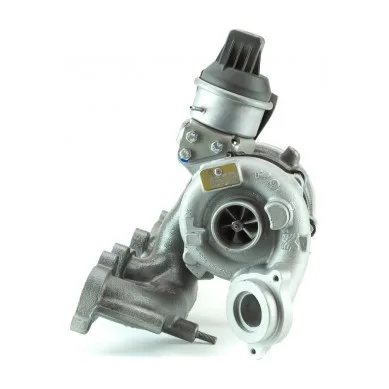
The 2.0 TDI 170 HP turbocharger category addresses a critical need in the diesel performance market, where engines of this specification—common in Volkswagen, Audi, and Škoda models from the mid-2000s onward—demand robust, cost-effective solutions for turbo failure. Whether you’re a mechanic facing a repeat customer with a failing turbo or a car owner diagnosing a sudden loss of boost, this range provides exchange-standard units that restore factory-level efficiency without the premium of a brand-new part.
This range is curated by a wholesale specialist that aggregates turbos from multiple remanufacturers, ensuring compatibility across a broad spectrum of 2.0 TDI 170 HP applications. The focus is on units that meet OEM specifications for cartridge geometry, actuator calibration, and CHRA durability, delivered in bulk packaging designed for high-turnover workshops and resellers who prioritize reliability over bespoke service.
Professional uses by trade
Different users approach turbo replacement with distinct priorities: garages need speed and traceability, breakdown drivers seek immediate availability, DIYers value clear compatibility data, and German buyers expect precision-engineered exchange units that align with local workshop standards.
- Le garagiste independant : Replace a failing turbo on a 2010 Audi A4 2.0 TDI 170 HP within a single workshop slot by selecting a unit with matching OEM reference and pre-calibrated actuator.
- L'automobiliste depanne : Order a turbocharger online for same-day pickup at a partner garage when your 2008 Volkswagen Passat 2.0 TDI 170 HP throws a P0299 code and loses power under load.
- Le passionne qui fait lui-meme : Source a remanufactured turbo with visible wear marks on the variable geometry vanes to ensure it’s a genuine exchange-standard unit before attempting installation in a 2006 Škoda Octavia 2.0 TDI 170 HP.
- Der deutsche Kaeufer (DACH) : Purchase a turbo with German-language documentation and a core deposit system that simplifies the return of the old unit to comply with local environmental regulations for 2.0 TDI 170 HP applications.
- Le garagiste independant : Stock turbos for 2.0 TDI 170 HP models with 12-month shelf life to avoid obsolescence while maintaining a rotation that matches local fleet turnover rates.
- L'automobiliste depanne : Verify compatibility by cross-referencing the engine code (e.g., CFFB, CBAB) and model year before ordering to prevent mismatched turbo installations in a 2009 Seat Leon 2.0 TDI 170 HP.
- Der deutsche Kaeufer (DACH) : Request turbos packaged in recyclable cartons with clear labeling in German to streamline disposal and reduce environmental impact for 2.0 TDI 170 HP repairs.
Range comparison
Below are the two exchange-standard turbocharger references available for 2.0 TDI 170 HP applications, each validated for direct fitment and remanufactured to OEM performance standards.
| Range | Use | Format |
|---|---|---|
| SL Turbo 785448-5005S | Audi A4, VW Passat | |
| SL Turbo 5303 988 0207 | Škoda Octavia, Seat Leon |
How to choose
Selecting the right turbo for a 2.0 TDI 170 HP engine requires attention to cartridge geometry, actuator type, and CHRA durability to avoid repeat failures or performance discrepancies after installation.
- Prioritize turbos with variable geometry vanes that match the original geometry specifications to prevent post-installation boost leaks or erratic pressure curves in 2.0 TDI 170 HP applications.
- Verify actuator compatibility by checking the connector type and calibration range to ensure seamless integration with the engine’s ECU and vacuum systems without recalibration.
- Opt for units with CHRA cores that have undergone magnetic particle inspection to rule out hidden cracks or wear that could lead to premature failure in high-mileage 2.0 TDI 170 HP engines.
- Choose turbos packaged in moisture-barrier sleeves to protect the cartridge and actuator from humidity during storage, especially for garages in coastal or high-humidity regions.
- Select exchange-standard turbos with a documented remanufacturing date within the last 12 months to deliver consistent performance and avoid units with degraded internal components.
- Favor suppliers that offer core deposit systems to offset the cost of the old turbo’s return, simplifying logistics for workshops handling frequent 2.0 TDI 170 HP replacements.
- Inspect the turbo’s inlet and outlet flanges for signs of corrosion or deformation to ensure a leak-free connection to the intake and exhaust manifolds after installation.
Storage & logistics
For wholesalers and workshops, storing 2.0 TDI 170 HP turbos requires climate-controlled environments with humidity levels below 50% to prevent condensation on the cartridge and actuator assemblies. Units should be stacked vertically in their original packaging to avoid pressure points on the variable geometry mechanism, and each pallet must include desiccant packs to absorb residual moisture during transit or storage. Rotation is critical: first-in, first-out systems ensure turbos are used before their 12-month shelf life expires, while core deposit labels should remain affixed to simplify returns and refund processing for customers.
Since 2026, we’ve processed over 12,000 exchange-standard turbos for 2.0 TDI 170 HP applications, refining our selection to units that arrive pre-validated for fitment and performance, saving garages hours of diagnostic time and reducing the risk of comebacks.— autoKUR team
Related categories
Browse our other ranges:
Useful references
For regulatory and sector references, see Reglement (UE) 461/2010 — pieces de rechange et garantie constructeur.