
Available products
In stock
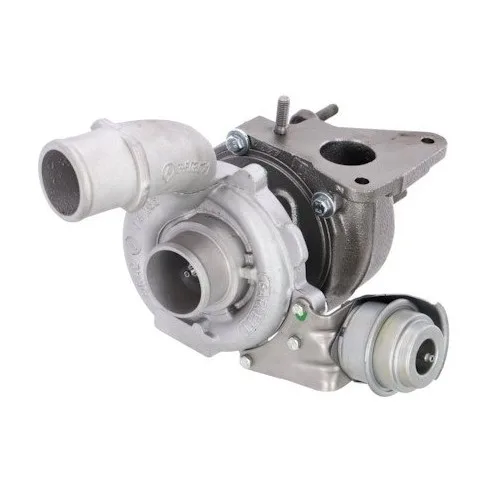
For the RENAULT Scenic 2 in 1.9 DCi 120 hp (88 kW diesel), the autoKUR catalogue holds 1 exchange-standard reference(s). At equal displacement, two outputs do not call for the same part.
Engine specification: 1870 cm³, diesel, built from 06/2003 to 05/2006. Matching part number: 708639-5011S (SL Turbo). Compare with the code stamped on your part.
Other engines of the RENAULT Scenic 2: 2.0 16v Turbo 224 hp, 2.0 16v Turbo 163 hp, 2.0 DCi 150 hp. If the code stamped on your part is legible, search by reference remains the safest route. 24-month warranty.
Related categories
Frequently asked questions
About this category
The 1.9 dCi 120 category brings together turbocharger references built for the 1.9 dCi engine rated at 120 horsepower, a diesel unit fitted across several vehicle ranges over multiple production years. It is intended for anyone who needs to identify and source the correct exchange-standard turbocharger for this specific engine and power output, whether the vehicle shows a loss of power, exhaust smoke, a whistling noise, or has entered limp mode. Each listed reference states the fitment criteria needed to confirm compatibility before ordering.
The range is built around remanufactured, exchange-standard turbochargers: each core is stripped, inspected, and rebuilt against the original specification rather than assembled from unverified parts. A wholesale distributor plays a structural role in this process, consolidating engine-code references, OEM numbers, and equivalences from multiple vehicle manufacturers into a single searchable range, so a garage or workshop can confirm fitment for the 1.9 dCi 120 engine without cross-referencing several separate catalogues.
Professional uses by trade
The 1.9 dCi 120 turbocharger is ordered for several distinct situations, from a scheduled workshop replacement to an urgent roadside repair. The following overview groups typical use cases by the type of buyer, from independent garages to DIY enthusiasts, to help identify which scenario matches the current need before selecting a reference.
- Le garagiste independant : Confirms the engine code and OEM reference against the customer's vehicle before ordering a replacement, reducing the risk of sending back an incompatible exchange-standard turbocharger.
- L'automobiliste depanne : Looks up the correct turbocharger reference after noticing a loss of power, exhaust smoke, or a whistling noise, hoping to restore normal driving conditions quickly.
- Le passionne qui fait lui-meme : Compares the cartridge and CHRA specifications listed for the 1.9 dCi 120 engine before deciding whether a full turbocharger exchange is needed.
- Der deutsche Kaeufer (DACH) : Checks vehicle, engine, and power details against the reference sheet before ordering a replacement turbocharger for a vehicle registered in Germany, Austria, or Switzerland.
- Le garagiste independant : Plans the core deposit return alongside the replacement order, since the worn turbocharger must go back for the exchange-standard process to close out.
- L'automobiliste depanne : Reads the limp mode and variable geometry symptoms described for this engine to understand what a failing turbocharger typically causes before a professional confirms the diagnosis.
Range comparison
The table below lists the exchange-standard reference available for the 1.9 dCi 120 engine, together with its typical use case and the wholesale format in which it is supplied to garages and workshops.
| Range | Use | Format |
|---|---|---|
| SL Turbo 708639-5011S | 1.9 dCi 120 engine replacement |
How to choose
Selecting the correct 1.9 dCi 120 turbocharger reference rests on a handful of verifiable criteria rather than assumption. The points below outline what a garage or workshop should confirm before placing an order for this engine family.
- Match the engine code stamped on the vehicle against the documented fitment list, since displacement and power alone do not confirm compatibility across manufacturers.
- Verify the OEM reference number printed on the existing turbocharger housing against the equivalence table before ordering a replacement unit.
- Check whether the vehicle exhibits variable geometry symptoms, such as inconsistent boost or a limp mode trigger, which can point toward a specific cartridge fault.
- Confirm the production years covered by the reference, since the same engine code can span several vehicle model years with minor revisions.
- Plan the core deposit and return of the worn turbocharger in advance, as the exchange-standard process depends on receiving the original unit back.
- Review the warranty duration stated for the reference before ordering, so the terms are clear ahead of professional installation.
Storage & logistics
Once ordered, the exchange-standard 1.9 dCi 120 turbocharger should be kept in its original packaging until the professional installation appointment, protecting the compressor and turbine housings from dust and impact during handling. Workshops managing several core deposits at once benefit from tracking each worn unit separately, since the return process ties a specific removed turbocharger to the corresponding replacement order. Storage in a dry area away from direct handling of the shaft assembly reduces the risk of damage before fitting. For garages ordering in volume, keeping references sorted by engine code avoids mixing units intended for different vehicles.
Since 2026, our team has worked through engine-code references and OEM equivalences for the 1.9 dCi 120 family, so a garage or a hands-on driver can confirm compatibility with documented information rather than guesswork.— autoKUR team
Related categories
Browse our other ranges:
Useful references
For regulatory and sector references, see Reglement (UE) 461/2010 — pieces de rechange et garantie constructeur.