

Available products
3 references


Frequently asked questions
About this category
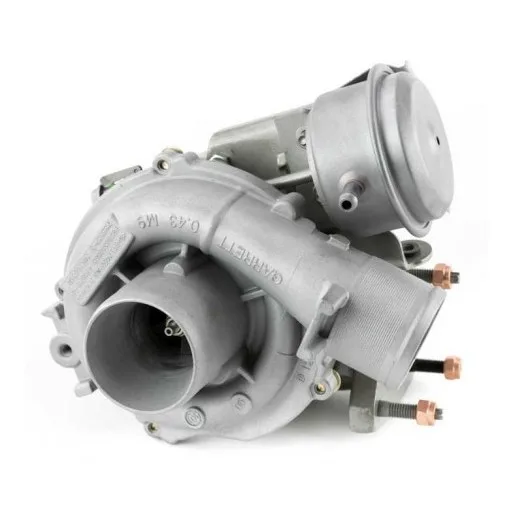
This category is built around the 1.9 dCi 130 diesel engine, a power rating shared across a family of platforms fitted with variants of the same core architecture. It brings together the exchange turbocharger unit confirmed for that engine, intended for independent garages ordering a replacement part, roadside drivers facing a sudden loss of power, and owners who prefer to fit their own components. Rather than a general turbo catalogue, this page narrows the selection to the reference relevant to this specific engine family.
The reference held in this category follows the exchange-standard process: a core unit is reconditioned to factory specification and supplied against the return of the failed part, rather than built from new. As a parts distributor, our role is to hold the confirmed reference in stock rotation, verify the OEM cross-reference against the engine code before listing it, and keep the exchange and core-deposit process clear for trade and individual buyers alike.
Professional uses by trade
The 1.9 dCi 130 turbo replacement in this category serves several distinct routines, from a garage diagnosing a fault code to an owner working through symptoms in a driveway. The uses below map the reference to the situation each type of buyer is actually facing when they arrive at this page.
- Le garagiste independant : Confirming the OEM reference and engine code before ordering, so the exchange turbocharger fits the vehicle already booked in for the repair.
- L'automobiliste depanne : Recognising symptoms such as a sudden loss of power, exhaust smoke, or a whistling noise, and locating the reference matching the 1.9 dCi 130 platform.
- Le passionne qui fait lui-meme : Comparing the cartridge and CHRA specification against the failed part before fitting a replacement turbocharger without workshop assistance.
- Der deutsche Kaeufer (DACH) : Checking the exchange-standard process and core-deposit terms before ordering a reference for a vehicle registered in a German-speaking market.
- Le garagiste independant : Explaining the core-deposit and return process to a customer waiting on the exchange turbocharger to arrive at the workshop counter.
- L'automobiliste depanne : Understanding why a vehicle drops into limp mode when the variable geometry mechanism on the failed turbocharger seizes or sticks.
- Le passionne qui fait lui-meme : Sourcing the injector and high-pressure pump reference separately when the turbocharger fault shares symptoms with a fuel-system issue.
Range comparison
The reference below groups the exchange turbocharger confirmed for the 1.9 dCi 130 platform, alongside the deposit and format it is supplied under, so a professional order and an individual purchase both source the exact same confirmed part.
| Range | Use | Format |
|---|---|---|
| SL Turbo 755507-5009S | 1.9 dCi 130 replacement |
How to choose
Choosing the right reference for the 1.9 dCi 130 turbo replacement depends on more than the power rating alone. The criteria below help a garage or an owner confirm the part before it is fitted, not after.
- Matching the engine code stamped on the failed unit against the reference listed here, since the same power output can span several code variants on related platforms.
- Confirming the OEM part number and its known equivalences before ordering, rather than relying on the power rating printed on the old turbocharger housing.
- Checking the core-deposit and return terms for the failed unit in advance, so the exchange process runs without a delay at the counter.
- Reviewing the warranty terms attached to the reference before fitting it, since a reconditioned exchange unit carries different terms than a new part.
- Verifying whether the fault points to the cartridge, the CHRA, or the variable geometry mechanism, rather than assuming the whole turbocharger needs replacing.
- Ruling out the injector and high-pressure pump as the source of the symptom before ordering a turbocharger reference that turns out not to be the cause.
- Confirming with the supplier that the reference is currently held in rotation for this platform, rather than ordered against an outdated cross-reference.
Storage & logistics
A core-exchange turbocharger should be kept in its original packaging until the moment of fitting, protecting the compressor and turbine housings from impact and the actuator linkage from being knocked out of position. The failed unit being returned under the core-deposit process should be drained of residual oil and packaged so the exchange housing stays intact, since the deposit is tied to the condition of the part sent back rather than to the fault itself. For a garage handling several references at once, pairing each unit with its OEM cross-reference sheet avoids mismatches when several similar platforms pass through the workshop in the same week.
Since 2026, our team has handled the exchange-standard process for platforms like the 1.9 dCi 130, and the lesson has stayed the same: the engine code decides the reference, never the power rating printed on the box.— autoKUR team
Related categories
Browse our other ranges:
Useful references
For regulatory and sector references, see Reglement (UE) 461/2010 — pieces de rechange et garantie constructeur.